The shekel’s comeback: How currency strength reshaped Israel’s markets and inflation in 2025


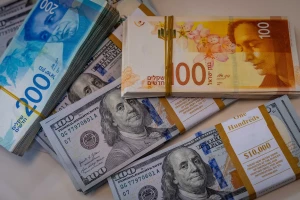
At the close of 2025, the Israeli shekel stood at its strongest level in four years. On December 31 it traded at around NIS 3.17 to the US dollar, a level last seen before a succession of global shocks that reshaped financial markets. Over the course of the year, the shekel appreciated by about 14.3% against the dollar. The move went beyond technical momentum. It reflected a reassessment of Israel’s economic footing after an extended period marked by war, tight monetary conditions, and elevated geopolitical risk. The appreciation was gradual, driven by a combination of domestic resilience and global market dynamics that altered expectations for growth, risk, and inflation.
The shift in sentiment accelerated as geopolitical risk began to ease. Following military operations in the north against Hezbollah and a brief but intense conflict with Iran, markets started to price in a lower risk premium. That reassessment coincided with firmer economic signals, including renewed growth, rising foreign investment, and a strong recovery in equity prices.
Deal activity played a central role. A landmark natural gas export agreement with Egypt – the largest in Israel’s history – committed the supply of roughly 130 billion cubic metres of gas through 2040 in a deal valued at about $35 billion, underscoring the scale of prospective foreign-currency inflows and reinforcing Israel’s position as a regional energy supplier. Alongside energy, defense exports expanded sharply. Strong battlefield performance translated into a growing pipeline of procurement orders – from major contractors to smaller specialist firms – creating steady demand for shekels.
Technology exits amplified the effect. The announced acquisition of Israeli cyber company Armis by ServiceNow in a cash deal valued at roughly $7.75 billion – one of the largest technology exits in Israel in recent years – bolstered the currency even before funds had entered the country. Market participants treated the announcement itself as a signal of confidence in Israel’s high-tech sector and its ability to generate large-scale US dollar inflows. Such deals tend to trigger anticipatory positioning by investors and institutions, reinforcing the shekel’s strength through expectations of future currency conversions, employee payouts, and reinvestment flows. In this sense, sentiment and signalling proved nearly as powerful as the capital movements themselves.
Capital flows from institutional investors provided an additional tailwind. Gains in global equities prompted Israeli companies with foreign exposure to trim US dollar positions as part of routine hedging adjustments, supporting the Israeli shekel. The resulting rise in asset values helped sustain this pattern, embedding it in currency markets.
Currency strength did not emerge in isolation, and Israel’s equity market reflected the same shift in sentiment. The Tel Aviv Stock Exchange closed 2025 with gains of 51.6%, following a 28.4% rise the previous year, even amid prolonged security tensions. The gains were led by technology, defence, energy and financial stocks – sectors closely aligned with the forces supporting the shekel.
A stronger Israeli currency helped contain import costs in an economy that remains heavily dependent on foreign goods. With Israel importing close to $92 billion worth of goods in 2024, the shekel’s appreciation eased price pressures across energy, food, and manufactured inputs, while improving balance-sheet conditions for domestically focused companies. In the meantime, international investors, encouraged by calmer security conditions improved macro signals, increased exposure to Israeli assets. The rally underscored a broader point: the shekel’s strength was not an abstract monetary development, but the byproduct of sustained capital inflows interacting with a trade-intensive economy.
For households, however, the most immediate effect of a stronger shekel was felt in prices. Currency appreciation helped moderate import costs, contributing to a 0.5% decline in the consumer price index in November. Annual inflation stabilised at 2.4% placing it squarely within the Bank of Israel’s target range of 1% to 3%. At a time when many economies continued to struggle with persistent price pressures, the Israeli shekel acted as a disinflationary force.
Israeli policymakers, however, remained cautious. While goods inflation eased, services inflation – less sensitive to exchange-rate movements – remained elevated. A tight labor market, characterized by low unemployment and high job vacancies, continued to exert upward pressure on wages. Fiscal uncertainty added to the caution, as budget discussions pointed to a widening deficit.
Against this backdrop, the Bank of Israel maintained a cautious stance. After cutting interest rates by 0.25% in November, the central bank signalled no urgency to move further, despite market speculation. Policymakers stressed that exchange-rate strength was only one consideration, alongside growth, labor-market conditions, fiscal discipline, and security risks.
That restraint reflects the trade-offs inherent in a stronger currency. Exporters face margin pressure, and a sustained rally can test competitiveness. Even so, economists argue that Israel’s export base – centred on high-value technology, defense, and energy – has so far shown sufficient resilience to withstand a stronger shekel.
Taken together, the shekel’s appreciation of 14.3% in 2025 against the US dollar captured a change in how markets priced Israel’s economic and geopolitical outlook. Improved security conditions, large-scale export activity, capital inflows and a resilient corporate sector combined to support the currency at a time when policy remained deliberately cautious. Whether the strength proves durable will depend less on exchange-rate policy than on the balance between growth, fiscal discipline and regional stability. For now, the shekel stands as a signal of renewed confidence, moderated by the constraints and risks that continue to influence Israel’s economy.
You might also like to read this: