Israeli shekel increases to 4-year high against US dollar




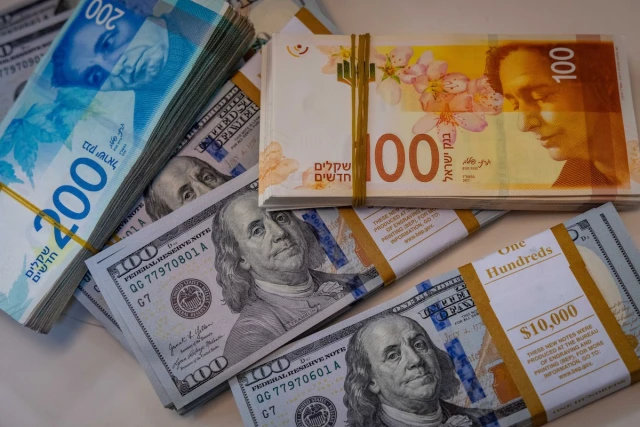
The Israeli shekel strengthened to NIS 3.18 per U.S. dollar on Wednesday, as the American currency continued to weaken on international markets, bringing the shekel close to a four-year high against the dollar.
Joe Fraiman, CEO of the Prico Group, an Israeli financial consultancy company, said he expects the shekel to continue strengthening against the dollar, backed by considerable foreign-currency supply.
“Large foreign-exchange sales are coming both from the business sector, carrying out year-end financial activity, and from exporters and institutional investors,” Fraiman explained. “Toward the end of the year, when ‘window dressing’ activity intensifies, many institutions operate on a significant scale as part of preparations for the new financial year and to improve the appearance of their financial statements,”
Fraiman said that the shekel’s strength is linked to the continued inflow of foreign capital into Israeli investments, especially the tech sector, in combination with exporters’ foreign currency sales.
He noted that the shekel is not the only currency currently strengthening against the dollar. “The strengthening of the shekel against the dollar aligns with the global trend, in which the dollar continues to weaken against major currencies.”
The shekel has been gaining ground against the dollar for some time. In October, it traded at NIS 3.28 per dollar, marking its strongest performance in three years. While the appreciation boosts the purchasing power of Israeli travelers abroad, it is a mixed blessing for the broader economy, as a stronger shekel makes Israeli exports more expensive and can hurt businesses that are export-oriented.
“Exporters are already struggling to ship products to certain countries due to the ongoing war, losing buyers in the process. Now, the sharp decline in export revenues, particularly from dollar-based markets, could lead to losses that threaten the survival of many factories in Israel,” several Israeli exporters warned in October.
Ron Tomer, president of the Manufacturers Association of Israel, warned that a stronger shekel risked undermining Israel’s export-driven economy in the longer term.
“The weakening of the dollar severely harms exporters, manufacturers and tech companies that earn in dollars,” Tomer explained. “Each drop in the exchange rate immediately translates to lower shekel income, eroded profitability and the risk of losing international markets.”
Tomer urged the Israeli Finance Ministry and the Bank of Israel to take steps to stabilize the shekel, warning that “The Israeli economy needs active policy to protect industrial competitiveness and jobs.”
The shekel’s recent strength comes despite nearly two years of intense, multifront conflict. In August 2023, less than two months before the October 7 Hamas attack, the currency was significantly weaker, trading at NIS 4.12 per U.S. dollar. At the time, the depreciation reduced the purchasing power of Israeli travelers abroad but provided a boost to Israel’s export-oriented industries.
However, the stronger shekel also reflects a broader rise in global confidence in the Israeli economy, which has demonstrated resilience over nearly two years of war. According to a new report by LeumiTech – the technology arm of Bank Leumi – and IVC Data & Insights, investment in Israel’s tech sector has increased by 45% since the Gaza ceasefire in October, with roughly 60% of funding coming from foreign investors.
LeumiTech CEO Maya Eisen Zafrir said, “The past year reflects the strength and continued growth of Israeli tech, despite a prolonged period of uncertainty and upheaval in the local and global arena.”
You might also like to read this: