Israeli tourists welcome strong shekel, exporters are concerned


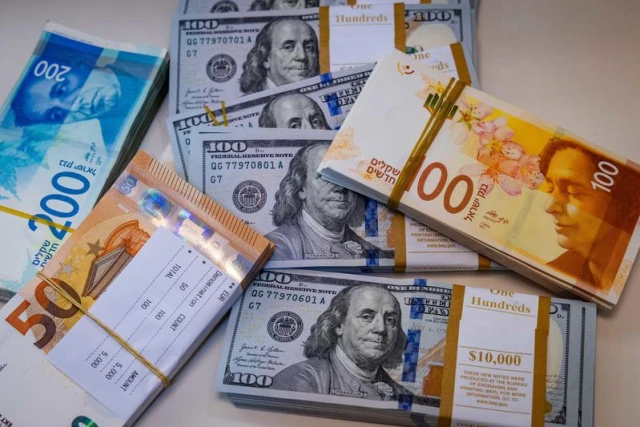
The Israeli shekel reached on Wednesday its strongest position versus the U.S. dollar in the past three years. The dollar fell to 3.28 shekels, a development which is viewed as a mixed blessing. While Israeli tourists welcome their strengthened purchasing power, Israeli exporters are concerned that a strengthened shekel will have a negative impact on their exports to the U.S. and other parts of the world where the trade is conducted in dollars.
“Exporters are already struggling to ship products to certain countries due to the ongoing war, losing buyers in the process. Now, the sharp decline in export revenues, particularly from dollar-based markets, could lead to losses that threaten the survival of many factories in Israel,” several exporters warned in an interview on Tuesday with the news outlet Ynet News.
Like other small and advanced economies, Israel exports a significant proportion of its total production overseas.
Ron Tomer, president of the Manufacturers Association of Israel, warned that the stronger shekel and weaker dollar threatened the local tech industry, which is the leading engine in the Israeli economy.
“The weakening of the dollar severely harms exporters, manufacturers and tech companies that earn in dollars,” Tomer assessed. “Each drop in the exchange rate immediately translates to lower shekel income, eroded profitability and the risk of losing international markets,” he added.
Tomer explained that Israeli exporters now need to face both growing anti-Israel sentiments and eroding export profits due to the weakened dollar.
“At a time when exporters are trying to retain customers with competitive pricing, the stronger shekel makes Israeli products more expensive – the opposite effect,” he stated, adding that “such a sharp strengthening could be a death blow for some exporters.”
Looking ahead, he called on both the Bank of Israel and the Finance Ministry to intervene by stabilizing the exchange rate between the shekel and the dollar.
“The Israeli economy needs active policy to protect industrial competitiveness and jobs,” Tomer concluded.
In contrast, local retailers and contractors welcome the stronger shekel, which they believe could lower prices in the Jewish state on imported goods.
However, Shahar Turjeman, president of the Federation of Israeli Chambers of Commerce (FICC), believes that consumer prices will take time to adjust amid the fluctuating currency exchange rate between the shekel and the dollar.
“Many large companies hedge their currency exposure, so today’s sharp drop won’t be felt immediately,” he predicted. “If the shekel remains strong, prices will likely fall – but not right away,” Turjeman added.
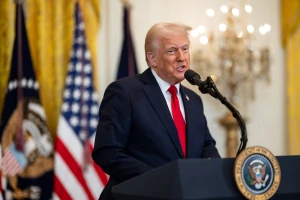
In August, the U.S. Trump administration imposed a 15% tariff on Israeli products imported into the United States. The move is part of U.S. President Donald Trump’s plan to reduce America’s vast trade deficit with the outside world. Countries worldwide are therefore facing similar challenges concerning exports to the large U.S. markets.
“In light of the expected serious consequences, I call on you to take all diplomatic and economic measures at your disposal to prevent the imposition of taxes,” the Manufacturers Association of Israel head Tomer urged Prime Minister Benjamin Netanyahu at the time.
The Israeli export industry has warned that the U.S. tariffs could cost the Israeli economy some $2.3 billion per year in lost exports. In addition, Israeli business officials have warned that between 18,000 and 26,000 Israeli workers could potentially lose their jobs as a result of the U.S. tariffs.

The All Israel News Staff is a team of journalists in Israel.
You might also like to read this: