Trump tells PM Netanyahu he will support an Israeli strike on Iran if negotiations fail – report
Ayatollah Khamenei's aide says ‘zero enrichment’ of uranium is unrealistic




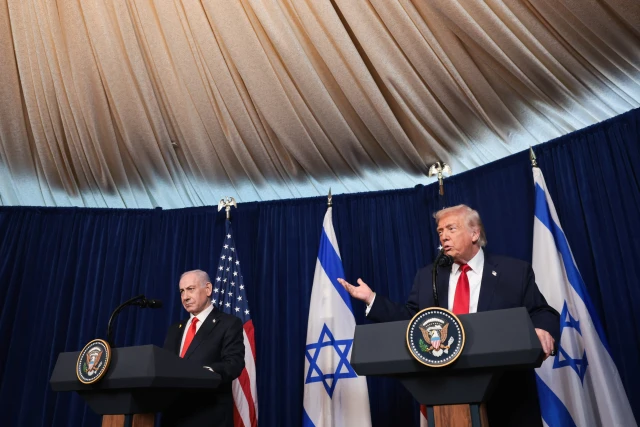
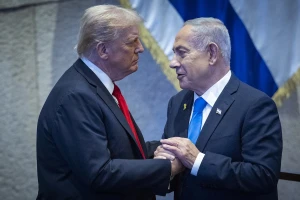
During Israeli Prime Minister Benjamin Netanyahu’s visit to the Mar-a-Lago estate in Florida, U.S. President Donald Trump said he would support Israeli strikes on Iran if negotiations fail, CBS News reported on Sunday.
CBS cited “two sources familiar with the matter” who agreed to talk about the meeting on condition of anonymity.
Amid an increased buildup of U.S. military forces in the region, CBS reported that American officials have begun discussing the possibility of supporting potential Israeli strikes on Iran, including through aerial refueling and facilitating overflight arrangements for Israeli aircraft.
Several Middle East countries, including Jordan, Saudi Arabia and the United Arab Emirates, have said they would not allow their airspace to be used to attack Iran, apparently fearing possible targeting by Iranian ballistic missiles.
The report was released as Iranian Foreign Minister Abbas Araghchi flew to Geneva ahead of the second round of indirect talks with U.S. envoys Steve Witkoff and Jared Kushner. The first round of talks, held earlier this month in Muscat, Oman, was described by Ali Larijani, secretary of Iran’s Supreme National Security Council and an aide to Ayatollah Ali Khamenei, as “an exchange of views.”
Speaking to Iranian state media on Sunday, Larijani said, “No written response to U.S. demands was provided in the recent Muscat talks. What occurred was merely an exchange of views, which remains ongoing.”
Larijani also said the regime does not support adding any issues outside the “nuclear framework” to the discussions, an apparent reference to Prime Minister Netanyahu’s request that the U.S. ensure that Iran’s ballistic missile program and support for regional proxies are also part of the negotiations.
“Tehran maintains a positive view of negotiations, provided they are 'fair and reasonable' and do not become a tool for stalling or imposing issues outside the nuclear framework,” he said.
Larijani also rejected talk of “zero enrichment” of uranium as unrealistic, further raising concerns that the Iranian regime could be using the talks as a means of stalling, as it tries to prepare for a potential U.S. or Israeli strike.
According to Axios, the U.S. expects Iran to present a response to Washington’s demands in the upcoming talks. At the same time, the U.S. could impose tariffs of up to 25% on China for trading with Iran, as Trump previously threatened. This is part of a pressure campaign against Iran.
Axios quoted an anonymous U.S. official saying there is “zero chance” of an agreement.
Meanwhile, U.S. Secretary of State Marco Rubio said on Saturday that President Trump would be willing to meet Ayatollah Khamenei if the Iranian dictator so desired.
“I’m pretty confident in saying that if the ayatollah said tomorrow he wanted to meet with President Trump, the President would meet him, not because he agrees with the ayatollah but because he thinks that’s the way you solve problems in the world, and he doesn’t view meeting someone as a concession,” Rubio said in an interview with Bloomberg at the Munich Security Conference.
Regarding the force buildup in the region, Rubio said, “We obviously want to have forces in the region because Iran has shown the willingness and the capability to lash out and strike out at the United States presence in the region.”
He said that while Trump prefers a deal, the forces are intended “to ensure that they don’t make a mistake and come after us and trigger something larger.”
You might also like to read this: