Lebanon ceasefire: Israeli cabinet surprised, northern communities furious as Trump announces 10-day truce
PM Netanyahu says ceasefire is 'historic chance' to forge peace with Lebanon







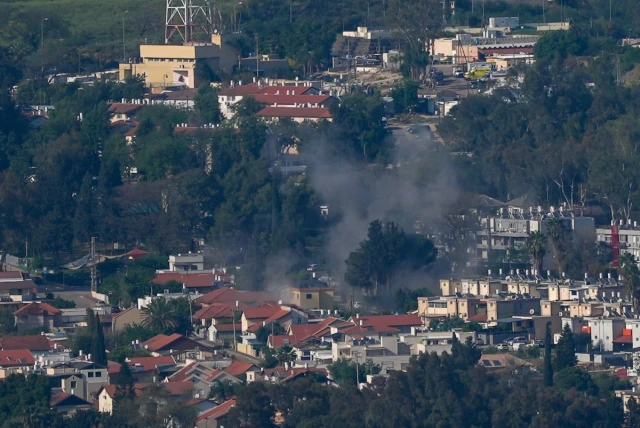
Reactions in Israel were overwhelmingly negative on Thursday evening, after U.S. President Donald Trump declared a ceasefire between Israel and Hezbollah in Lebanon, catching the IDF, cabinet ministers and residents of northern Israel by surprise.
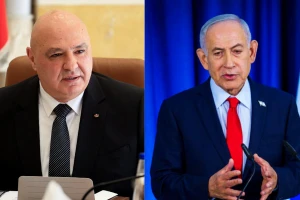
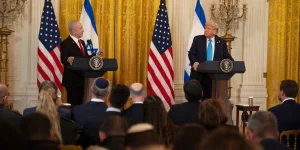
After “excellent conversations with the Highly Respected President Joseph Aoun, of Lebanon, and Prime Minister Bibi Netanyahu,” Trump said, they agreed that “to achieve PEACE between their Countries, they will formally begin a 10 Day CEASEFIRE” set to start at midnight, local time.
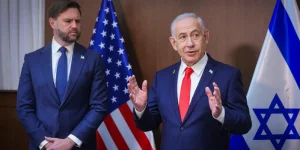
Trump added that he instructed U.S. Vice President JD Vance, State Secretary Marco Rubio and the chairman of the Joint Chiefs of Staff, Dan Caine, to “work with Israel and Lebanon to achieve a Lasting PEACE.”
Iran, mediators from Pakistan, as well as Lebanon, have been pushing for the inclusion of the Lebanese front in the Iran ceasefire since its start. Trump’s announcement followed a meeting between the countries’ envoys to the U.S. on Wednesday.
Israel and the United States have rejected linking the fronts, and the IDF initially escalated its strikes against Hezbollah, before U.S. pressure apparently made Netanyahu give in and agree to “a timeout, or more accurately, a temporary ten-day ceasefire,” as he put it.
In a long statement defending the controversial decision against the gathering storm of criticism, Netanyahu said on Thursday evening that he agreed because of the “opportunity to forge a historic peace agreement with Lebanon.”
He vowed that the Israeli military would stay in “a security strip ten kilometers deep” in Lebanese territory, adding that Israel would insist on the disarmament of Hezbollah and on a sustainable peace agreement in the negotiations.
Despite the ongoing talks behind the scenes, the Israeli government was apparently caught off guard by Trump’s announcement. After a security cabinet meeting on the issue ended without a decision on Wednesday, Netanyahu convened an urgent conference call to vote on a truce on Thursday afternoon. Several minutes into the call, Trump announced the decision without the Israeli ministers being able to hold a vote.
Just minutes before the announcement, IDF Chief of Staff Lt.-Gen. Eyal Zamir had said during a public appearance, “The fighting along our northern border is still ongoing – we have acted and will continue to act with determination and force for as long as time allows… We will continue to strike and weaken Hezbollah, erode the enemy’s capabilities, and ensure the long-term security and daily life of our citizens.”
Representatives of the northern communities, as well as opposition leaders, reacted with notable fury.
Moshe Davidovich, head of the Mateh Asher Regional Council, told Army Radio the ceasefire is “a death sentence of waiting for the next massacre.”
“Agreements are signed by tie-wearers in Washington, but the price is paid here in blood, in destroyed homes, and in shattered communities,” he added. “Until we see Hezbollah stripped of its capabilities and our communities truly protected, any celebration of victory is nothing more than an attempt to pull the wool over the public’s eyes.”
David Azoulay, head of the Metula council and a member of the Yisrael Beytenu party, said residents in the north feel “betrayed once again.”
Benny Ben-Muvhar, head of the Mevo’ot HaHermon Regional Council, told Channel 12 that he cannot yet assure residents who fled south that it is safe to return.
“We’ve been underground [in shelters] for two months so the IDF could do what it had to do… enough of these games,” he added.
Avigdor Liberman, former defense minister and leader of Yisrael Beytenu, agreed: "Once again, Hezbollah is being given time to recover and strengthen. The war must not end without a clear victory and the elimination of Hezbollah. Otherwise, the next round is only a matter of time – at a much heavier cost and under far worse conditions."
Gadi Eisenkot, leader of the Yashar! party, warned that the government is failing to "translate military achievements into political gains."
"A ceasefire should come from a position of strength and an Israeli decision, in order to serve negotiations. A pattern is developing in which ceasefires are imposed on us – in Gaza, in Iran, and now in Lebanon," he said.
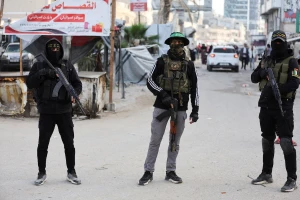
Furthermore, on Thursday evening, several local leaders and the IDF warned residents to prepare for Hezbollah’s traditional “ending barrages” of rockets before a ceasefire.
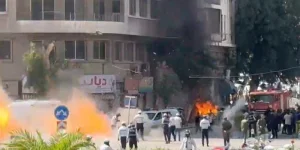
In a first attack, around 10 rockets were launched toward the Western Galilee, most of which were shot down or fell in open areas, and two drones were intercepted by the IDF. Shortly afterwards, a man was seriously wounded by a rocket attack in Karmiel.
You might also like to read this: