








all israel edu From Osirak to Tehran: how a failed air strike reshaped nuclear strategy in the Middle East
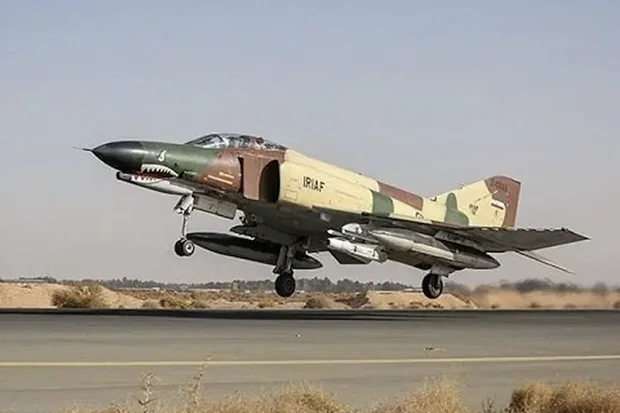
In September 1980, four F4 Phantom jets suddenly appeared in the sky above Baghdad. As they approached, they swooped down above the nuclear reactor Osirak, dropped their payload and… didn’t destroy the reactor. Instead, they hit some infrastructure around the reactor, and it delayed the Iraqi nuclear program by only a few months. Because this was not the famous Operation Opera, where Israel destroyed Saddam’s reactor. That didn’t happen until June 7, 1981. No, this was an Iranian attack. The Iran-Iraq War had recently started, and the newly formed Islamic Republic of Iran was just as worried as Israel and the United States about Saddam Hussein armed with nukes. Did they fail on purpose to “send a warning,” or did they actually fail the mission? It’s debated.
Understanding what happened during those couple of years, over 40 years ago, is key to understanding what’s going on today in the Middle East. Because Iraq and Iran chose two completely different paths to the bomb, and that difference still shapes the Middle East today.
Once Israel destroyed the reactor, Iran was carefully taking notes, and they learned from Saddam what not to do. There are two main pathways to make a nuclear bomb, and in 1945, the US had already tried both – one on Hiroshima and one on Nagasaki. You either use a nuclear reactor to turn uranium into plutonium, or you use centrifuges to enrich uranium. Saddam built a reactor to make plutonium, which is exactly why Iran went the other direction.
But let’s take it from the beginning. In the 1970s, Saddam Hussein went to Europe to shop for nuclear technology for peaceful purposes only, of course. French President Jacques Chirac was happy to offer assistance. Anyone could see that this was suspicious. Saddam Hussein was a rogue and dangerous dictator, and his country was flowing with oil, so it’s not like he needed nuclear power for electricity. Nevertheless, there was an oil crisis in the 70s, and Chirac needed the money, wanted influence in the Middle East, and a counterbalance against Iran after the 1979 revolution. France saw no reason to refuse as long as Iraq was signed on to the NPT, the UN non-proliferation treaty, and cooperated with the International Atomic Energy Agency (IAEA) inspections that would ensure the program was for peaceful purposes only.
Recently declassified material from the US shows that American diplomats were deeply worried throughout the process. This reactor could easily create plutonium, and its fuel was highly enriched uranium, which under the right conditions, could be diverted toward weapons use. The IAEA inspectors didn’t have sufficient experience with this specific type of reactor, and once the Iran-Iraq war started, the reactor was standing in the middle of a war zone, and there was an even more serious worry that the inspectors and French technicians would leave.
Throughout the process during the 70s, Israel reportedly carried out covert efforts to delay the program, including sabotage and suspected targeted operations. Nuclear scientists who were involved died mysterious deaths; reactor parts about to be shipped were damaged in mysterious explosions.
But operations like that can only postpone, not prevent, and Israel started training pilots for the daring mission of obliterating the reactor, hoping they wouldn’t need to enact it. When the Iranian attack occurred in 1980, it became a goldmine for Israeli intelligence on Iraqi anti-aircraft defenses, radar systems, and data. Then-Israeli Prime Minister Menachem Begin specifically asked the US to prepare a full technical assessment of the Iranian attack, what had been hit, and how much damage was done.
The big question is, of course – Did Israel and Iran talk about it directly? We already know there were secret connections between Israel and the Islamic Republic during the Iran-Iraq War because of their mutual enemy, Saddam. But did it go as far as actual intelligence cooperation? There are rumors that Iran provided Israel with reconnaissance photos, preparing for the operation, and that they offered Israeli pilots the option to land on Iranian soil in case something went wrong. But those are rumors based on anonymous sources that can’t be verified.
On June 7, 1981, the surprise airstrike that had been rehearsed and trained for years finally took place. Eight Israeli F-16s took off from the Sinai Peninsula – which was still under Israeli control at the time – and flew undetected over Jordan and Saudi Arabia all the way to Baghdad. They arrived with the element of surprise, and dropped all 16 bombs on the reactor, totally destroying it. What is even more incredible – they all made it home safely. Mid-air refueling was not an option back then, and they made it back on the very last drops of fuel.
The attack eliminated around 10 Iraqi soldiers and one French technician, since it occurred on a Sunday to avoid European casualties. Had this attack taken place just one month later, the reactor would have been critical, and an attack would have caused severe radioactive contamination throughout all of Baghdad. The attack was surgical, precise, and occurred at the very last moment. So many things could have gone wrong, and nothing did.
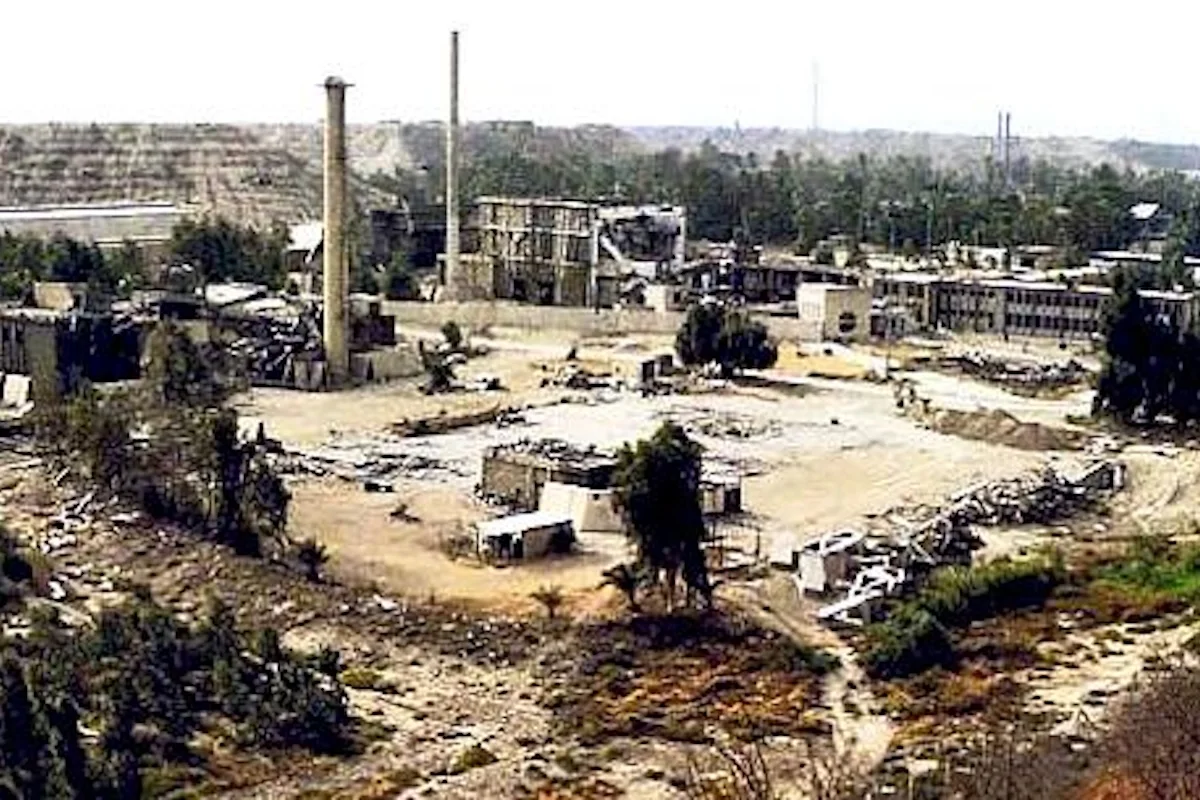
As always, when Israel succeeds, the world gets mad. The attack was met with international condemnation from everyone, including an angry UN resolution, which even the US stood behind. For once, the US and Soviet Union actually agreed on something in the midst of the Cold War. Why? Well, because Iraq had cooperated with the IAEA on paper, and everything had been in order. Israel, not trusting the international standards, put the very system in danger and put the IAEA in an existential crisis. Why would any country accept the IAEA inspections now if the international system didn’t safeguard them against attacks? Israel claimed that it did what it had to do in self-defense, pointed to Saddam explicitly ensuring Iran that the nuclear program was not targeted at them, but at the “Zionists,” and that the IAEA system wasn’t robust enough. Israel also pointed to the fact that Iran had already attacked the reactor before them, so Iran also saw the danger.
Behind the scenes, many Americans, including then-President Ronald Reagan, were content that Israel had done what they couldn’t or wouldn’t do. One can even assume that President Chirac was not angry about the outcome. This way, he received the Iraqi money, provided what he promised, and still didn’t need to worry about being blamed for enabling Iraq’s nuclear bomb. Then, as now, Israel did the dirty work for the rest of the Western world. They pretended to be outraged while thanking Israel under the table. Which makes me wonder how much of that is still happening today, and what we might learn about the current war in another 40 years.
In 1991, however, the IAEA discovered that Saddam, after 1981, had embarked on a massive clandestine nuclear weapons program, using uranium enrichment and centrifuges instead. Had the US not invaded in 1991, Saddam would have reached nuclear capabilities in just a couple of years. So even Operation Opera didn’t stop the ambitions – they only pushed them underground and postponed the problems for 10 years.
After 1991, the IAEA became more aggressive and efficient, until Saddam kicked them out in 1998. When the US invaded in 2003, they were certain he had spent the last few years rebuilding the capacity, but discovered he had merely kept nuclear scientists on the payroll to keep the knowledge alive, while not actually building any factories or centrifuges.
But not only Saddam himself had learned from Osirak. Iran learned too. They had their own research reactor in Bushehr, which was attacked numerous times during the long Iran-Iraq War. Iran learned from this and embarked on a clandestine, decentralized strategy to develop nuclear weapons that relies on three chief elements: disaggregation, concealment, and redundancy.
Disaggregation means that every part of the process is in a different place. Uranium enrichment in one place, R&D in another place, uranium conversion in one place, enrichment centrifuges in another place. Concealment means that many of these factories and facilities were built underground, beneath a mountain, making them hard to reach even with bunker-busting bombs. Finally, redundancy means they avoid bottlenecks by building many pathways, not relying on just one plant or one enrichment facility. If one is destroyed, they have another.
Essentially, it turned their nuclear program into a hydra with many heads. By doing this, Iran ensured that the only way to stop them from reaching nuclear capability would be a full-scale regional war, which they know the Western world would want to avoid at all costs.
Iraq built a nuclear program that you can bomb. Iran built one you can’t. Iraq built a target. Iran built a system.
Osirak was a tactical success at the time and, despite the diplomatic backlash, it is viewed today as a success. No one wants to imagine what 1991 or 2003 would have looked like if Saddam had nuclear bombs. But despite this, it led to immense strategic problems down the road, which we are dealing with today.
The tactical successes of today inform tomorrow’s strategy. Which begs the question: What are we teaching our enemies today that they will use against us tomorrow? Are we, through our sheer way of waging war, also teaching our adversaries how to regroup and defeat us next time? And do we make sure to always be one step ahead?
Popular article:

interview Easter message of resurrection hope amid war at Jerusalem's Garden Tomb

biblical commentary Let my people go: a Passover message for today
4 IDF soldiers killed, 2 wounded in fighting in southern Lebanon, as Israel eliminates dozens of Hezbollah terrorists

Receive latest news & updates
A message from All Israel News
Help us educate Christians on a daily basis about what is happening in Israel & the Middle East and why it matters.
For as little as $10, you can support ALL ISRAEL NEWS, a non-profit media organization that is supported by readers like you.
Latest articles:

all israel edu North American Jewish organizations to recruit 100 professionals to combat antisemitism
all israel edu ‘No need’ for pre-election Iran strike, IDF chief says as gov’t, opposition trade blame for potential escalation – report
terror attack 2 Israeli soldiers killed, 2 terrorists eliminated in Hebron shooting; IDF says much larger attack was prevented
analysis A people dwelling securely? Israel’s strategic standing, 3 years after Oct 7

all israel edu Hamas on wheels: What I found in Dearborn reveals a troubling history and a battle over Israel