Israeli reactions to the Iran deal - Coalition and opposition members criticize failure to protect Israel’s security needs
“Agreement with Iran bad for Israel and the entire free world’ - Finance Minister says







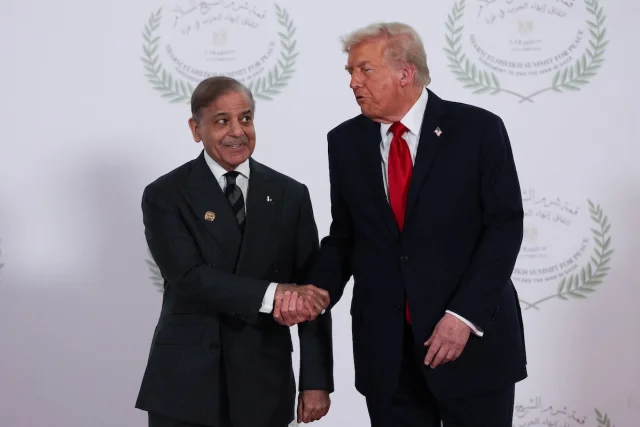
While the agreement between the United States and Iran has been welcomed by many around the world, it has been poorly received in Israel.
Details of the agreement have not yet been officially released, with the U.S. and Iran making contradictory statements about its terms.
However, one part of the agreement is reportedly a clause stating that Lebanon is to be considered as part of the permanent ceasefire agreement, which would appear to restrict Israeli freedom of operation against Hezbollah.
In announcing the achievement of a “peace deal” between the two countries, Pakistani Prime Minister Shehbaz Sharif claimed, “Both sides have declared the immediate and permanent termination of military operations on all fronts, including in Lebanon.”
That statement provoked sharp reactions from Israeli politicians and leaders across the political spectrum.
Coalition members, while not openly criticizing U.S. President Donald Trump, expressed their opposition to apparent flaws in the agreement.
National Security Minister Itamar Ben Gvir said that the U.S. agreement is not binding on Israel.
“Trump's agreement does not bind us,” Ben Gvir wrote on 𝕏. “Israel is not subject to the United States, and we are an independent and sovereign nation!”
“Every time we succumbed to international pressure at the expense of Israel's security, we paid a blood price with interest,” Ben Gvir continued.
“We emphasize: We love the USA and are grateful to President Trump,” Ben Gvir said, in an apparent attempt to soften his statements. “And yet, the State of Israel is not a banana republic.”
The minister also said that because Israel was not a partner to the agreement, which “does not ensure our security, it also does not bind us in any way.”
Ben Gvir also called for continued retaliatory strikes in Dahiyeh if Hezbollah continues attacks against Israeli soldiers or communities.
Finance Minister Bezalel Smotrich also expressed sharp criticism of the agreement.
“The agreement with Iran is bad for Israel and for the entire free world. Period,” Smotrich wrote to 𝕏.
He also cast doubt on the effectiveness of the deal in preventing the Islamic Republic from achieving nuclear weapons.
“The joint campaign had many achievements in weakening Iran, and they will not go to waste,” Smotrich continued. “We will have to continue the campaign to topple the regime ourselves and in creative ways, and ensure that Iran will never have nuclear weapons.”
Defense Minister Israel Katz did not directly refer to the U.S.-Iran agreement, but noted that Israel would not give up on its achievements in Lebanon.
“Prime Minister Benjamin Netanyahu and I are leading a clear policy that states that the IDF will remain in the security zones in Lebanon, Syria, and Gaza – indefinitely – in order to defend the border and Israeli communities from there against jihadist elements,” Katz said in a statement.
“The area will be cleared of local residents and all terrorist infrastructure, above and below ground - including the houses in the contact villages that served as terrorist outposts - will be destroyed,” Katz continued, calling such actions a “lesson learned from October 7.”
Saying both he and Prime Minister Netanyahu communicated this position to the American administration, Katz promised to resist “all the existing and future pressures” to change their stance.
However, it was not only coalition members who expressed dismay at the apparent sidelining of Israeli interests in the Iran agreement.
Former Prime Minister Naftali Bennett, who is chairman of the new Together party, called the deal “a dangerous turn for Israel's security that only a new leadership can fix.”
“In the last thousand days, we have repeatedly discovered the greatness of the people and the weakness of the government,” Bennett said.
“In the war with Iran, we saw the tremendous performance of the IDF and the security forces on the front lines and the heroism of the people on the home front,” he continued. “This morning we discovered that the government is once again incapable of turning all of this into sustainable security achievements.”
Former IDF Chief of Staff and prime minister hopeful Gadi Eisenkot also called the agreement “the dismal result of a failed government.”
“Nearly three years after the October 7 debacle, with heavy costs and commendable military achievements – Israel wakes up this morning to a deal taking shape far from here and far from Israel's interests,” Eisenkot wrote.
Eisenkot accused Netanyahu of not being honest with the Israeli public regarding the agreement and pointed to the northern communities as an example of the government’s failure to provide security for its citizens.
“Once again, Israeli citizens learn about the deal through reports from foreign leaders,” Eisenkot wrote in a post to 𝕏. “The residents of the north, who were abandoned for two and a half years, discover this morning that their homes and security remain exposed to threat and that their outcry was not heard in Jerusalem once again. We will not leave them alone.”
Opposition MK, and former war cabinet member Benny Gantz said Israel cannot accept any restrictions in Lebanon.
“Under no circumstances – it is forbidden to agree to restrict Israel's freedom of action in Lebanon or to a withdrawal that endangers the residents of the north,” Gantz wrote to 𝕏. “The emerging agreement with Iran appears to be a strategic failure that will require Israel to engage in diplomatic, military, and legal struggles in the coming years, which only a broad Zionist government can lead.”
As reports came in that Lebanese civilians were trying to return to homes in southern Lebanon, while the IDF was continuing to report Hezbollah drones, Metulla Council head David Azoulay said, “We woke up this morning to the sounds of gunfire and explosions; this is part of ‘peace.’"
“I'm sad that we're falling into this trap again,” Azoulay said. “It is sad that the prime minister is not acting in the interest of the citizens of the State of Israel. We are in a much worse situation today than before 7/10 in the north. We have to end the story with Hezbollah once and for all. I hope the prime minister will come to his senses.”
The Lebanese government warned civilians not to attempt to return to their homes until a final agreement is reached between Israel and Lebanon.
Please take a moment to join believers worldwide praying for Israel right now. Add your light to the live prayer map—and show the world one more watchman praying for the peace of Jerusalem.

You might also like to read this: