Israeli researchers develop experimental immune-based therapy for breast cancer




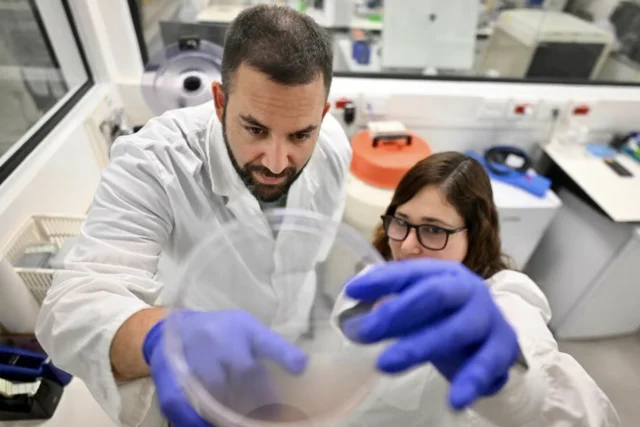
Researchers at the Technion-Israel Institute of Technology in northern Israel have developed an experimental treatment for one of the most aggressive forms of breast cancer, using engineered nanoparticles designed to help the body's immune system attack tumors.
The study, published this week in the medical journal ACS Nano, focuses on triple-negative breast cancer – a particularly aggressive disease that is often resistant to existing treatments. The researchers say the new approach successfully halted tumor growth in preclinical trials involving mice and could open the door to a new generation of cancer therapies.
The research was led by Ph.D. candidate Ofri Vizenblit, with the assistance of Ph.D. candidate Rawan Mhajne, under the supervision of Asst. Prof. Assaf Zinger, head of the Bioinspired Nano Engineering and Translational Therapeutics Laboratory in the Wolfson Faculty of Chemical Engineering. Zinger's research group, Zinger Labs aims to be a world leader in building nanoparticles that can carry many types of drugs, including mRNA, proteins, and small molecules, with the potential to change how diseases are treated.
The new treatment works differently from traditional therapies. Instead of directly attacking tumors, it changes the environment where cancer cells grow. The nanoparticles, called MPsomes, are designed to redirect cancer cells’ activity away from healthy white blood cells, helping the immune system focus on fighting the tumor.
“This is a conceptual shift,” the researchers explained. “The therapeutic efficacy does not stem from the release of an active substance, but from the biological information encoded on the surface of the nanoparticle.”
According to the study, the MPsomes interact with the body's natural immune system and provide biological signals that help suppress the growth of triple-negative breast cancer tumors.
The researchers noted that the nanoparticles are composed of materials recognized by the FDA as Generally Recognized as Safe (GRAS) and can be produced at a rate of 1.2 liters per hour, making them potentially suitable for individual patient use and future large-scale manufacturing.
However, the treatment remains in the early stages of development. So far, testing has been limited to animal models, and additional research and clinical trials will be required before the therapy could become available for use in human patients.
Zinger said, “Although we focused here on a specific type of cancer, this is a paradigmatic breakthrough that can lead to the development of new therapeutic platforms that are more effective and safer. I sincerely hope we will find the path to bring this invention to the clinic.”
The research was supported by the Israel Cancer Research Fund (ICRF), the Israel Science Foundation (ISF), the European Union (ERC Starting Grant), the Ministry of Innovation, Science and Technology (MOST), the Israel Cancer Association, the Russell Berrie Nanotechnology Institute at the Technion, and the Alon and Seiden Fellowships in nanotechnology and optoelectronics.
You might also like to read this: