Megiddo and the memory of mourning: a biblical geography that shaped Israel’s hope




When a place carries a story
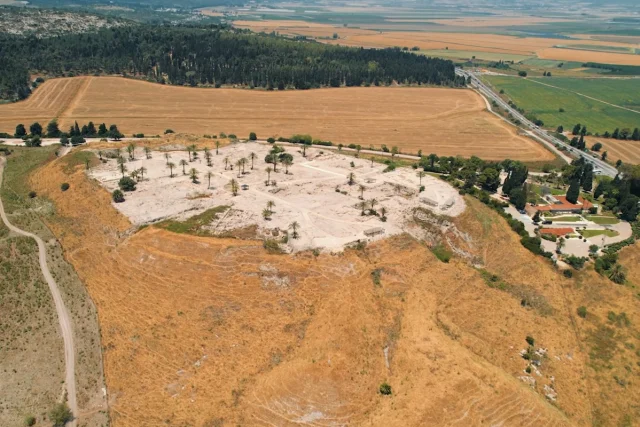
When many Christians today hear the name Megiddo, their thoughts immediately turn to Armageddon, the place associated with the final battle described in the book of Revelation. Yet for Jews living during the Second Temple period, the name evoked a very different memory – one of grief, tragedy, and national mourning.
The Bible often connects locations with powerful memories. Certain places become symbols because of events that occurred there. Such geographical analogies help readers understand later passages by recalling earlier stories tied to the same location.
Megiddo is one of those places. Long before it became associated with the last battle of history, it had already become a symbol of sorrow in Israel’s collective memory. The reason lies in the tragic deaths of two kings from the House of David.
The fragile hope of the Davidic Dynasty
The Kingdom of Judah existed for more than 400 years. During that entire time, only one royal family ruled the throne in Jerusalem: the House of David. There was only one brief interruption when Athaliah, the mother of King Ahaziah and a descendant of the northern royal house of Ahab, seized the throne.
This continuity was deeply connected to the promise God gave to David through the prophet Nathan:
“I will raise up your offspring to succeed you… and I will establish the throne of his kingdom forever” (2 Samuel 7:12–13).
Because of this covenant, the survival of David’s line was not merely a political matter – it was a theological one. Every time a king died unexpectedly or violently, the people feared that the promise might fail and that the royal line could come to an end.
Over the centuries, five kings of Judah were murdered. Three of them were killed by conspiracies within the kingdom and two by foreign enemies.
Remarkably, even after internal conspiracies, the dynasty survived.
Murders within the kingdom
The first king to be killed by internal enemies was Joash. Scripture tells us that Joash “did what was right in the eyes of the LORD” (2 Kings 12:2). Yet, despite his faithfulness, two of his own servants conspired against him and murdered him in Jerusalem. After his death, his son Amaziah became king.
Tragically, Amaziah met a similar fate. When a conspiracy formed against him in Jerusalem, he fled to Lachish, hoping to escape. But the conspirators pursued him and killed him there (2 Kings 14:19). His son Uzziah then ascended the throne.
Another victim of conspiracy was King Amon, a ruler who did evil in the eyes of the LORD. His servants assassinated him in Jerusalem (2 Kings 21:23). However, the people of the land responded by killing the conspirators and installing his son Josiah as king.
Despite these violent episodes, the Davidic line continued. This stability stands in sharp contrast to the Kingdom of Israel in the north, where not less than ten dynasties rose and fell through coups and assassinations.
Yet, two other royal deaths posed a far greater threat.
The first tragedy at Megiddo
The first occurred during the reign of King Ahaziah of Judah.
Ahaziah was the son of Jehoram of Judah and Athaliah, the daughter of the northern king Omri and sister of Ahab. This marriage alliance was intended to strengthen ties between Judah and Israel, but it ultimately brought disaster.
Ahaziah maintained close ties with his cousin Joram, the king of Israel. When Joram was wounded in battle against Aram, Ahaziah went to visit him in Jezreel.
During this visit, a dramatic political upheaval began. Jehu, a commander in Israel’s army, had just been secretly anointed king by a messenger from the prophet Elisha. Jehu launched a revolt against the house of Ahab.
He quickly executed Joram and Jezebel. In the chaos, Ahaziah also became a target. Jehu’s men wounded the king of Judah, who fled away. Ahaziah managed to reach Megiddo, but there he died from his wounds (2 Kings 9:27).
For the first time, Megiddo became associated with the death of a Davidic king outside the land of Judah.
But history would repeat itself.
The death of a righteous king
The second tragedy involved one of the most beloved rulers in Judah’s history: King Josiah.
Scripture gives Josiah extraordinary praise:
“Neither before nor after Josiah was there a king like him who turned to the LORD as he did – with all his heart and with all his soul and with all his strength” (2 Kings 23:25).
Josiah led sweeping reforms that restored proper worship in the Temple. During his reign, the Book of the Law was rediscovered, leading the nation back to covenant faithfulness.
Yet, his life ended suddenly and tragically.
When Pharaoh Necho of Egypt marched north to join a war, Josiah went out to confront him. The encounter took place at Megiddo, where the Egyptian forces killed the king.
Once again, a king of Judah had died at the same place. At Megiddo.
Megiddo had now witnessed the deaths of two Davidic rulers.
Megiddo as a symbol of national mourning
By the time of the prophet Zechariah, after the return from the Babylonian exile, the memory of Megiddo had become deeply embedded in Israel’s consciousness.
In chapter 12, Zechariah describes a future day when all nations will gather against Jerusalem. On that day, God will defend His people, but great mourning will occur when the people recognize “the one whom they pierced.”
To describe the intensity of this sorrow, the prophet uses a striking comparison:
“On that day the weeping in Jerusalem will be as great as the weeping of Hadad Rimmon in the plain of Megiddo” (Zechariah 12:11).
Megiddo had become a symbol of national grief, likely recalling the mourning after the death of King Josiah.
Yet, the biblical story does not end in sorrow.
Scripture reminds us that mourning will ultimately give way to redemption. The prophets consistently point to a day when God will restore His people, and when the promised Messiah from the line of David will bring salvation.
Thus, the place once associated with tragedy becomes part of the larger biblical story – a reminder that even the darkest moments in the nation’s history are woven into God’s redemptive plan.
You might also like to read this: