Trump could have re-established US leadership through ‘unconditional surrender’ of Iran; instead, he capitulated


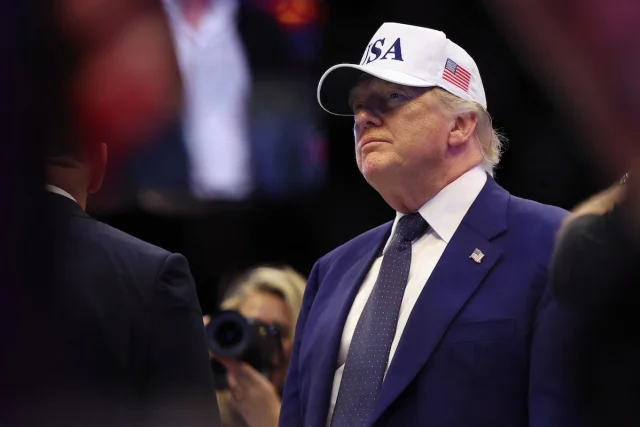
A recent post by Mosab Hassan Yousef, the former Hamas “prince” turned Israeli informant, is instructive in evaluating the deal between the United States and the Islamic Republic of Iran, even without knowing the specific terms.
Yousef notes that the deal can be evaluated as a failure without knowing the exact terms, but by looking at its stated results.
“Before the military campaign began on February 28th, Iran was under heavy sanctions while the Strait of Hormuz remained open. Now, the US is offering sanctions relief and access to frozen assets simply to reopen that same strait,” Yousef wrote on 𝕏. “This means America is paying a real price for a situation that already existed before the war.”
The Real Cost of Trump’s Emerging Deal with Iran
— Mosab Hassan Yousef (@MosabHasanYOSEF) June 14, 2026
The United States appears close to reaching an agreement with Iran. President Trump claims a deal may be signed as early as this weekend, though Iranian officials continue to push back on that timeline.
Before the military…
Yousef, who cannot be accused of not understanding the Islamic revolutionary mindset, notes that the practical outcome of this deal being signed will be the strengthening of Iran’s position in the region, with the concurrent weakening of the U.S., and those allied or tightly affiliated with it, such as Saudi Arabia, the United Arab Emirates, and especially Israel.
“The regime will emerge financially stronger and politically emboldened,” Yousef wrote, noting that would likely lead to a strengthening of Iran's proxies and an increased vulnerability for Sunni Arab monarchies “with their trust in American security guarantees significantly weakened.”
“A stronger Iran may also push Turkey to deepen its military presence in Syria, bringing Turkish forces closer to Israel’s northern border,” he continued. “If true, this deal would mean the United States has paid a significant price to return to a position that is actually worse than before the military campaign began.”
This assessment by Yousef is not only frank but is more damning for what it does not say.
The most significant loss in this deal is the loss of respect for and belief in the American will to use its military and technological superiority to enforce what it sees as right.
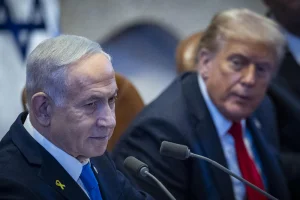
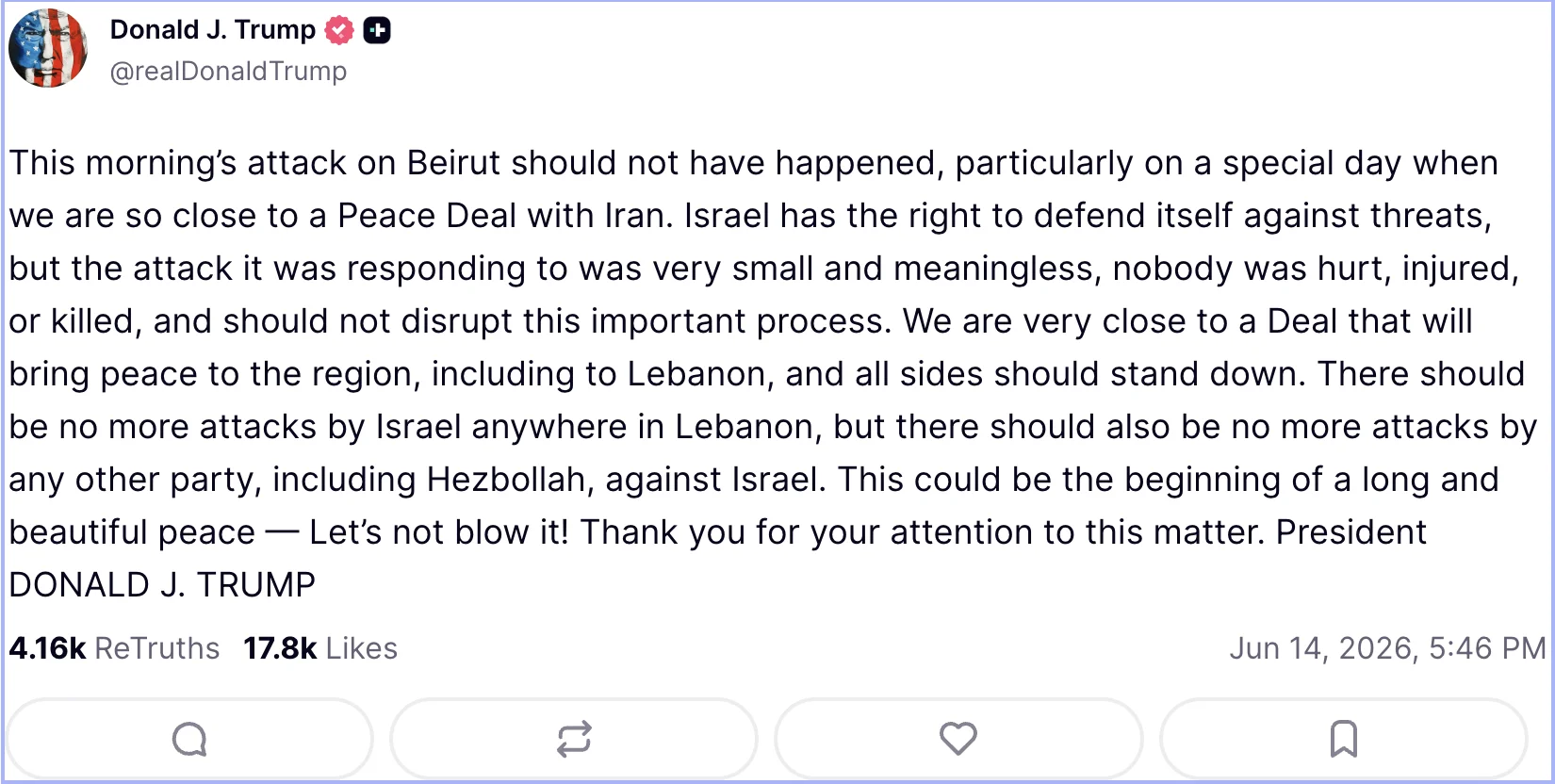
This was demonstrated when U.S. President Donald Trump slammed Israel for striking a Hezbollah command center in Beirut, following repeated drone and rocket attacks by the terror group.
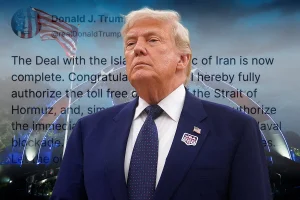
“This morning's attack on Beirut should not have happened, particularly on a special day when we are so close to a Peace Deal with Iran,” Trump wrote on Truth Social. The U.S. president criticized his ally in the fight against Iran, while failing to condemn Iran or Hezbollah for their continued attacks against Israel.
All the while, the IDF is eliminating the killers of American soldiers, but Trump is pleading for a peace deal with the sponsor of those killers.
🔴ELIMINATED: Ali Musa Daqduq, a senior Hezbollah commander who held a series of 5 senior positions within Hezbollah.
— Israel Defense Forces (@IDF) June 14, 2026
Daqduq played a central role in advancing terrorist attacks and combat operations against Israel and IDF soldiers. In 2007, he orchestrated the kidnapping and… pic.twitter.com/XWg6O2k5XR
Yousef is correct to criticize a Memorandum of Understanding that will not stop the Islamic Republic’s funding of “Death to America” proxies in Lebanon, Syria, Israel, and Yemen. Nor can we forget that some members of those Iranian proxies have already crossed the border into the United States, where they are, no doubt, planning terror attacks within the United States.
Trump’s display of weakness to the Middle East will likely far outstrip former U.S. President Barack Obama’s capitulation, because unlike Obama, Trump demonstrated that the U.S. can use force. However, he also demonstrated that the U.S. lacks the fortitude and will to use that military capability to secure a more favorable outcome.
During World War II, many Americans did not want to get involved in the fighting and once the U.S. entered the war, there were many who wanted the country to get out of the war.
The war involved far greater U.S. military casualties and was, many times, bogged down for weeks or months without seeing the hoped-for changes on the ground. However, there was a firm conviction among the U.S. leadership that what the military was doing was necessary and would eventually lead to a better outcome for all the nations suffering from the war.
That attitude is gone. The United States has become risk- and pain-averse. As our culture has abandoned the belief in transcendent values, it no longer believes in any values except personal comfort and enjoyment.
Unfortunately, the weakness of both the U.S. administration and the American people will lead to the deaths of more Americans. The enemies of the U.S., particularly the Islamic enemies of America and the West, have been waiting for evidence that the West has weakened enough to be pushed into collapse.
Western European leaders have largely demonstrated that this moment has already arrived in Europe. Trump’s unwillingness to stand firm, even when such a stance is unpopular, signals to those enemies that the United States is following the same path as European governments.
But the U.S. attempt to impose its weakness upon Israel – to force Israel to accept terms they believe undermine its security interests – will also lead to more Israeli deaths. The same enemy who shouts “Death to America!” also shouts “Death to Israel!”
Israel is surrounded by nations and groups who have dreamed of destroying it since 1948. U.S. backing, especially following the 1967 Six-Day War, was one of the things that kept some of them from trying. However, now that the U.S. is demonstrating that it views Israel’s self-defense as negotiable, that deterrence will begin to fade.
Last week, when questioned about Turkish President Recep Tayyip Erdoğan’s repeated threats against Israel, President Trump feigned ignorance, then praised Erdoğan, calling him a great friend, before saying that nothing would happen while he is president.
Trump’s unwillingness to stand firmly against the Islamic Republic, his willingness to ignore the aggression of Turkish forces against Kurds and other minorities in Syria, and his tolerance of jihadist Syrian President Ahmed al-Sharaa do not offer much reason to believe he would be willing to commit military support for Israel in the event of another attack along the lines of the 1973 Yom Kippur War.
The recent statements by U.S. Vice President JD Vance – that all wars are ultimately settled by negotiation – highlight a contrast with the mindset of Western leaders during World War II.
JD Vance:
— yogesh (@yogeshtwet) June 12, 2026
If you go back to WW2 or every major conflict in human history, they all ended with some kind of negotiation. pic.twitter.com/B7h4uqlk0r
This is technically correct: World War II did end with negotiations, but the terms of the negotiations were agreed upon after the imposition of empire-shattering force. Germany, Italy, and Japan agreed to unconditional surrender, because the West, particularly the United States, demonstrated both the ability and the willingness to prosecute that war until they had killed off every opposing soldier, politician, or leader.
Another comparison offers insight into the strategic failure that Trump is leading the U.S. into: the case of the Barbary pirates. From the 16th century onwards, Muslim raiders from the Ottoman-controlled cities of Tunis, Algiers, and Tripoli engaged in raids against Western naval vessels, taking slaves and seizing cargo.
Several Western states engaged in bribery, paying the Ottoman pirates to leave their vessels alone. While not always effective, this lowered the number of attacks on vessels from those nations. However, with the expansion of the Barbary pirates into the Atlantic Ocean, they began to attack American merchant vessels.
Rather than negotiate or pay bribes, the United States, along with several European partners, launched a series of wars against the Barbary pirates, which led to the pirates' defeat, safety for Western vessels, and also produced a memorable line in the hymn of the U.S. Marine Corps.
Trump had an opportunity to reinforce a policy of deterrence after the Houthis, an Iranian proxy group in Yemen, began attacking vessels traversing the Gulf of Aden and the Red Sea off Yemen’s coast.
Instead, Trump launched a short-lived series of strikes against the Houthis, called Operation Rough Rider, before declaring an agreement had been reached. This agreement apparently took the Houthis by surprise, but it involved the U.S. abandoning the operation without achieving its objectives.
Similarly, when Iran declared the Strait of Hormuz closed, President Trump announced a U.S. blockade of vessels heading to or from Iranian ports. Some time later, the president announced Project Freedom to help bring stranded vessels through the Strait. However, this project was canceled hours later, after Trump realized it would likely require that the U.S. once again begin engaging in military operations against Iran.
Instead, after one of the most stunning and successful aerial campaigns in recorded history, Trump did not push his advantage and demonstrate the will to use overwhelming force until the enemies of the U.S. agreed to unconditional surrender, as happened in World War II.
No, the world’s most powerful military demonstrated the ability, but not the will, to defeat the suicidal Islamic death cult leading Iran, which dreams of destroying both Israel and the United States. As a result, more Americans, more Israelis, and more Iranians will lose their lives.
When this happens, it will be the result of President Trump’s failure to grasp the Middle East mindset – and to act accordingly.
You might also like to read this: