Israel skeptical as 5th round of Lebanon talks begins after Hezbollah violates ceasefire again
Ambassador Leiter blasts US for allowing Tehran to link Iran and Lebanon ceasefires




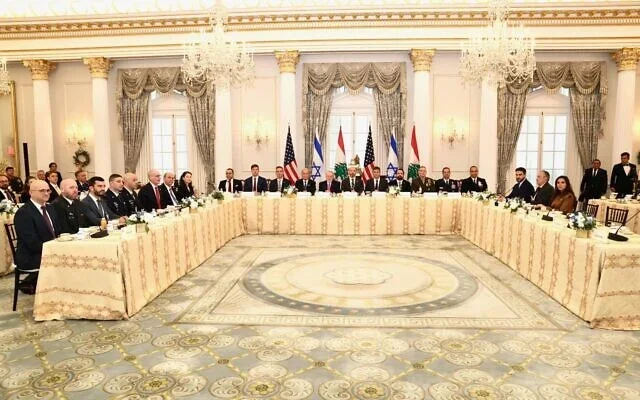
Israel’s representative in the United States expressed deep skepticism about the prospects for success in talks with Lebanon on Tuesday, as the fifth round of negotiations between Israel and Lebanon kicked off in Washington, D.C., under the shadow of the U.S.-Iranian Memorandum of Understanding (MOU)
In a Hebrew-language statement ahead of the talks, Israeli Ambassador to the U.S Yechiel Leiter strongly criticized the U.S. for allowing the Iranian regime to connect the fighting against Hezbollah to the MOU after the main goal of the talks with Lebanon had been to separate the issues and remove Iranian influence from Lebanon. Leiter described the situation as a “train wreck.”
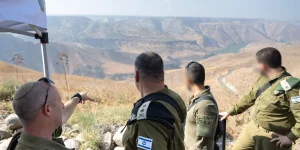
For the first time, both sides deployed sizeable military delegations, with talks reportedly focusing on “pilot areas” from which the IDF would withdraw to allow the Lebanese Armed Forces (LAF) to deploy and attempt once again to disarm Hezbollah, dismantle its infrastructure, and prevent its re-emergence.
However, the LAF’s personnel reportedly refused to be photographed with members of the Israeli delegation. A picture taken ahead of the talks showed the Lebanese side represented only by its diplomatic staff, with several chairs left empty.
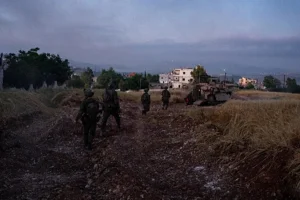
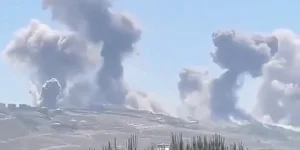
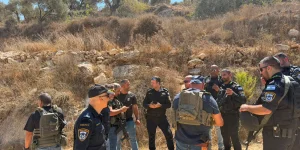
Hours before the talks, the fragile ceasefire in southern Lebanon again broke down after several days of relative quiet. The IDF said its troops fired toward Hezbollah terrorists in southern Lebanon in two separate incidents in the area of the Ali al-Taher Ridge.
In the first incident, the IDF released footage and reported striking "a cell of armed terrorists operating in close proximity to IDF soldiers in the Security Zone."
🎯STRUCK: Armed terrorists who posed an immediate threat to IDF troops operating in the Security Zone in southern Lebanon.
— Israel Defense Forces (@IDF) June 23, 2026
Following the identification, the soldiers struck the terrorists in order to remove the threat. pic.twitter.com/9Ta7qMFPNP
In the second incident, IDF soldiers reportedly "identified four Hezbollah terrorists riding a bulldozer and a motorcycle who had crossed into the security zone and approached the soldiers, posing an immediate threat."
After they didn't heed warning shots and calls, "additional fire was conducted in order to remove the threat. Hits were identified," the IDF said.
Leiter described Israel’s approach to the talks. “Four rounds ago, we all boarded the same train… The train was headed in a very clear direction: full peace between the countries; Iran out, and its malign influence out of Lebanon; the dismantling of Hezbollah; peace and security for Lebanon and Israel.”
“Today, that train is at risk of derailing. I hope we can put it back on track. The underlying assumption was that Iran was out, and that the central discussion concerned Lebanon and Hezbollah – not the question of how much Iran can restrain Hezbollah. That is not Iran's role. Its role is to leave Lebanon. The role of the Lebanese government is to exercise its sovereignty. Sovereignty means that Iran will no longer be involved in activity or malign influence in Lebanon.”
Why do you think Hezbollah's tunnel shafts are so close to civilian homes, and sometimes even directly inside them?
— Ambassador Yechiel (Michael) Leiter (@yechielleiter) June 22, 2026
Correct: to murder, maim, intimidate, and blackmail, just like the madmen of Tehran who control them.
No Hezbollah = peace between Israel 🇮🇱 and Lebanon 🇱🇧 pic.twitter.com/dcs6fK2rDN
While Lebanon’s justice minister, Adel Nassar, appeared to agree with Leiter’s remarks, President Joseph Aoun said in a statement: “We will accept nothing less than the end of the Israeli occupation of southern Lebanon and the removal of all forms of foreign tutelage at the same time, because our only choice is our national sovereignty,” without explicitly mentioning Hezbollah or Iran.
Speaking to Sky News Arabia, Nassar singled out the Iranian influence in his country, stressing that Lebanon has the right to prepare a legal case demanding full responsibility for all damages resulting from its interference, including the training, arming, and financing of a military system operating under its command, referring to Hezbollah.
A key issue for Israel is the U.S.-backed de-confliction mechanism, outlined in a statement by Qatar and Pakistan and apparently without Israel being consulted.
Leiter noted that Israel hopes the MOU succeeds, while noting, “Israel is not in conflict with Lebanon. Therefore, deconfliction is not the issue. All that is required is coordination with Lebanon. The only issue is Hezbollah. Hezbollah must be defeated and removed from the equation.”
Pointing to the joint statement at the end of the last round of talks, he asked, “Is the dismantling of Hezbollah still the basis of these discussions?...
He continued: "Iran is expected to benefit from a flow of funds under the MoU. How will we ensure that these funds do not find their way to Hezbollah? If we cannot guarantee that, then all the words we agree upon here will change nothing, because Hezbollah will simply rebuild itself.”
In another worrying development for Israel, Qatar appears to be increasingly involved in the Lebanon file.
The Hezbollah-affiliated newspaper Al-Akhbar reported that a proposal for Qatar to mediate indirect negotiations between Israel and Hezbollah was approved during the U.S.-Iran talks in Switzerland earlier this week.
In addition, the Lebanese newspaper Nidaa Al-Watan reported that the de-confliction mechanism will also include representatives from Qatar alongside Lebanon, the U.S., Iran and Pakistan.
Help more people find our reporting from Israel! Leave a quick Google review of our website HERE .
You might also like to read this: