Israel signals stable ceasefire with Hezbollah in Lebanon, IDF lifts security instructions for northern towns
Troops continue to criticize political limitations on strikes against terrorists






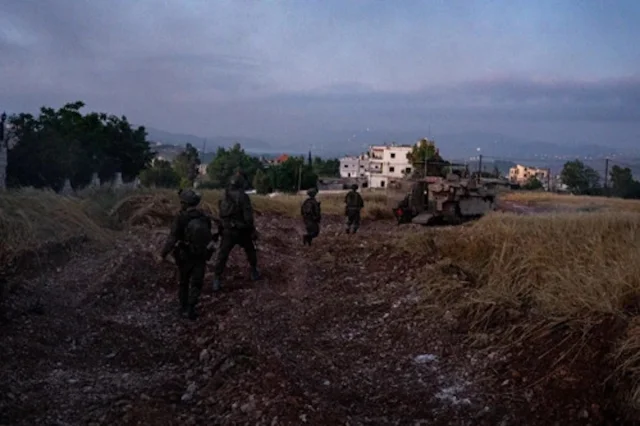
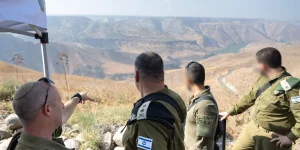
Following heavy Iranian and U.S. pressure to wind down the military operation against Hezbollah in southern Lebanon, Jerusalem has sought to placate Washington by stressing that Israeli troops are currently observing a ceasefire, while strongly rejecting Tehran’s calls for an immediate withdrawal.
At the same time, the Israeli government has faced a torrent of criticism as Israeli media outlets have reported that soldiers in the field are allowed to respond only when fired upon, while facing high hurdles to order airstrikes against attempts to prepare attacks against them.
Starting from Monday, the Israeli military has lifted all remaining defensive guidelines for northern Israel and announced it would release the emergency platoons guarding towns along the northern border next week.
Prime Minister Benjamin Netanyahu stressed in a statement released on Monday that Israeli troops “in southern Lebanon have full freedom of action to thwart any direct or developing threat to them or to the residents of the North. The IDF has no restrictions on this matter.”
“My stance is firm on our remaining in the security zone in southern Lebanon for as long as is required in order to protect the residents of the North and all citizens of the state,” he added.
According to a report by Channel 12 on Monday, Netanyahu is “panicking” over a new Lebanon deconfliction mechanism that apparently emerged from the US-Iran talks without any input from Israel. The prime minister is working to protect Israel’s interests in the matter, a senior Israeli official told the outlet.
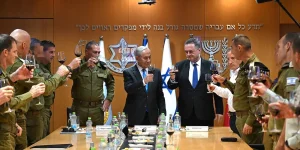
Defense Minister Israel Katz reiterated in his own statement that “the security of Israel’s citizens and the safety of our forces stand above every other consideration,” responding to claims that the IDF has been ordered to significantly decrease its strikes in Lebanon following Iranian threats to ditch the talks with U.S. representatives in Switzerland.
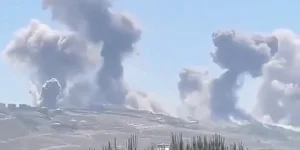
According to reports by Israeli and Lebanese media outlets, the IDF has not carried out strikes in Lebanon for over 48 hours.
Despite Netanyahu’s and Katz’s statements, Israeli and Lebanese media outlets have reported that Israel is offering to carry out “limited withdrawals” in certain areas as goodwill measures as part of the negotiations with Beirut.
“There is no American demand for either a small or large withdrawal,” an Israeli source told Ynet News. “Since the last round, we have been discussing 'pilot zones,' where the Lebanese Army can demonstrate its ability to make areas free of Hezbollah. This is one of the issues that will be discussed in negotiations beginning Tuesday.”
“The pilot project will be accompanied by the Americans to ensure the Lebanese Army's success in the mission,” the source added.
Reacting to the apparently stable ceasefire, the IDF Home Front Command lifted security restrictions along the northern border, the last area in the country where gathering limits and other guidelines were still in effect. This is the first time since the start of May that residents of the area can return to full normalcy.
“I hope this marks the beginning of a long period of greater safety and quiet for the residents of the north and for the State of Israel as a whole,” the head of the Ma'ale Yosef Regional Council, Shimon Guetta, told Ynet News.
“Now is the time to invest in rebuilding the north, strengthening infrastructure, and creating a social and economic foundation that will allow residents to return to full lives and growth,” Guetta urged.
In a move that already proved more controversial, the IDF also announced its intention to demobilize the defense platoons stationed in towns along the border, which had been called up for reserve duty with the start of Operation Roaring Lion.
Moran Dadoush, a member of the local security squad in Moshav Goren, said the move meant “abandoning our homes. The message that members of the northern security squads received today is a slap in the face to everyone who has protected our homes over the past three years.”
Speaking to Ynet, Dadoush criticized the sudden nature of the IDF’s order to demobilize, “as if they were shutting down a recreational club and not ending the defense of an entire region.”
The local defense squads are mostly made up of residents of the respective towns, who are mobilized, trained and equipped by the IDF to act as the first line of defense for towns in the immediate vicinity of the border.
Similar arrangements exist for towns along the other borders of the state, for example, the Gaza Strip, where some of the squads saved their villages during the Hamas invasion on Oct. 7.
Dadoush continued, “The ink on the ceasefire agreements isn't even dry yet. The quiet here is an illusion, tense and fragile, and the first decision of the system is to dismantle the last line of defense of our communities?”
“Does anyone up there really think that on Sunday our families will feel safe knowing there is no one who will be first to respond in the event of an incident? You can't buy an illusion of calm at the expense of our real security. Releasing the local security squads right now, without a transition period and without proven security on the ground, is not a return to normal life. It's negligence,“ he concluded.
You might also like to read this: