US-Iran conclude first round of talks, agree on roadmap for deal within 60 days
‘De-confliction cell’ established to halt military operations in Lebanon - Qatar, Pakistan say





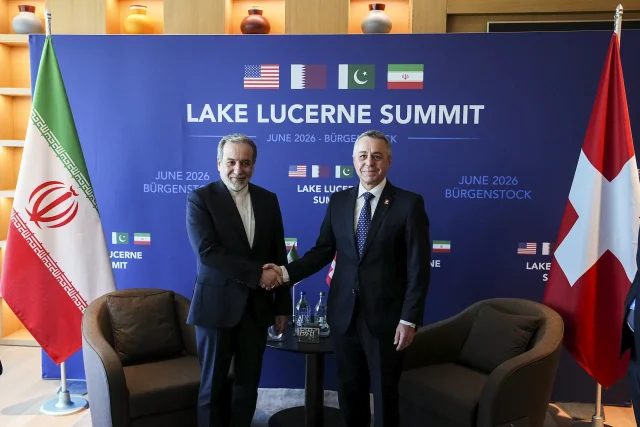
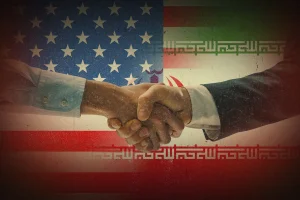
The United States and Iran have agreed on a roadmap for talks over the next 60 days, Qatari and Pakistani mediators announced early on Monday morning.
“The High Level Committee has agreed upon a roadmap towards reaching a final deal within 60 days, laying the foundation for the immediate commencement of further technical talks,” the two nations said in a joint statement.
“The Lake Lucerne Summit was conducted in a positive and constructive atmosphere. Encouraging progress has been made including the creation of a mechanism for further technical talks.”
Technical talks between the two sides will continue for the rest of the week in the Qatari-owned Swiss mountain resort of Bürgenstock, the statement added.
“Chief negotiators will report regularly to the High Level Committee and lead working groups focused on nuclear, sanctions, and a monitoring and dispute resolution group to ensure the effective implementation of the MoU, and on other matters.”
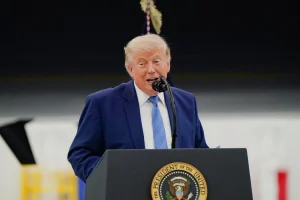
Iranian media had reported that their country’s delegates departed following the publication of harsh comments by U.S. President Donald Trump on Sunday, in which he said the U.S. could strike Iran again if the Islamic Republic did not “immediately stop their highly paid PROXIES in Lebanon from causing trouble.”
President Trump also threatened the Iranian regime over reports that the Islamic Revolutionary Guard Corps (IRGC) had closed the Strait of Hormuz. Speaking to Fox News’ Trey Yingst, Trump appeared to threaten the Iranian delegation.
“You close it and you won't have a country,” Trump said to Yingst. “You won't even make it back to your f—king country.”
However, a few hours after the Iranian reports, claiming the delegation had left, the statement by the Qatari and Pakistani mediators was released.
A U.S. diplomat involved in the discussions told Reuters that Iran did not leave the talks but refused to sit in the room with the American delegation after Trump’s comments. Instead, the delegation passed messages with members of the Qatari and Pakistani mediation teams.
According to Iran's Tasnim news agency, negotiations on nuclear matters require the United States to deliver on certain parts of the Memorandum of Understanding (MOU), including the release of frozen Iranian assets and U.S. waivers authorizing Iranian oil exports.
Several reports in the international press and on social media claimed that the Iranian delegation refused to greet the American delegation or to participate in a photo-op at the start of the talks.
Following the release of the Qatari and Pakistani statement at the end of the first round of talks, videos on social media also showed Qatari Prime Minister Sheikh Mohammed bin Abdulrahman Al Thani refusing to greet or shake hands with U.S. Vice President JD Vance.
Look how Qatar's Prime Minister totally snubs and embarrasses VP Vance.
— Eitan Fischberger (@EFischberger) June 21, 2026
Qatar is an enemy state. It spits on American sovereignty and laughs at the naïveté of its leaders.
Time to treat Qatar like the Islamist hellscape dictatorship that it is.pic.twitter.com/5dMPbFXnsN
The MOU calls for the reopening of the Strait of Hormuz – a strategic waterway for global energy shipments – as well as ending all hostilities, including in Lebanon. Israel has continued to strike Hezbollah, one of Iran’s largest proxies, in retaliation for attacks on Israeli targets.
The Iranian regime argues that the U.S. has failed to meet its commitment to halt the fighting against Hezbollah in Lebanon. Over the weekend, Iranian sources claimed to have again imposed a blockade on the Strait. Iranian media reported that the negotiations would not cover substantive issues, including Iran's nuclear program, until the fighting in Lebanon has ceased.
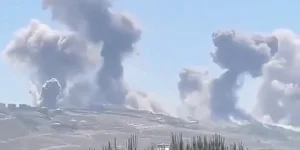
Fighting between Israel and Hezbollah has persisted, despite several ceasefire agreements being announced.
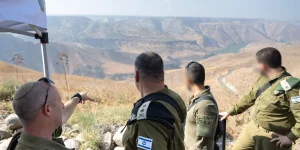
Israeli leaders have consistently stated that IDF troops will remain in southern Lebanon as long as necessary to guarantee the security of Israel’s northern communities.
Both Prime Minister Benjamin Netanyahu and Defense Minister Israel Katz have stated that there are no restrictions on Israeli soldiers defending themselves in the security zone, nor while conducting strikes against Hezbollah targets in the area, which was meant to be cleared of Hezbollah presence under the previous Lebanon ceasefire deal.
Speaking at the JNS International Policy Summit, Netanyahu said Israel will remain in the security zone.
“As long as we need to protect our people, we will remain in the security zone in south Lebanon,” he said. “And the reason is perfectly understood. No country would be asked to do otherwise.”
The Qatari and Pakistani statement reported that “a de-confliction cell” was established during the talks to end the fighting in Lebanon.
“The parties agreed on the creation of a de-confliction cell, between the parties, the Lebanese Republic and facilitated by the Mediators, to ensure the adherence of the termination of military operations in Lebanon,” the joint statement read.
Notably, the statement made no mention of either Hezbollah or Israel, neither of which are represented in the U.S.–Iran talks.
While the Iranian regime has accused the U.S. of failing to rein in Israel, the U.S. and Israel insist that Hezbollah is following orders from Iran in carrying out attacks against Israeli targets.
I lived in Lebanon for 15 years, and in all those years I never missed a speech by Hassan Nasrallah.
— Dan Burmawi (@DanBurmawy) June 21, 2026
I read the Iranian-funded Hezbollah newspaper Al-Akhbar every day.
I met with people who personally knew Nasrallah and heard directly from them about the man.
After all… https://t.co/G1oYc7DTzG
Over the weekend, Hezbollah launched over 50 rockets, drones and other projectiles at IDF soldiers in southern Lebanon within hours of a ceasefire agreement having been announced.
During the talks in Switzerland, Vice President Vance attempted to downplay the significance of the continued attacks, saying, “These things are always a little bit messy.”
You might also like to read this: