The names born from tears
Part 1: The twelve tribes and Israel's Messianic calling in a time of testing


Israel has always learned its deepest theology in narrow places.
Between Pharaoh and the sea. Between Sinai and the wilderness. Between exile and return. Between promise and delay. Between a sealed tomb and the third morning.
And now, again, Israel lives in the narrow place.
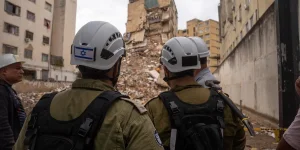
The land is ancient, but the grief is immediate. Northern communities listen for sirens. Soldiers move between home and front. Families measure days by news alerts. Displaced people wonder when ordinary life can be trusted again. Even ceasefire announcements now arrive with conditions, exceptions, violations, and the fear that quiet may only be an interval between alarms.
For Messianic Jews in Israel, this moment carries a particular weight. You do not read the Tanakh as borrowed literature. You read it as family memory. Abraham is not merely an example. Moses is not merely a theme. David is not merely a type. Isaiah is not merely a prophet Christians quote. These are the voices of your people, your Scriptures, your covenantal ache.
And yet you confess the staggering thing: that the Messiah of Israel has come; that His name is Yeshua; that He is the Son of David, the Lion of Judah, the suffering Servant, the pierced One, the Lamb standing as though slain; that He is not the cancellation of Jewish hope, but its wounded and resurrected center.
That is why the twelve tribes matter now.
They are not a list. They are not a chart. They are the names God chose to carry Israel's sorrow, calling, fracture, judgment, mercy, and future. They begin in Genesis with a family so wounded that no modern counselor would call it promising. They move through slavery, wilderness, monarchy, exile, return, Messiah, dispersion, and hope. They end in Revelation with their names engraved on the gates of the New Jerusalem.
Between Jacob's deathbed and John's vision, every tribe is wounded. Every tribe fails. Every tribe is scattered. And still, at the end, the names remain.
That is the mercy Israel needs. That is the mercy Messianic Jews in Israel are called to embody. The God of Israel does not engrave perfect names on His city. He engraves redeemed ones.
Before Israel Was a Nation, Israel Was a Cry
The tribal story begins not with borders, armies, flags, kings, priests, or prophets.
It begins with Leah.
Before Israel was a national question, Israel was a household wound. Before there was a throne in Jerusalem, there was an unloved woman in a tent.
Jacob loved Rachel. Leah knew it. Scripture does not soften the humiliation. Genesis says the Lord saw that Leah was unloved. That is the beginning of tribal Israel: not human excellence, but divine attention.
Then Leah bears Reuben. His name carries the sound of seeing: "See, a son." Leah says, "Because the Lord has looked upon my affliction; surely now my husband will love me" (Genesis 29:32).
Then comes Simeon, tied to hearing: "Because the Lord has heard that I am unloved" (Genesis 29:33).
Then Levi, tied to attachment: "Now this time my husband will be attached to me" (Genesis 29:34).
Then Judah: "This time I will praise the Lord" (Genesis 29:35).
The first four tribal names form a pilgrimage of the soul: God sees me. God hears me. God draws near to me. Therefore, I will praise Him.
This is not merely a naming pattern. It is revelation. Israel's tribal architecture is built first out of the prayers of a woman whose pain was invisible to her household but not to heaven.
That matters now because war makes people feel unseen. The bereaved feel unseen. The wounded soldier feels unseen. The hostage family feels unseen. The displaced family feels unseen. The young Israeli believer in Yeshua who is treated as suspect by his own people can feel unseen. The Arab follower of Yeshua grieving under the same sky can feel unseen. The Messianic congregation serving faithfully while misunderstood by Jews and Christians alike can feel unseen.
But Reuben stands at the doorway of Israel's story and says: God sees.
Simeon follows and says: God hears.
Before Israel is strong, Israel is noticed. Before Israel is organized, Israel is loved. Before Israel receives commandments, Israel is seen.
Jacob's Deathbed: Blessing as Prophecy and Warning
The twelve tribes are born in Genesis 29 and 30, but they are interpreted in Genesis 49.
There, old Jacob gathers his sons around his deathbed. The man who wrestled with God, deceived his father, fled his brother, buried Rachel, grieved Joseph, and lived long enough to see providence rise out of betrayal now speaks over the future of Israel.
His words are not sentimental. They are blessings, but some blessings arrive like a blade.
Reuben, the firstborn, is unstable as water. Simeon and Levi are rebuked for violence. Judah receives the royal promise: the scepter will not depart from him. Dan will judge, yet also become a serpent by the way. Joseph is a fruitful bough whose branches run over the wall. Benjamin is a ravenous wolf.
This is Israel in miniature: dignity and danger, promise and wound, calling and consequence.
Jacob does not flatter his sons. He names them truthfully. That is part of biblical love. Covenant does not mean God pretends His people are innocent. It means He refuses to abandon them when they are not.
Messianic Jews in Israel know this tension. To love Israel biblically is not to romanticize Israel. It is to love her as the prophets did: fiercely, truthfully, covenantally, with tears in the eyes and fire in the bones. Jacob's deathbed teaches this: a blessing that cannot tell the truth is not a biblical blessing.
Judah: Praise After the Wound
Judah is the turning point.
With Reuben, Simeon, and Levi, Leah's words circle around her sorrow. She wants to be seen. She wants to be heard. She wants to be loved. But when Judah is born, the direction changes: "This time I will praise the Lord."
Judah is not praise before pain. Judah is praise after pain.
That is why Judah can carry kingship. Biblical praise is not denial. It is not pretending the wound is small. Praise is the refusal to let the wound become god. Praise does not say, "There is no grave." Praise says, "The grave is not Lord."
From Judah comes David. From David comes the royal promise. From that royal promise comes Yeshua, the Lion of the tribe of Judah and the Root of David (Revelation 5:5).
For Messianic Jews in Israel, this is identity-defining. Faith in Yeshua is not a Gentile detour away from Israel's hope. It is the confession that Israel's hope has a Jewish body, Jewish blood, Jewish Scriptures, Jewish wounds, and a Jewish resurrection.
Yeshua does not hover above Israel as an idea. He comes through Judah. He is circumcised into Israel. He keeps Israel's feasts. He teaches from Israel's Scriptures. He weeps over Jerusalem. He dies under a Roman sign naming Him King of the Jews. And He rises as Israel's Messiah and the nations' Lord.
Judah teaches the remnant how to praise in wartime: not with cruelty, not with slogans, not with contempt for enemies, but with holy stubbornness. Praise is what faith does when peace has not yet arrived. Praise is how Israel breathes in the smoke.
Levi: Longing Turned into Priesthood
Levi's name is tied to attachment. Leah hoped Jacob would finally become attached to her. Yet God took that longing and transfigured it. Levi became the priestly tribe, attached not merely to a husband's affection but to the service of the Lord.
This is one of Scripture's tender mercies: God does not waste longing. He purifies it. He redirects it. He takes the ache to be loved and turns it into the vocation to love.
The Levites carried the ark. They guarded the sanctuary. They taught Torah. And the high priest wore the names of the twelve tribes over his heart on the breastplate of judgment (Exodus 28:15-21).
Not on his back, as if Israel were merely a burden.
On his heart.
Twelve stones. Twelve names. Twelve histories. Twelve colors. One people carried into the presence of God.
That image should govern how Messianic Jews speak, pray, and serve. Israel is not a theological puzzle to be solved. Israel is not a headline. Israel is not a platform. Israel is a people carried on the heart of God.
In Yeshua, the priestly image reaches its fullness. He is the greater High Priest, not entering the earthly sanctuary with another's blood, but entering the heavenly reality by His own. He carries His people not as stones sewn into fabric, but as names engraved in His wounds.
For Messianic Jews in Israel, Levi is a call: become priestly in a fractured nation. Intercede when others only argue. Bless when others only condemn. Serve when others only explain. Tell the truth, but do not enjoy the pain of telling it. Defend Israel, but do not let defense harden into spiritual arrogance. Love the Jewish people, but do not flatter them. Love the nations, but do not dissolve Israel into them.
A priestly people does not stand above the wounded. It kneels beside them.
The Camp Around the Presence
In the wilderness, the tribes were not scattered randomly. They were arranged around the tabernacle (Numbers 2).
Judah camped to the east. Reuben to the south. Ephraim to the west. Dan to the north. The Levites encircled the sanctuary. The cloud of God's presence stood at the center.
That arrangement was theology in geography.
Israel was not held together first by military convenience, ethnic sentiment, political strategy, or shared fear. Israel was held together by the presence of the Lord. The tribes had different banners, different positions, different callings, different histories. But they were ordered around one center.
This is a word for the Messianic body in Israel now. You will not be preserved merely by shared anxiety, shared ethnicity, shared politics, shared trauma, or shared enemies. You will be preserved by the presence of God in Messiah. The question is not merely where each congregation stands on the map. The question is what stands at the center.
If fear is at the center, the camp will fracture. If resentment is at the center, the camp will harden. If nationalism is at the center, the camp will lose holiness. If rootless universalism is at the center, the camp will lose Israel. If Yeshua is at the center, the tribes can keep their names without becoming enemies.
The wilderness teaches this: the people of God must camp around the presence, or they will eventually dance around a calf.
That is Part 1's word to Israel's Messianic remnant: God sees, God hears, God draws near, and God calls His people to praise and priestly service in the narrow place. The tribes were not born from perfect conditions. They were born from tears. But the God who began Israel's story in tears is the same God who will finish it in glory.
You might also like to read this: