10-day ceasefire in Lebanon begins after intensified Hezbollah strikes wound 3 Israelis
IDF troops stay inside 10km-deep 'buffer zone' in southern Lebanon, retain right to strike 'planned, imminent or ongoing attacks'




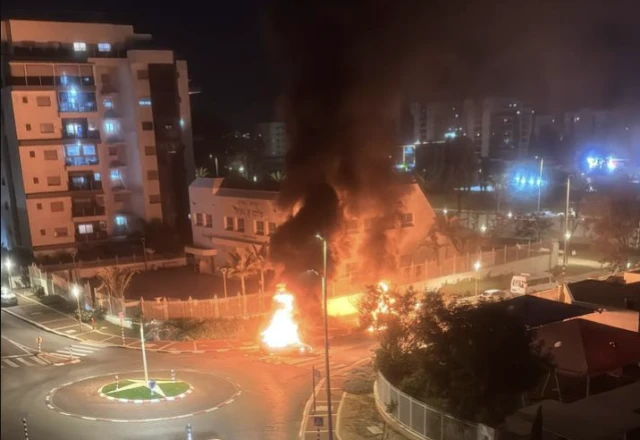
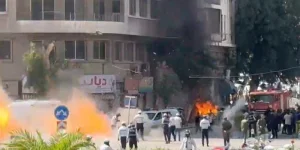
The 10-day ceasefire between Israel and Hezbollah in Lebanon announced by U.S. President Donald Trump on Thursday went into effect at midnight, after Hezbollah wounded at least three Israelis in rocket attacks shortly before the deadline.
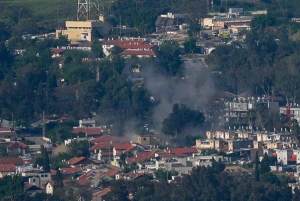
Rocket barrages seriously wounded two Israelis in the city of Karmiel, while another man suffered moderate wounds in Nahariya.
In a statement shortly before midnight, the Israel Defense Forces said it destroyed the launchers used by Hezbollah, adding that it had struck over 380 Hezbollah targets over the preceding 24 hours.
“The IDF is on high alert in defense and will operate in accordance with directives from the political echelon,” the IDF said, before a tense quiet settled over northern Israel.
“I hope Hezbollah acts nicely and well during this important period of time,” Trump wrote overnight on Truth Social. “It will be an GREAT moment for them if they do. No more killing. Must finally have PEACE!”
“I hope Hezbollah acts nicely and well during this important period of time. It will be an GREAT moment for them if they do. No more killing. Must finally have PEACE! Thank you for your attention to this matter.” - President DONALD J. TRUMP pic.twitter.com/PFNse33GVb
— The White House (@WhiteHouse) April 16, 2026
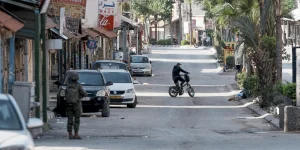
In the morning, Lebanese media reported that, contrary to instructions from the Lebanese and Israeli militaries, thousands of southern Lebanon's residents began returning to their homes, causing large traffic jams on the highways leading south.
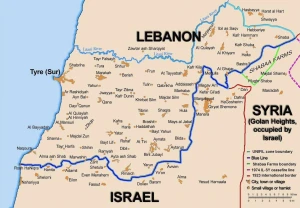
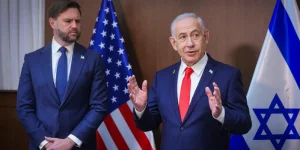
Under the terms of the agreement, the Israeli military remained in control of a roughly 10 km strip along the border. Prime Minister Benjamin Netanyahu stated, "This is a security buffer that starts at the sea and continues to Mount Dov and the foothills of Mt. Hermon, up to the Syrian border. This is a security strip ten kilometers deep, which is much stronger, more intense, more continuous, and more solid than what we had previously. That is where we are and we are not leaving.”
Netanyahu continued, “This allows us, first and foremost, to block the danger of an invasion into our communities, and secondly, it allows us to prevent direct anti-tank fire into the communities. The residents are now protected from these two dangers.”
“Of course, there are still problems; They (Hezbollah) still have rockets left. We will have to deal with that as well, as part of the progress toward a security agreement and a continuous peace treaty,” he acknowledged.
According to IDF sources cited by Army Radio, the IDF supports the ceasefire, with senior officials saying, “There is an opportunity here… We want the Lebanese state to take responsibility for the situation and prepare a plan to disarm Hezbollah.”
The Israeli military believes that the current operation has reached its objectives, while broader goals – including the disarmament of Hezbollah by the IDF – would require occupying the entire country, which is not considered to be feasible. “The ceasefire is the right move. Whether it will prove to be good – we’ll know in a year,” a security official said.
Military officials noted that maintaining freedom of action remains a key priority for the IDF.
According to the ceasefire terms published by the U.S. State Department: “Israel shall preserve its right to take all necessary measures in self-defense, at any time, against planned, imminent, or ongoing attacks,” while refraining from “any offensive military operations against Lebanese targets.”
The November 27, 2024 ceasefire agreement was considerably better than this.
— David Daoud (@DavidADaoud) April 17, 2026
That document's flaw was not intrinsic. It included Lebanon's obligation to disarm Hezbollah. Its flaw was depending upon a demonstrably unable/unwilling Lebanon to oversee Hezbollah's disarmament. https://t.co/TMIrJi09L3
However, David Daoud, senior fellow at the Foundation for Defense of Democracies (FDD), noted that the wording of the new ceasefire grants Israel less freedom of action than the 2024 ceasefire, which noted that Israel’s “inherent right of self-defense” wasn’t limited only to “planned, imminent, or ongoing attacks.”
“Coupled with Lebanon's explicitly stated obligation to begin disarming Hezbollah and dismantling its infrastructure, this allowed Israel to continue operating in Lebanon in response to 1) Hezbollah's regeneration or rearmament and 2) Lebanese inaction – the combination of which constituted a serious violation of the ceasefire agreement and entitled Israel to employ self-help measures,“ he wrote on 𝕏.
Many Israelis, including representatives of the northern residents and opposition leaders, have expressed concerns about a repeat of the last ceasefire, when the Lebanese government publicly praised its own efforts to disarm Hezbollah before the terror group again launched strikes from the same areas the government claimed had been brought under control.
Notably, the 10-day ceasefire agreement doesn't include a robust statement that Beirut intends to disarm Hezbollah, but only claims it will "take meaningful steps to prevent Hezbollah... from carrying out any attacks, operations, or hostile activities against Israeli targets," and that it understands that activities by "non-state armed groups," meaning Hezbollah, "must be curtailed, such that the only forces authorized to bear arms in Lebanon" will be the official security forces.
To allay Israeli fears, the U.S. intends to be actively involved in the disarmament of Hezbollah this time, a senior Israeli official told i24 News, without providing details.
“Donald Trump wants this to happen, so this time the U.S. will be much more involved,” the official said, adding that, due to the substantial blows suffered by Hezbollah over the past weeks, this is “a much better situation overall” compared to November 2024.
“Forces are deployed from Naqoura to Syria and they are not leaving. In addition, Iran is in a much weaker position in terms of its ability to help rebuild the organization,” he said.
“For now, this is a ten-day ceasefire. If it is to continue, the burden of proof lies with Lebanon and Hezbollah.”
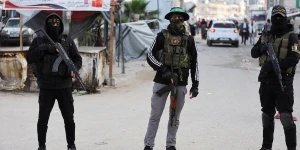
For its part, Hezbollah has already clarified that it is only interested in stopping the Israeli military strikes without making any concessions in return.
A senior Hezbollah official reportedly told NBC News that its leaders are satisfied with the ceasefire, but have no intention of disarming. "The war has only strengthened our determination,” he declared.
You might also like to read this: