With negotiations stalled, Iran diplomat says country will charge 'service fees' for Hormuz transit
Iranian officials threaten US, western nations over military presence in Hormuz






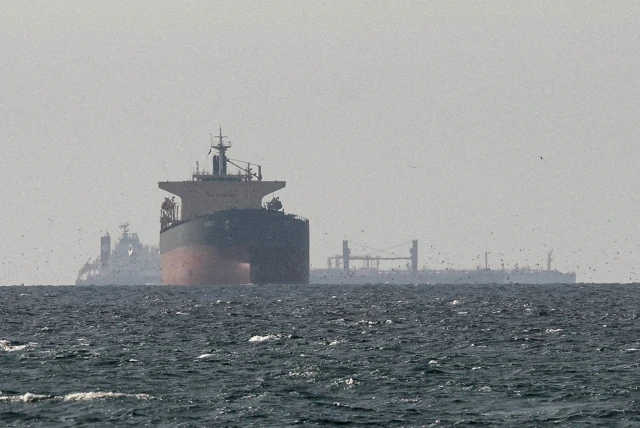
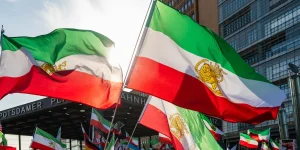
Iran’s ambassador to China reaffirmed that his country plans to charge transit fees for vessels traversing the Strait of Hormuz after the end of the 60-day period defined by the Memorandum of Understanding.
The Iranian ambassador also said that “friendly” nations could receive “special treatment,” without specifying what that would entail.
Speaking at the World Peace Forum in Beijing, Iranian Ambassador Abdolreza Rahmani Fazli said his country is working with Oman on new arrangements for the strait, but affirmed it would charge “service fees” for use of the waterway.
"As a country where the Hormuz is part of its territorial waters, we will definitely charge service fees," Ambassador Fazli said in translated remarks, while denying that such fees would be a “toll.”
Fazli said the proposed fees would cover services related to securing safe passage, monitoring ship movements, and addressing the environmental impact from the heavy maritime traffic.
Fazli also indicated that Iran could give favorable treatment to nations it considers supportive.
"We will definitely consider special treatment for the countries that were friendly to us and stood by us during the hard times," he said.
He also said that China would likely receive such special treatment, saying, “We will definitely have special considerations for China, because China is a friendly country.”
Under the 60-day period of the Memorandum of Understanding, commercial ships are to be allowed to transit the strait without payment of any fees. The U.S. has insisted that the final agreement between the two nations will not allow Iran to charge any transit fees for use of the strait, calling it an international waterway.
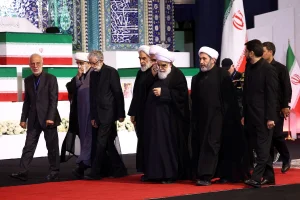
The announcement of fee imposition comes after sharp statements from Iranian Deputy Foreign Minister Kazem Gharibabadi, who rejected the involvement of foreign military powers in the strait.
“The Strait of Hormuz is not a theater for the military display of extra-regional powers, Gharibabadi wrote on 𝕏. “Iran, as the responsible power and guarantor of the Strait's security, warns with sensitivity to any military movement in this waterway.”
“The security of Hormuz lies with the coastal states; the crisis-makers will be held accountable for the consequences of their adventurism; this is a serious warning,” Gharibabadi continued.
The statement came after a joint declaration by outgoing British Prime Minister Keir Starmer and French President Emmanuel Macron, saying the two had reached an agreement with Oman “to ensure that its sovereign territorial waters are safe for navigation.”
Calling Hormuz “a vital artery for the global economy,” the statement said the two nations “stand ready to deploy the wider Multinational Military Mission to support freedom of navigation in the Strait of Hormuz.”
At the same time, Macron wrote on 𝕏 that France had deployed minesweeping equipment to the Middle East, including two minesweeping ships.
The French force is accompanied by two warships and a maritime reconnaissance plane, Macron wrote, saying the forces “are ready to contribute, alongside our partners, to the full resumption of navigation and to ensure the safety of traffic in the Strait of Hormuz.”
Two days earlier, Gharibabadi said that “Hormuz is defined under Iran's command, not CENTCOM,” in response to a regional defense meeting conducted by U.S. Central Command in Bahrain, along with 12 other regional nations.
“The region's security will be ensured through the end of interventions and the U.S. withdrawal from the area, respect for countries' sovereignty, and acceptance of new geopolitical realities—not under the military umbrella of America,” Gharibabadi said.
Meanwhile, over the weekend, Iranian Parliament Speaker Mohammad Bagher Ghalibaf said his country has reached an agreement with the Gulf state of Oman to regulate traffic in the strait.
Ghalibaf also claimed that Israel is “seeking to disrupt” the U.S.-Iran MoU.
"The Israelis are undoubtedly seeking to disrupt the Iran-U.S. Memorandum of Understanding," Ghalibaf said, "but the deterrent power of the Islamic Republic of Iran in the region will prevent them from starting a war again.”
Negotiations between the U.S. and Iran have been stalled for several days. Last week, U.S. envoys went to Qatar, after President Donald Trump claimed that Iran begged for a meeting, which Iranian officials denied.
The U.S. envoys met with Qatari mediators, but did not engage with Iranian negotiators.
In remarks at a 4th of July celebration at Mount Rushmore, in Keystone, South Dakota, Trump claimed that Iran is “dying to settle,” but claimed he “gave them a week off for a funeral,” referring to the funeral for former Supreme Leader Ali Khamenei, who was killed by Israeli strikes at the outset of the fighting on Feb. 28.
You might also like to read this: