US Ambassador Waltz accuses Iran of 'global blackmail' in heated UNSC exchange
As talks continue, Waltz says UN won't stand for Iranian attacks 'if it has a backbone'


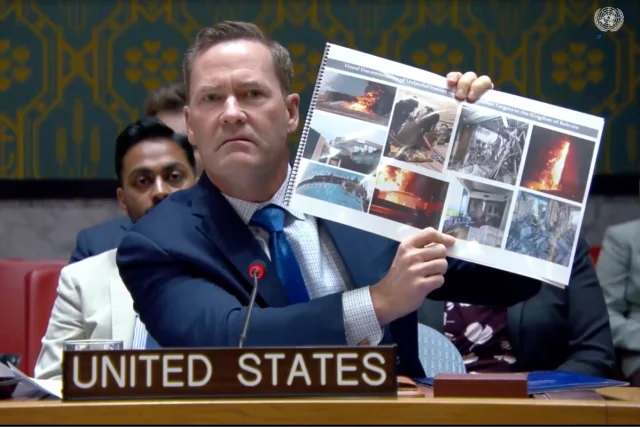
A sharp exchange unfolded at the United Nations on Thursday as U.S. Ambassador to the UN Michael Waltz accused Iran of “global blackmail” during an emergency Security Council (UNSC) meeting on Iranian strikes against Bahrain and Kuwait, even as President Donald Trump has remained largely silent on the latest escalation.
Speaking before the UNSC, Iranian Ambassador Amir Saeid Iravani urged members to “refrain from convening a meeting that risks undermining ongoing [MOU] efforts.”
Waltz responded with a blunt rebuke.
“Let me remind you where you are,” he said. “This is not Tehran. This is the United States of America. This is the United Nations Security Council. You will not silence this body.”
🚨🇺🇸🇮🇷 "This is not Tehran... You will not silence this body."
— C14 News | EN (@c14english) July 2, 2026
US UN Ambassador Mike Waltz delivered a fierce rebuke to Iranian envoy Amir-Saeed Iravani during a heated UN Security Council clash over regional tensions.
📹 UN pic.twitter.com/Gd3NoA3Nmq
Following Iravani's claims that the U.S. "betrayed diplomacy" by cooperating with Israel in Operation Midnight Hammer and Epic Fury amid negotiations, Waltz rejected Iran's appeal to self-defense under the UN Charter.
"Closing international waterways is not self-defense," the U.S. ambassador said. "He claimed that threatening commercial vessels was part of their sovereignty and self-defense. I ask, did the Singaporean air force or military attack Tehran or attack Iran? Did Panama attack Iran?"
“I don’t think the rest of the world has attacked Iran,” he continued, citing rising energy and food costs, and the denial of basic life-saving aid to 61 developing countries. “It is a cynical, sad, and sick attempt at global blackmail, plain and simple.”
“The United Nations Security Council, if it has a backbone, won’t stand for it. The world will not stand for it,” Waltz added. “We will hold this Iranian regime accountable for its attacks on our populations around the world through this sick attempt at global coercion.”
The meeting exposed the deepening divide between Iran and certain Gulf states.
Bahraini Foreign Minister Abdullatif bin Rashid al Zayani said his country had been subjected to 808 missile and drone attacks from Iran. He warned that, as one of the world’s most densely populated countries, Bahrain's civilians face heightened risks because much of the country's industrial and critical infrastructure is located close to residential areas.
Citing the targeting of a water desalination plant, densely-populated residential neighborhoods, civilian facilities, and critical infrastructure, he said: “These are not military targets, as Iran claims, but part of a systematic campaign against the critical infrastructure upon which civilian life in our countries depends.”
The foreign minister said Iranian attacks have “terrorized peaceful civilians, spread fear among the population, and severely disrupted normal daily life.”
Echoing remarks from Bahrain, Kuwaiti Ambassador Faisal Ghazi Al-Enezi cited 893 drone attacks and 873 ballistic-missile attacks launched by Iran, despite affirming that Kuwait has “not allowed and will never allow its territory or aerospace or territorial waters to be used to launch any hostilities against any other countries.”
The Iranian representative dismissed accusations from Gulf states as “unfounded,” claiming they “shift blame onto the victims” and that their “double standards and hypocritical behavior have deprived them of any credibility to lecture others.”
Waltz pointed to photographic evidence presented earlier in the meeting: "Is this Arab family in Bahrain in a residential neighborhood whose home was destroyed by an Iranian Shahed drone – are they lying? Crowne Plaza Hotel full of tourists – are they lying? First responders whose headquarters were struck deliberately so that they couldn’t put out fires – were they lying? Is this hypocrisy?" he asked.
The exchange signaled continued tension despite ongoing talks.
Pakistani Ambassador Asim Iftikhar Ahmad said “the channels of communication remain open” after Pakistan and Qatar concluded separate rounds of talks with U.S. and Iranian negotiators in Doha on Wednesday.
You might also like to read this: