US, Iran agree to end hostilities, resume talks over Strait of Hormuz following weekend flare up
Iranian officials continue to assert sovereignty over critical waterway, accuse US of violating MoU





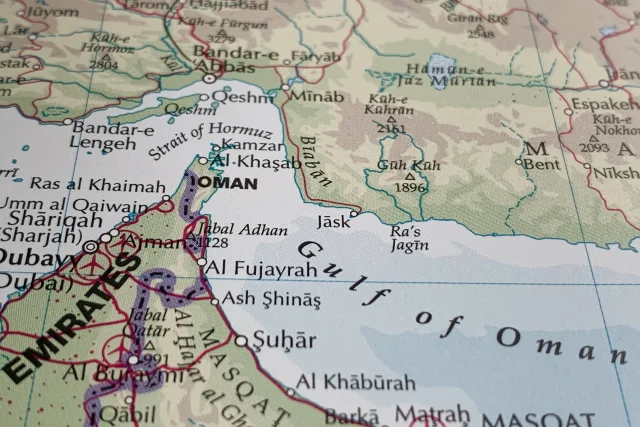
Following several days of back-and-forth strikes, the United States and Iran have agreed to end hostilities in and around the Strait of Hormuz and resume negotiations, The Wall Street Journal reported
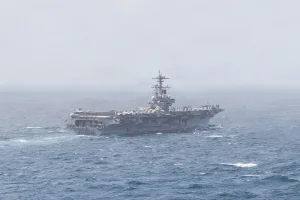
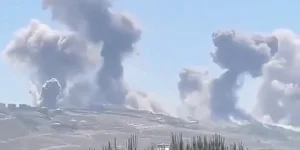
U.S. Central Command (CENTCOM) launched strikes on IRGC missile and drone sites involved in targeting shipping traffic on Thursday, responding to an Iranian attack on a vessel transiting the strait outside of the Islamic Revolutionary Guard Corps (IRGC)-approved route.
In return, the IRGC forces announced they were targeting U.S. bases in the Gulf region, while threatening a broader response.
On Saturday, after an Iranian drone targeted a second vessel, CENTCOM again launched strikes on “Iranian military surveillance infrastructure, communication systems, air defense sites, drone storage facilities, and minelayer capabilities.”
The strikes prompted another retaliation, with the IRGC – which is believed by some to have taken over the Iranian regime – again targeting U.S. facilities in Kuwait and Bahrain.
On Sunday, an Iranian official said Tehran's delegation had not participated in the technical talks continuing in Switzerland, citing U.S. "violations" and Washington's failure to fulfill the conditions of the Memorandum of Understanding (MOU).
However, the U.S. and Iran could hold talks focused on resolving the Hormuz situation as early as Tuesday in Doha, Qatar, the WSJ reported, citing officials familiar with the negotiations.
A U.S. official also told Reuters that the two countries had agreed to halt hostilities and resume technical talks.
“Technical talks are slated to continue on all areas of the MOU. Both sides will stand down for now and vessels can move freely,” the official said.
The Strait of Hormuz remains a key point of contention, with U.S. and Iranian officials offering conflicting accounts of the waterway's future status.
On Sunday, Iranian Foreign Minister Abbas Araghchi reiterated his government’s stance that the Islamic Republic will have full sovereignty over the vital shipping lane.
“The management and full restoration of maritime traffic in the Strait of Hormuz is Iran’s responsibility,” Araghchi said, according to state media. “No other country or entity has any responsibility or authority in this matter.”
Araghchi did not officially acknowledge Iran’s role in the attacks on the vessels over the weekend, calling them “accidents.”
“As in the past two nights, we have witnessed accidents in the Strait of Hormuz, which led to an increase in tension and clashes,” Araghchi said during remarks in his recent visit to Iraq. “I call on all parties not to interfere in the management of the Strait of Hormuz and the arrangements made by the Islamic Republic of Iran for the reopening of the Strait of Hormuz, and to adhere to the signed memorandum of understanding and not to allow this memorandum of understanding to derail.”
Meanwhile, Iran’s Assembly of Experts, an 88-member advisory body to the supreme leader, reportedly told negotiators that the strait should be closed unless Israel ends its operations against Hezbollah in Lebanon, calling its continued operation "a strategic mistake."
“The opening of the Strait of Hormuz is contrary to the obligations of the officials and is considered a strategic mistake,” the assembly said, according to reports in Iranian media.
U.S. officials have rejected claims that the MOU recognizes Iranian sovereignty over the Strait of Hormuz. Secretary of State Marco Rubio has maintained that the strait is an international waterway and not the sovereign territory of any nation.
“The Strait(s) of Hormuz are international waters,” Rubio said during a recent visit to Bahrain. “International waterways do not belong to any nation-state. This is a foundational principle in the world today, without which, the world would be in total chaos.”
U.S. Ambassador to the United Nations Mike Waltz told Fox News that Washington won’t tolerate further attacks on ships.
“If the Iranian regime thinks for a second that President Trump is going to sit by, stand by, while Iran continues to attack international shipping without a response or (attacks) our bases without a response, they’re sadly mistaken,” Waltz said.
“And they saw that loud and clear over the last few nights.”
You might also like to read this: