After 3 years of war, Hamas leadership is badly battered – and now has to decide its future
With Iran-Qatar alliance showing cracks, Hamas' leaders could be forced to choose





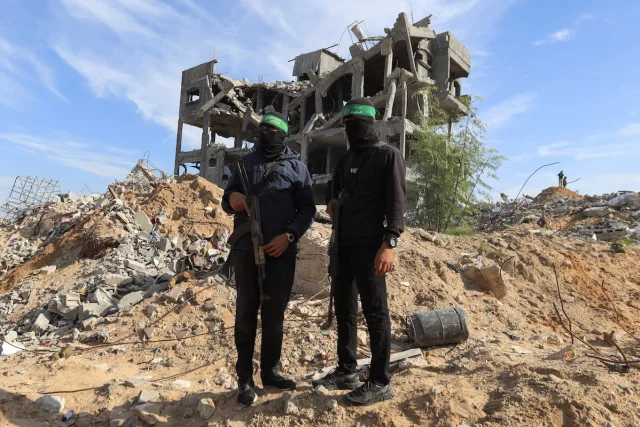
Almost three years after the leadership of Hamas decided to carry out a surprise invasion and massacre in Israel, nearly every single one of its senior commanders in the Gaza Strip has been killed by Israeli strikes.
But despite the Israeli military’s remarkably successful campaign of targeted eliminations, which included even junior field commanders who led the massacres and kidnappings on the ground, the group has not collapsed.
Hamas leadership in the Gaza Strip has continuously turned to the next man in line and apparently managed to conserve and even rebuild a measure of control over the parts of the enclave that Israel doesn’t control.
Meanwhile, the group’s politburo and most of the group’s leaders outside Gaza are still based in Qatar, despite numerous reports and rumors to the contrary over the past few years.
While it has struggled to elect a new overall leader, it has continued to function and maintain a minimum level of cohesion that allows it to coordinate the negotiations over the Gaza peace deal – even stringing along the Board of Peace while obstinately rejecting disarmament.
Now mired in a protracted election process, the new leadership will have to chart the terror group's course over the coming years, as the region's alliance structure is rapidly shifting.
Gaza: Near complete decapitation
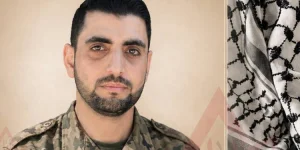
Most of Hamas’ senior and experienced military leaders in the Gaza Strip were killed by Israeli airstrikes in 2024 and 2025, including Yahya Sinwar, Marwan Issa, Mohammed Deif, and Abu Obaida. The list was nearly completed by May 2026, when airstrikes killed Izz al-Din al-Haddad, one of the last remaining senior military leaders in the enclave, and then, less than two weeks later, his successor, Mohammed Odeh.
🔴ELIMINATED: Mohammed Odeh - Head of Hamas’ Military Wing in a strike in northern Gaza.
— Israel Defense Forces (@IDF) May 27, 2026
Odeh served as the Head of Hamas’ military wing following the elimination of Izz al-Din al-Haddad. As part of his role, he was responsible for planning and coordinating Hamas terrorists’… pic.twitter.com/y1Z7eUaUMd
According to the IDF, the only member of the military wing’s senior leadership during Oct. 7 who remains alive is Imad Aqel, who was responsible for Hamas’ Home Front headquarters.
A founding member of the military wing, Aqel is considered one of the figures responsible for preserving operational continuity during wartime and could become the next leader in Gaza.
Over the years, it has become somewhat of a cliché to sneer at the Israeli eliminations of senior terrorists, with one favorite retort being that one can’t “kill an idea.”
But this wasn’t “just” the elimination of a few leaders but the wholesale execution of a generation of leaders and founding members – the most important pool of talent, charisma and experience in the organization.
As a military intelligence officer told Walla News, the IDF assesses that there is currently no military figure capable of being an effective leader besides Haddad.
“Serious organizations need serious leadership, and I think that by getting rid of him, there are no other leaders of his stature at the top of Hamas today… there will be a challenge here in command of the military wing, and there may also be a delay in the processes it is trying to advance,” the officer said.
Despite Israel’s operational successes, Hamas has still managed to prevent the collapse of its control over Gaza’s population, highlighting the structural resilience of the group. Most Israeli strikes have focused on military figures, leaving Hamas’ “civilian” control structures less harmed.
The few Israeli-supported, clan-based militias opposing Hamas have not succeeded in galvanizing broad support among the population, which remains dependent on food, fuel, and medications that are being transferred into the enclave. The terror group’s ability to control and impose heavy taxation on imported goods was key to its survival and regeneration.
Qatar politburo
One of the main effects of the killing off of most of Hamas’ Gaza leadership is a relative weakening vis-à-vis the leadership abroad, which could have far-reaching consequences down the line.
The terror group’s political and diplomatic leadership abroad hasn’t suffered nearly as many casualties, despite its veteran leader, Ismail Haniyeh, being assassinated while visiting Tehran in July 2024.
After starting as a “classic” Sunni Islamist terror group, Hamas in recent years has increasingly integrated into the Shiite, Iranian-led “Axis of Resistance,” with Qatar becoming a key financial and diplomatic backer, which also coordinated closely with Tehran.
This development accelerated over the past years, as Yahya Sinwar became the group’s strongman, especially after spearheading the October 7 attack.
After the elimination of Haniyeh, Sinwar even took over the overall leadership of the group, and his continuing coordination with the Iranian regime through the war appeared to cement the pro-Iranian course for years to come.
However, Sinwar was eliminated two months later, and this year, the alliance between Qatar and Iran showed serious cracks as the regime attacked Qatar with hundreds of missiles and drones.
The last senior proponent of the pro-Iranian course from Gaza remaining alive is Khalil al-Hayya, a close confidante who was dispatched by Sinwar to Qatar shortly before the invasion and thus survived. He now represents Gaza on the temporary five-member leadership council that is meant to guide the group until elections can determine a new leader.
At the time of publication, two rounds of voting were inconclusive.
For the Qatar-based leadership, the continued patronage of the emirate is crucial. Over the past few years, there have been periodic reports that U.S. pressure, or disputes with the Qatari hosts, had finally broken their patience and made them boot out the terrorists.
One such report came at the end of April, when Channel 12 News correspondent Amit Segal declared, “Hamas’ latest bout of intractability has finally broken its patron’s back.”
Segal cited the Iran war as a reason, saying it had forced Hamas to decide between two of its most important backers: “Torn between their two patrons, Hamas ultimately issued a statement defending Iran’s ‘right of self-defense,’ but asked Tehran to refrain from targeting ‘neighboring countries.’ For Qatar, a nation whose sovereign territory was actively being struck by Iranian missiles, this relatively weak, delayed condemnation from the group they had been funneling cash and support to for decades was not endearing.”
Qatar, Iran – or Turkey?
The report highlighted the very real conflict that could decide the terror group’s course over the coming years – but it was wrong, Dr. Ariel Admoni of the Jerusalem Institute for Strategy and Security told ALL ISRAEL NEWS.
“Since the beginning of the war in Gaza, Qatar has used leaks regarding its willingness to expel Hamas as a tool to appease the American side and as evidence of a ‘serious’ Qatari effort to pressure Hamas,” Admoni explained.
The leak of the latest ostensible break with Hamas “served an additional purpose: demonstrating anger toward the movement for failing to properly condemn the Iranian attacks, specifically targeting certain Hamas leaders like Khalil al-Hayya, who did not align with Qatari desires,” he said.
He noted that this became more evident “during the Turkish Foreign Minister's visit to Doha [in May], where he met with al-Hayya in front of the cameras. It is highly likely that during the Hamas elections, Qatar did not want to burn its bridges with any camp.”
The pro-Sunni Islamist camp within Hamas had been led by veteran terrorist Khaled Meshaal, who still holds a senior position and could now try to make a comeback.
Sinwar was a strong proponent of the pro-Iranian approach, but now that he and most of his affiliated leaders have been killed, the currently still-ongoing elections for a new overall leader are a key referendum about the future course of Hamas.
A third way could be opening up, as Qatar has increasingly (re-)aligned itself with Turkey, creating a new Sunni Islamist camp that could become Hamas’ new diplomatic and political home base, “with Turkey offering sanctuary in exchange for regional influence,” according to Segal.
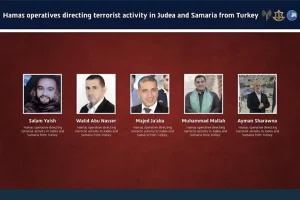
Zaher Jabarin, a member of Hamas’ five-person leadership council, has been based in Turkey for some time. The Shin Bet security agency recently announced it had foiled dozens of planned attacks in the West Bank that were directed by Hamas operatives in Turkey over the past year.
Whoever will emerge to guide Hamas through these difficult times, the group’s goal will remain unchanged.
In the words of the Military Intelligence officer to Walla, “Hamas is an Islamic military resistance movement. It is deep in its DNA, and even if there is another commander who will be willing to take pragmatic considerations over a short period of time, and even if he is less dominant as a leader, in the end, the ideology is the same ideology.”
You might also like to read this: