Groundbreaking Israeli treatment uses sound waves to eliminate opioid cravings in 20 minutes





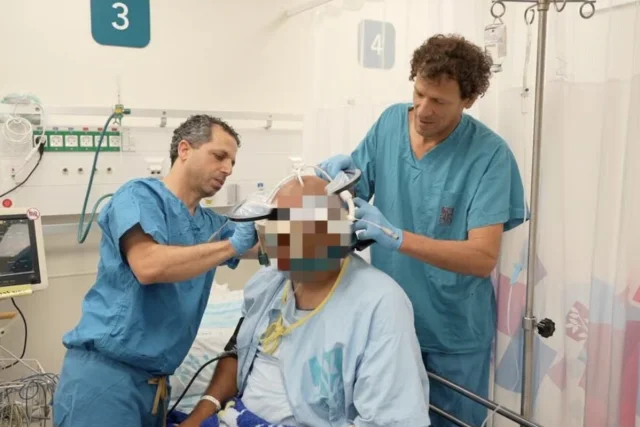
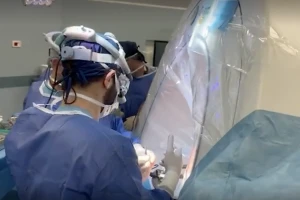
Doctors at the Israeli Rambam Health Care Campus have carried out a first-of-its-kind treatment that uses focused sound waves to eliminate opioid cravings, helping a patient in his 40s end a dependence that had reached as many as 130 painkiller pills a day. The procedure lasted just 20 minutes and targeted the brain’s reward center without surgery or invasive intervention.
The treatment, which is being tested as part of an international study involving medical centers in Israel and the United States, could offer a new approach to treating opioid dependence. The technology was developed by Insightec, an Israeli medical technology company headquartered in the northern town of Tirat Carmel.
“This is a new therapeutic platform that allows us to offer a range of noninvasive treatments for many problems affecting people around the world,” explained Dr. Lior Lev Tov, head of the Functional Neurosurgery Unit in Rambam’s neurosurgery department and the study’s lead investigator.
“This is a major scientific breakthrough that could have far-reaching implications and reshape the way we approach treatment,” he assessed.
The treatment focused on a northern Israeli resident identified only as “H,” who became dependent on painkillers after suffering a serious neck injury several years ago.
Dr. Amir Minerbi, director of Rambam’s Institute for Pain Medicine, explained that the patient remained dependent on opioids even after his pain had subsided.
“Over time, the pain subsided, but he could not free himself from dependence on the pills, and the doses kept increasing, reaching a peak of about 130 pills a day,” Minerbi said.
“H. was no longer suffering from pain. He simply needed the substance in his bloodstream to feel calm and function,” he explained.
Opioids are medications that act on the brain’s reward system and are commonly used to treat pain. However, prolonged use can lead to dependence even after the original pain has disappeared.
According to Rambam physicians, the treatment enables doctors to increase or suppress activity in targeted nerve cells based on therapeutic need.
“Already during the treatment itself, we identified a drop in the patient’s craving for the drug,” Lev Tov revealed.
“The patient reported a craving level of zero out of 10 for using the drug, and even an unexpected side effect, a drastic decline in his desire for cigarettes,” he added.
“This is nothing less than a medical and therapeutic revolution,” Lev Tov emphasized.
“From the moment of the treatment until today, he has been clean. The urge and craving to use have disappeared entirely. He told us he got his life back. The tests show that his body is completely clean, and his physical and functional condition is entirely normal.”
Minerbi explained that while opioid painkillers can be highly effective for treating short-term pain, long-term use carries significant risks.
“Among those who take the medication over time, it becomes less effective in treating pain and contributes to worsening side effects, including health damage, an increased risk of early mortality, impaired ability to participate in daily life and a decline in quality of life,” he explained.
"We hope this new development can help many thousands of people dependent on opioids, in a safer and less traumatic way,” Minerbi concluded.
Israel has emerged as a significant player in advanced healthcare and medical technology. In 2025, doctors at the Israeli Sheba Medical Center outside Tel Aviv developed an advanced spinal implant designed to help patients suffering from chronic pain.
Help more people find our reporting from Israel! Leave a quick Google review of our website HERE .
You might also like to read this: