Why isn't the Armenian government celebrating the official Israeli recognition of the Armenian Genocide?




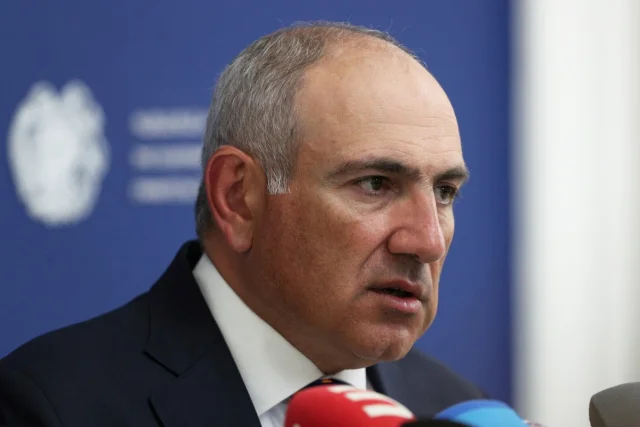
The Israeli government’s recent decision to officially recognize the Armenian Genocide sparked predictably angry reactions from Turkey and Azerbaijan; however, the reaction from Armenia has largely been muted.
Armenian Prime Minister Nikol Pashinyan downplayed the significance of the Israeli government's move while speaking to reporters in Yerevan.
“We see no need to respond because we believe that refraining from entering into the issue of the weaponization of the Armenian Genocide is in the interests of the Republic of Armenia,” Pashinyan said.
The Armenian Ministry of Foreign Affairs, which has previously noted major genocide announcements or memorials around the world, did not issue any statement regarding the Israeli government’s acknowledgment.
The Armenian National Committee also released a tepid statement welcoming the move, while also accusing Israel of playing a role in the deaths of Armenians during the Armenia-Azerbaijan conflict.
A harsher reaction to the cabinet’s decision was offered by the former Armenian parliament member Mihran Hakobyan, who wrote, “It is the pinnacle of immoral cynicism that the 1915 Armenian Genocide is being ‘recognized’ by a fascist state which, from the moment of its founding, has been — after Turkey — the most active in fighting against the international recognition of the Armenian Genocide, has directly participated in the patricide of Armenians in Artsakh, and is carrying out an obvious genocide in Gaza.”
A similar position was expressed by Serj Tankian, an Armenian-American and the lead singer of the heavy metal band System Of A Down, which is composed entirely of Armenian descendants. In an expletive-laced reaction video posted to Instagram, he accused the Israeli government of using Armenian history and pain for “political advantage.”
“For many years, Israel's government used AIPAC to lobby the U.S. Congress to not recognize the Armenian Genocide, to prevent Congress from recognizing the Armenian Genocide due to their relationship with Turkey, their intelligence sharing with Turkey, etc.,” Tankian said.
“Today, the Netanyahu cabinet decided to recognize the Armenian Genocide of 1915, a genocide that led to Hitler thinking that he could do what he could do to the Jews in the 1930s and 40s,” he continued.
“The fact that this government is already committing genocide in Gaza and Lebanon, decided to recognize the genocide of my grandparents, is the worst f—ing thing that they could have done to Armenians by using our history, our genocide, our pain to their political advantage,” Tankian said.
The harsh words by Hakobyan and Tankian illustrate the pain many Armenians feel over the failure of the Israeli government to officially recognize the genocide, which many historians believe led directly to the Holocaust.
However, not all Armenian leaders reacted as cynically to the Israeli cabinet’s move. Bishop Koryun Baghdasaryan, a senior leader and dean of the manor of Jerusalem’s Armenian Patriarchate, said that in making this move the government “fulfilled its moral duty.”
“It means a lot for the State of Israel, for the Jewish people,” Bishop Baghdasaryan told The Jerusalem Post, “because as a nation that went through the Holocaust, and right after the Holocaust established the State of Israel, it was really the moral duty for the State of Israel to recognize the Armenian Genocide.”
Predictably, the reaction by Turkey was sharp, with President Recep Tayyip Erdoğan accusing Israel of “slander.”
“There are many slander campaigns going on by this network of murderers who had the blood of 73,000 innocent Gazans on their hands,” Erdoğan said.
“In our history, there have been no genocides, no massacres, oppression, and no colonialism. Throughout our thousands of years of glorious history, there has only been justice and compassion,” he claimed.
Erdoğan’s press secretary Burhanettin Duran accused Israel of using the announcement to “cover up” its killings of Palestinians.
“Israel’s recognition of the events of 1915 as a so-called ‘genocide’ is nothing more than a futile attempt to cover up the blood of innocent Palestinians shed by its own hands, its own state terrorism in the Middle East, and its crimes against humanity committed with impunity,” Duran wrote in a post to social media.
Israel’s regional partner, Azerbaijan, which has a majority Turkic population and speaks a Turkish dialect, called the announcement “a matter of serious concern.”
“The decision by the Israeli government concerning the so-called ‘Armenian genocide’ is a matter of serious concern,” the Azerbaijan Foreign Ministry said.
“The distortion of the historical facts surrounding the events of 1915, and the reduction of a complex historical issue to a political decision without a sound legal or scholarly basis, are unacceptable,” the statement continued, while calling on the Israeli government to “reconsider this decision.”
So why has Israel’s long-sought recognition provoked such a tepid reaction among many Armenians? The answer lies in changing political realities of the major parties involved.
The Turkish government has long denied any systematic Ottoman government program targeting Armenians. While acknowledging that many Armenians were killed, the government has long blamed the deaths on “civil war” and tension related to World War I.
The genocide has its roots in the broader Islamic-Christian regional conflict stretching back over a millennium.
Most of the Anatolian Peninsula, modern-day Turkey, was captured from the Christian Byzantine Empire by the Seljuk Turks in the 11th century, which involved the massacre of many Christians. Under later dynasties, including the Ottomans, Armenian Christians refused to convert to Islam.
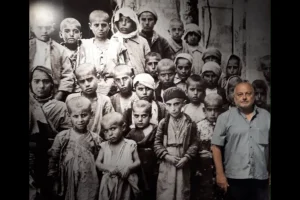
During World War I, many Armenians joined Russia, itself a Christian nation, in attacking the Ottomans. In retaliation, the Ottoman Empire began forcibly conscripting adult males, while forcing women, children, and the elderly out of historic Armenian territory. According to many historians, somewhere between 600,000 and 1.5 million Armenians were killed during this time.
For many years, the Israeli government supported the Turkish stance due to the political cost of angering the Turkish government. Historically, Turkey was one of Israel’s strongest regional partners in the decades before Erdoğan’s Justice and Development (AKP) party came to power.
Similarly, Israel has not wanted to offend Azerbaijan, which provides roughly 40% of Israel's oil imports along with a strategic border with one of Israel’s primary enemies, the Islamic Republic of Iran.
Turkey had deep economic and military ties with Israel during the 1970s-1990s. With the rise of Erdoğan’s Islamist party to power, that relationship began to deteriorate rapidly, especially following the Mavi Marmara incident in 2010, when Israeli military forces intercepted several vessels from Turkey that were attempting to break the blockade on Gaza imposed after Hamas took over the Gaza Strip.
Activists in the flotilla attacked Israeli soldiers as they were boarding one of the vessels, which led to the death of several people. That incident provided Erdoğan with the political cover to disrupt relations with Israel, which had become increasingly unpopular in the religious sector of Turkey.
While the two nations attempted to restore ties, the start of the October 2023 Gaza War brought a further worsening of relations, after Erdoğan’s government refused to condemn the Hamas attacks and began accusing Israel of “genocide” at the start of the ground campaign.
With the worsening relations and increasing threats by members of the Erdoğan government being directed against Israel, the former political calculus against angering Turkey no longer holds.
Many Armenian leaders see the current recognition of the genocide in light of that Israel-Turkey conflict, not as a benevolent gesture by the Israeli government.
Similarly, the timing of the Israeli announcement appears to be aimed at causing Turkey to lose face just before it hosts the NATO Leaders' Summit in Ankara next week, as it attempts to re-enter the F-35 program.
Additionally, Armenian Prime Minister Nikol Pashinyan, who was only recently re-elected, has been leading a movement away from demanding recognition of the 1915 genocide, and towards peace and integration with both Turkey and Azerbaijan, as part of a push to deepen ties with Europe.
As election results came in on June 8, Pashinyan said, “The people of Armenia voted for peace, regional prosperity and regional cooperation, and I hope this will be met with a positive response from Turkey and Azerbaijan.”
From Pashinyan’s perspective, the growing antagonism between Israel and Turkey, already threatening to escalate into a major regional conflict, could not come at a worse time.
Just as he attempts to move on from the defeat in and loss of Nagorno-Karabakh in 2023, in which Israel played a part by supplying weapons to Azerbaijan, the Israeli government, for reasons of its own, has chosen to acknowledge the one issue which could drive a wedge between Armenia and its neighbors.
If Israel is to convince Armenia that the recognition is not just political theater, it will have to treat the issue with the same respect that it demands for Holocaust remembrance.
You might also like to read this: