Israeli Cabinet unanimously recognizes Armenian Genocide: ‘Too little too late’ or ‘better late than never’?
Israelis, Armenians torn over Genocide recognition





When Israel’s foreign minister said on Thursday that he would call for a vote to recognize the Armenian Genocide, many involved in the issue scoffed and greeted the announcement with skepticism.
However, the issue did in fact take center stage two days later and, after decades of skirting the issue, the Cabinet formally recognized the Armenian Genocide.
Foreign Minister Gideon Sa'ar, who brought the resolution before the government, called the decision “a moral and historical duty. And in my opinion, there is no strong reason to be avoiding it.”
The historic decision drew mixed emotions from Israelis and Armenians who have long pushed for recognition by the Jewish state. Responses wavered from “better late than never” to “too little too late.”
Yoav Loeff, a lecturer on Armenian history at the Hebrew University of Jerusalem, welcomed the vote, but questioned the timing.
“It's a decision that could have been made decades ago,” Loeff told ALL ISRAEL NEWS. “So in one way, we say 'better late than never,' but it's so late. It's good that it happened, but it's not that it fills me with joy.”
Previous recognition efforts in Israel had often stalled because of Turkish pressure and Israel's strategic ties with Azerbaijan, an important security and energy partner. However, deteriorating ties between Jerusalem and Ankara likely reduced the diplomatic costs of recognition enough for a vote on the issue, Loeff said.
Even Israeli diplomats privately lauded the decision, many saying it was long overdue, sources in the Foreign Ministry told AIN. They agreed it was a moral obligation for Israel as a Jewish state and modern democracy.
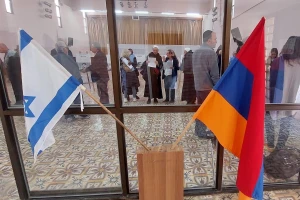
The Israeli Cabinet unanimously approved the resolution, making Israel one of just over 30 countries to formally recognize the mass killing of Armenians by the Ottoman Empire during World War I as a genocide. Many hope this formal recognition will raise awareness among Israelis – many of whom are unfamiliar with the history of the genocide, Jerusalem’s Armenian Quarter and the present-day community, where clashes sometimes erupt between Jews and Christians.
“The resolution that I am bringing to the government today constitutes the formal recognition by Israel of the genocide committed against the Armenian people during the collapse of the Ottoman Empire,” Sa'ar told ministers.
“I think the time has come for Israel, as a Jewish state, to formally accept this position,” he said. “At this time, the question - why hasn't this happened yet? - is less important to me. It is never too late to do the right thing. It is important that we do it now so that we do not continue to be asked in various places why we are avoiding it.”
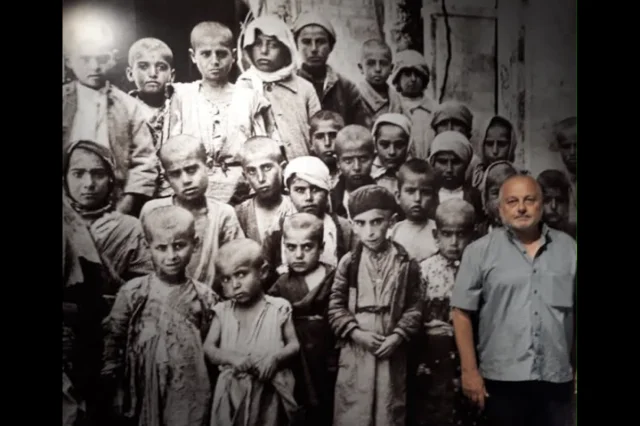
The Armenian Genocide began on April 24, 1915, with the arrest and deportation of Armenian intellectuals and community leaders in Constantinople before expanding into mass killings, forced marches, rape, starvation and widespread atrocities. Some 1.5 million Armenians were killed and thousands of survivors sought refuge in Jerusalem’s Armenian Quarter.
Israel had repeatedly rebuffed official recognition of the genocide despite attempts in the Knesset to put the issue to a vote. Diplomatic concerns, particularly Israel's strategic relationships with Turkey – which denies the atrocities constituted genocide – were widely viewed as the reason.
After the Israeli vote, Turkish President Recep Tayyip Erdoğan said he would continue to hold Israel to account for the war in Gaza.
“There, in Gaza, a genocide took place. And even today, the attacks continue. Accountability for this genocide will come, without a doubt,” he said, according to CNN.
For Jerusalem's Armenian community and many dedicated supporters, the decision was anti-climactic, coming from a nation built as a result of the Holocaust.
Since he was 13, Hagop Djernazian has advocated in the Knesset for Genocide recognition – to no avail. While he welcomes the decision, he told AIN, “Israel missed the opportunity.”
Djernazian, a fourth-generation survivor of the Genocide, said in an interview with Israel’s Kan News that he officially gave up hope that Israel would recognize the Genocide in 2021 when the U.S. did so under former President Joe Biden, but Israel still failed to follow suit.
Dickran Torrossian agreed that this critical recognition should have come much earlier.
"I am both sad and happy. Yes, it's never too late, but the State of Israel should have been the first ones and not delay due to political reasons," Torrossian said. “I pray that the day will come when the Turks will also recognize it.”
Tony Sperandeo, an Israeli who has long supported Armenia, described the vote as a historic moment after decades of waiting.
"The acknowledgment of the Armenian genocide by the Israeli parliament is a very important cornerstone event for justice to take place in our nation,” Sperandeo told AIN. “Since the founding of the State of Israel, we have been praying and waiting for this day to happen.”
Sperandeo said this is “a first big step” toward Israel fulfilling what he described as its moral calling to support persecuted peoples.
Skeptics still wondered whether the government had deeper motives, citing the election campaign, strained relations with Turkey, or an effort to counter growing international criticism of Israel's war in Gaza.
“I don't really believe that the motive is a burst of humanitarian thinking,” Loeff said.
Sa’ar said Sunday's decision was not retaliation against Erdoğan, whose criticism of Israel has escalated during the war in Gaza.
“The fact that Turkey promotes false narratives against Israel does not grant it immunity from historical truths,” he said.
Sa’ar said the resolution will soon come before the full Knesset for a vote.
In the year 301, Armenia became the first nation to declare Christianity its national religion.
You might also like to read this: