Hula Valley: How a malaria swamp became one of Israel's greatest wildlife treasures




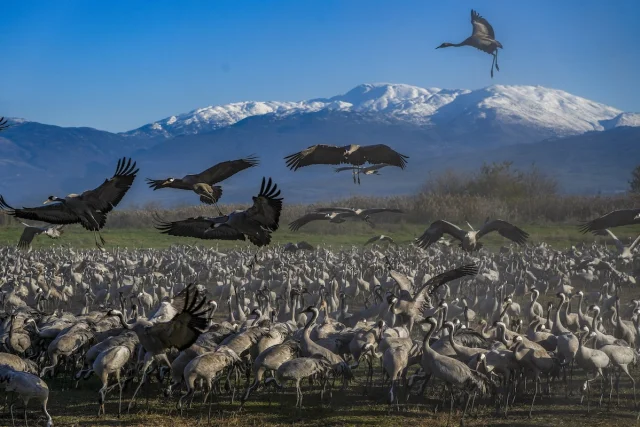
Just north of the Sea of Galilee lies one of Israel's most remarkable nature reserves: the Hula Valley. Today it is famous for its wildlife, especially the hundreds of millions of migratory birds that pass through it each year on their journey between Africa, Asia, and Europe. Cranes, pelicans, storks, flamingos, water buffalo, otters, turtles, and countless fish species all make their home here.
But the Hula Valley is more than a nature reserve. It sits within a narrow strip of land stretching northward to Israel's border with Lebanon, known in Hebrew as "the finger of the Galilee." Here, biblical history, modern Zionist history, and one of Israel's most important ecosystems all meet in the same place.
This narrow strip of land is sandwiched between the mountains of Lebanon to the west and the Golan Heights to the east. Back when the Golan Heights belonged to Syria, this “finger” was an extremely exposed – but crucial – part of Israel, controlling the water sources of the Sea of Galilee. Today, the Golan Heights to the east are in Israeli hands, but it’s still exposed to Lebanese fire every time there’s a war – including today.
The border was shaped when the British and French carved up the Middle East between themselves after World War I, trying to decide what would be part of French Syria and what would be in British Palestine. The Zionist pioneer, Joseph Trumpeldor, set up the Tel Hai settlement near present-day Metula, knowing that whatever ends up under British rule will eventually turn into the State of Israel. By defending this northern frontier – ultimately at the cost of his life in 1920 – he influenced the final border agreement between the French and Brits, securing this land for Israel. Trumpeldor's death at Tel Hai became one of the founding myths of modern Zionism. His reported last words, "It is good to die for our country," are still remembered in Israel today.
This area is defined by three main rivers (sometimes counted as four) that unite into the upper Jordan River, which eventually flows into the Sea of Galilee. But along the river, a few smaller lakes have formed, and much of the area used to be malaria-infested swampland. The Zionist pioneers arrived determined to change that. They drained the swamps, cultivated the land, and made it a prosperous agricultural region watered by the river.
But they overlooked something important. The swampland was a unique ecosystem which hosted numerous plants and wildlife, some unique to the region. Animals lost their habitat, and some species even became locally extinct. Today, a restored portion of this swampland survives in the famous Hula Valley.
Is it mentioned in the Bible?
Well, the area belonged to the tribe of Naphtali, and people must have passed it to reach Dan. Jesus must have passed it going from the Sea of Galilee to Caesarea Philippi and back. But an actual mention in the Bible? Perhaps once. In the Book of Joshua.
“They came out with all their troops and a large number of horses and chariots – a huge army, as numerous as the sand on the seashore. All these kings joined forces and made camp together at the Waters of Merom to fight against Israel. … So Joshua and his whole army came against them suddenly at the Waters of Merom and attacked them.” (Joshua 11:4-5,7)
“Merom” means “heights” or “high places,” and the Galilee panhandle is much higher up than the Sea of Galilee. It’s in a valley, yes, but it’s more or less at sea level, not below sea level. Compared to the Sea of Galilee, it makes sense to call the Hula swamps “the waters of the heights.” The king who gathered this army against Joshua was also the king of Hazor, an ancient city situated in this same region between the Sea of Galilee and the Hula Valley.
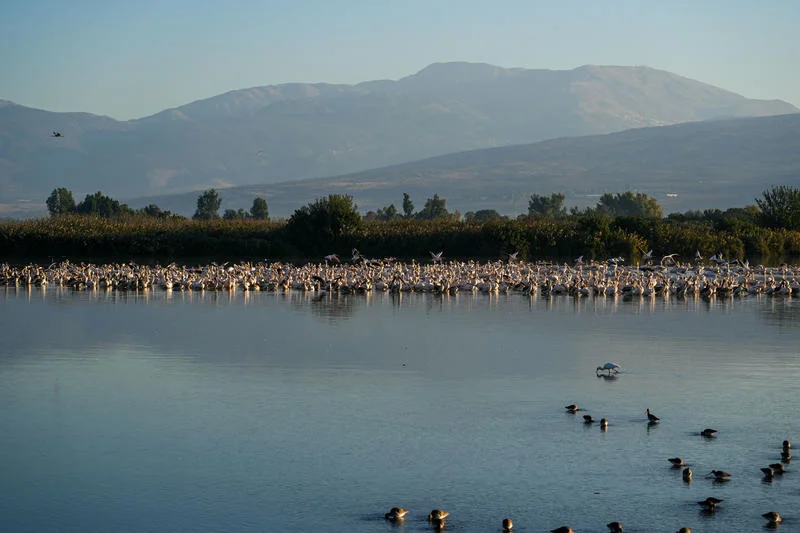
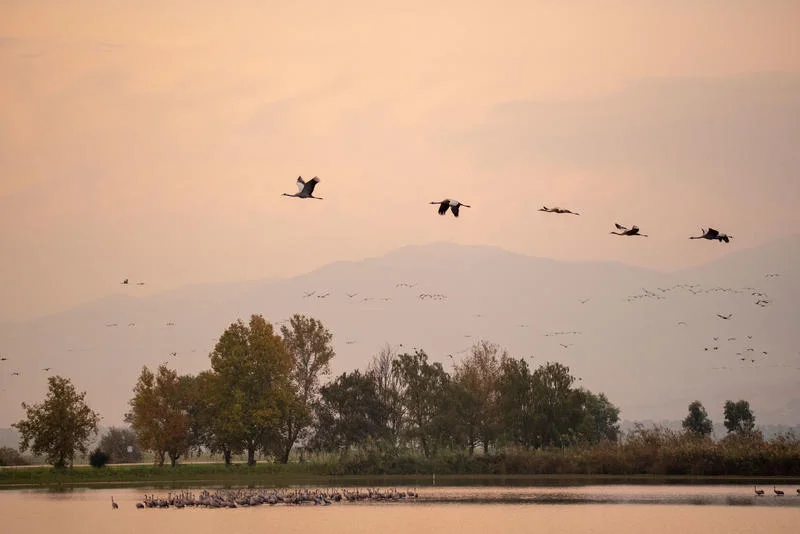
A visit to Hula is an amazing wildlife experience, and there is no longer any danger of malaria. Many migratory birds stop here along the way between Africa and Europe. In the right season, you can see cranes, pelicans, storks, and even flamingos. The mammals you’ll see are nutrias, otters, and water buffalo (at a distance – their habitat is off-limits). There are also frogs, ducks, turtles, and a surprising variety of fish species. If you’re lucky, you might even spot a jungle cat, but they’re extremely shy and mostly active at night.
There are two separate visitors’ centers in the Hula Valley: the Hula Nature Reserve, managed by the Israel Nature and Parks Authority, and the Agamon Hula Nature Park further north, managed by Keren Kayemet (KKL). Both are worth a visit.
It remains one of our favorite places to visit. The valley tells several stories at once: the biblical story of Israel's northern frontier; the Zionist story of draining the swamps and making the land flourish; and the modern conservation story of restoring part of what had been lost. Today, as cranes circle overhead and the Jordan River begins its journey southward toward the Sea of Galilee, it is easy to see why this corner of Israel continues to capture the imagination of visitors. Water, wildlife, history, and Scripture all meet here in one remarkable place.
Is All Israel News’ faithful reporting important to you? Be part of it—help us continue by becoming a $5/month supporting partner.
You might also like to read this: