From Genocide survivors to Holocaust heroes: Armenians honored for saving Jews
Jerusalem exhibit highlights little-known stories of Armenians recognized by Yad Vashem, revealing acts of courage and shared history between two persecuted peoples



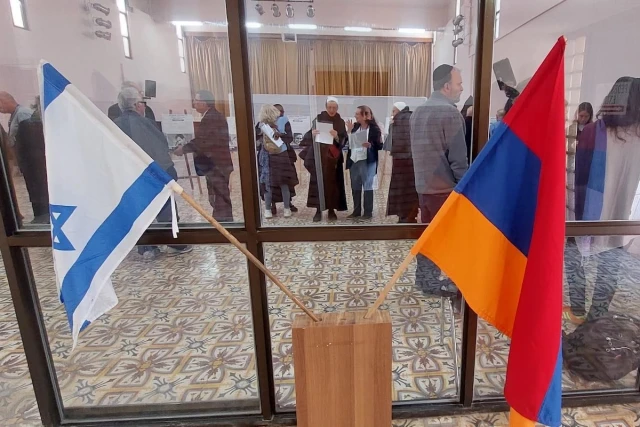
JERUSALEM—Ara Jeretzian, a survivor of the Armenian Genocide, noticed chilling parallels to his own family’s experiences when Budapest’s Jews were ordered into a ghetto by the Nazis in 1944.
After having escaped the slaughter of Armenians, including his own family members, in Ottoman Turkey in 1918, Jeretzian used his influence as a commander in Hungary’s civil defense apparatus to save Jews in the city.
“In this capacity, he founded a hospital that treated wounded Hungarian soldiers as well as Hungarian civilians free of charge and used this hospital to hide over 400 Jews,” said David Eisenstadt, who translated the placards of nine Armenians declared Righteous Among the Nations for a unique exhibit on Israel’s Holocaust Remembrance Day on Tuesday.
“He even managed to equip 40 Jewish doctors and other medical personnel with forged certificates stating that they were Aryan.”
When an informant told the authorities that Jews were being hidden in the hospital, Jeretzian showed up – in a Nazi uniform – and brandished a forged document stating that the hospital was protected territory.
“He was a genuine hero and a tremendous improviser,” Eisenstadt told ALL ISRAEL NEWS.
Another Armenian family, Grigori and Pran Tashchiyan, hid the children of a Jewish family in their home in Crimea during the war. They recruited their teen children, Hasmik and Tigran, to guard the younger Jewish children, ages 4 and 7, and rush them to hiding whenever the Germans came around.
Hasmik was quoted as saying, “After having experienced the Armenian Genocide, we decided we must help them survive.”
These are just some of the 24 Armenians recognized by Yad Vashem World Holocaust Remembrance Center as “Righteous Among the Gentiles” for saving Jews across Europe just 30 years after their own horrors.
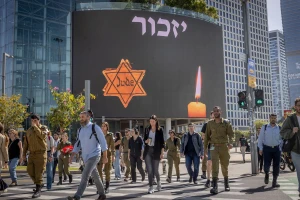
Yisca Harani, a Jewish scholar on Christianity, organized an exhibit in Jerusalem’s Armenian Quarter to honor these heroes on Israel’s Holocaust Remembrance Day – a day she said touches Jews more deeply than any other.
“If I want to deliver the news that anyone can be compassionate and that survivors of the Armenian Holocaust helped Jewish people to survive their Holocaust, this is something that can penetrate the heart of anyone on that day,” she told ALL ISRAEL NEWS. “So to hear that there were Armenians who risked their lives to save Jews is very strong.”
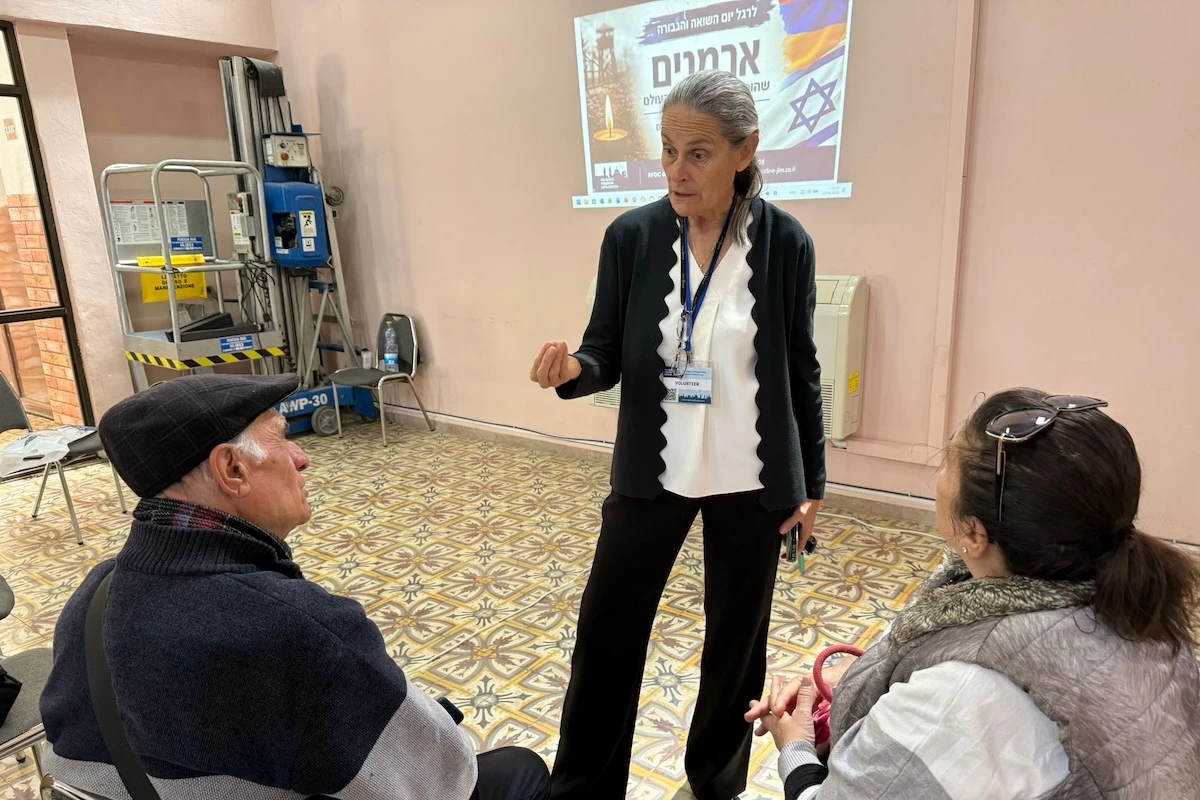
Harani, who established the Religious Freedom Data Center, an organization that monitors violence against Christians in Israel, has long worked to create positive relations between Armenians and Jews.
The exhibit was displayed at the Armenian seminary in the Old City, culled together by Harani and other Jewish volunteers.
On the road, as many Jews walked toward the Western Wall, volunteer Binyamin Klugger, an ultra-Orthodox Jew, stood outside the seminary inviting religious visitors to view the exhibit. Many were hesitant.
Klugger explained that Israelis generally lack understanding of who Christians are – and that they are not hostile.
“Overseas, Jews live among all cultures, they have Christian neighbors, Christians friends,” he said. “Here, they don’t know anything about Christianity or Christians. They only [know] stories of their childhood: the Inquisition, pogroms. Christians are enemies.”
Klugger engages in conversations on his Facebook page, writing about Christian communities and churches. He was once criticized by his community for being photographed with the Latin Patriarch Cardinal Pierbattista Pizzaballa, who was wearing a large cross.
“I told them, ‘I thought he was a math professor and that was a plus sign,’” he said. “I laughed it off, but I asked them, ‘What is your issue with this symbol?’ It opens up conversations and I have the opportunity to explain, there are different communities here in Israel, and it is worth getting to know them.”
Arek Kahkedjian, a tour guide who is Armenian – born and raised in Jerusalem – said Armenians and Jews share many historic and religious parallels.
“We are both very ancient nations, we have a lot of history. We are even mentioned in Titus Flavius Josephus’ book (War of the Jews),” Kahkedjian said. “Armenians are mentioned in the Bible and have a lot of connections to the Jewish people.”
The parallels carry a tragic tone as well – including the Genocide and the Holocaust – while modern-day geopolitics make for tense diplomatic relations between the two nations: Armenia has ties with neighboring Iran, while Israel has relations with Azerbaijan, a hostile nation on Armenia’s border.
“It's all very connected and it's all too complicated for a regular person to understand, but events like this that emphasize the similarities between the Jewish community and the Armenians – trying to introduce these to each other – could make things better,” he said.
Despite the connections and because of the geopolitics, Israel does not formally recognize the Armenian Genocide.
“It's important to inform and educate people over here on the role that Armenians played in saving Jews during the Holocaust,” said Kegham Balian. “If I’m not mistaken, they saved the most Jews per capita, so that’s information that should be shared widely.”
Balian emphasized the importance of events like this and advocated for expanded public discussion and educational efforts.
“To bear in mind, this was after Armenians suffered their own genocide,” he said.
While the Nazis never reached Armenia during World War II, Armenians living in Europe – many of them refugees – saw the signs of genocide.
“For very altruistic, humanitarian reasons, they helped Jews in distress,” Eisenstadt said. “Sometimes they were Jews that they knew and in some cases they didn’t know them at all.”
Harani described such cases, including a 15-year-old Armenian boy who saw an elderly Jewish man outside and brought him into his home to hide, and an Armenian woman who went to the ghetto to demand the release of her neighbors.
“Every Jewish person should ask him or herself, ‘If I was there back then, would I risk my life? Would I risk my children?’” Harani said.
You might also like to read this: