US Congress pushes back against White House dangerous arms deal with Turkey's President Erdoğan





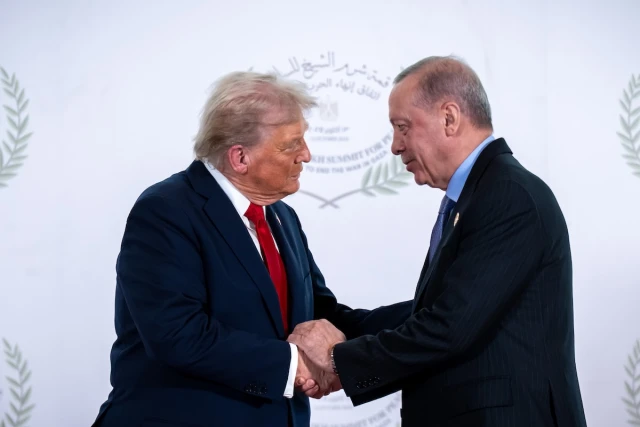
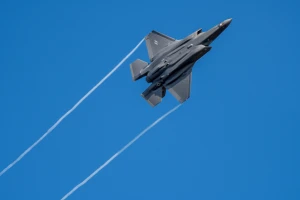
A growing number of lawmakers on Capitol Hill are sounding the alarm over reports that the Trump administration is considering reopening the door to selling advanced F-35 stealth fighter jets to Turkey, arguing that such a move would reward one of America’s most unpredictable allies while potentially undermining Israel’s security and U.S. interests across the Middle East.
A letter of concern is circulating this week in Washington that would seek to pressure House leadership to introduce a Joint Resolution of Disapproval should the Trump administration move forward with allowing Turkey to acquire F-35 fighter jets. The letter is in the signature-gathering process now.
Among those concerned is North Carolina Congressman Mark Harris, who tells ALL ISRAEL NEWS that Congress needs far more answers before any discussions move ahead.
“It is concerning…there’s no secret that Erdoğan and Turkey have some big question marks over them,” the congressman tells me. “And what their plan is for the region, what their desire is for the region is extremely concerning. And I think we need to move forward with a very, very cautious, cautious move, if you will, in any of those conversations. And, I’m anxious to learn more about why this is happening and what the plan is to send F-35s over there.”
Harris is hardly alone. The question here is whether President Donald Trump ultimately intends to restore Turkey to the F-35 program after years of congressional opposition. Trump himself fueled the speculation when he recently suggested he was likely to do something that would make Turkish President Recep Tayyip Erdoğan “very happy.”
That possibility has triggered bipartisan resistance in Congress. Several lawmakers have already warned that any effort to return Turkey to the F-35 program would face fierce opposition. Critics point to existing U.S. law that prohibits transferring the aircraft to Turkey as long as Ankara continues to possess the Russian-made S-400 missile defense system.
Congress adopted those restrictions after concluding that operating the S-400 alongside America’s most advanced stealth fighter could expose sensitive F-35 technology to Russia.
But for many lawmakers, the S-400 issue is only part of the problem. The larger concern centers on Erdoğan himself.
On paper, Turkey remains a NATO ally – but looks can be deceiving. Turkey does indeed host important American military facilities but it also fields one of NATO’s largest armies, and sits at one of the world’s most strategic crossroads between Europe and the Middle East.
In reality, however, Erdoğan has spent years pursuing what many analysts describe as an increasingly independent – and often anti-Western – foreign policy.
His government has maintained close ties with Russia despite Moscow’s invasion of Ukraine. Turkey purchased the Russian S-400 missile system despite repeated American warnings. Erdoğan has repeatedly hosted Hamas leaders, sharply escalated anti-Israel rhetoric since the Gaza war, and increasingly positioned himself as one of Israel’s most vocal international critics.
In short, Erdoğan is a dangerous wild card at best. His previous actions have caused many in Washington to question whether Turkey still shares America’s long-term strategic goals.
That concern rises to even higher levels when discussing the F-35. Unlike older fighter aircraft, the F-35 represents America’s most sophisticated combat aircraft, incorporating advanced stealth technology and classified software that remain among the Pentagon’s most closely guarded secrets.
Many defense experts argue that simply possessing both the Russian S-400 system and the F-35 creates unacceptable intelligence risks because Russia could potentially gain valuable information about how the stealth aircraft operates.
But beyond the technical concerns lies an even broader strategic question. Can Erdoğan actually be trusted? That question has become increasingly important as Turkey attempts to expand its influence across the Middle East.
Many analysts believe Erdoğan is pursuing what is often described as a neo-Ottoman vision – an effort to restore Turkish influence across territories once controlled by the Ottoman Empire. Others argue Erdoğan increasingly sees himself as the leading political voice of the Sunni Muslim world, positioning Turkey as a counterweight not only to Iran but also to Israel and, at times, even traditional Western influence. Put another way, Erdoğan is looking to be the ultimate player with Turkey as the dominant influence in the region. It’s also cloaked in Islamic religious aspirations but that’s a whole separate story.
Some foreign policy analysts warn that Erdoğan’s long-term ambitions extend well beyond ordinary regional competition. They argue that Turkey has increasingly used military deployments in Syria, Iraq, Libya and the Eastern Mediterranean to expand its influence while simultaneously strengthening relationships with Islamist movements, including Hamas.
That is one reason many pro-Israel advocates view any future F-35 sale through an entirely different lens than a typical arms agreement. It’s a story worth watching. Congress certainly will be.
You might also like to read this: