The names written on the gates
Part 2: The twelve tribes, the remnant, and the hope of the New Jerusalem



The twelve tribes begin as cries in Genesis. They end as names on the gates of the New Jerusalem.
That is the sweep of the Bible's hope.
In Part 1, we saw that Israel's tribal story did not begin with national strength, but with Leah's tears. Reuben says God sees. Simeon says God hears. Levi says God draws near. Judah says praise can rise even after pain. Jacob's deathbed blessings then show Israel in miniature: dignity and danger, promise and wound, calling and consequence.
But the story does not stop with Jacob's sons. The sons become tribes. The tribes become a people. The people inherit land, build altars, forget commandments, receive prophets, divide into kingdoms, go into exile, return in remnant, and finally give the world the Messiah.
The names travel through history.
And God does not forget them.
Shiloh, Jerusalem, and the Long Education of Israel
After the wilderness came the land. After the land came the allotments. After the allotments came the test of memory.
The tribes crossed the Jordan under Joshua. Stones were taken from the riverbed and set up as witness (Joshua 4). The land was divided, and each inheritance became a trust under God: fields, wells, towns, vineyards, and gates meant to testify that the Lord keeps promises.
For a time, the tabernacle stood at Shiloh (Joshua 18:1). Hannah prayed there. Samuel heard the voice of the Lord there. Eli's house fell there. The ark departed from there.
Then Jerusalem rose. David brought the ark. Solomon built the Temple. The tribes were meant to ascend together, singing psalms on the road to Zion.
But the human heart can stand near holy things and still drift. Israel had the tabernacle and still murmured. Israel had the land and still forgot. Israel had the Temple and still bowed to idols.
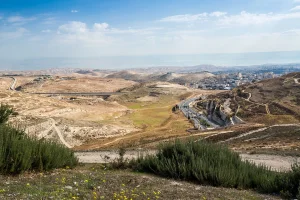
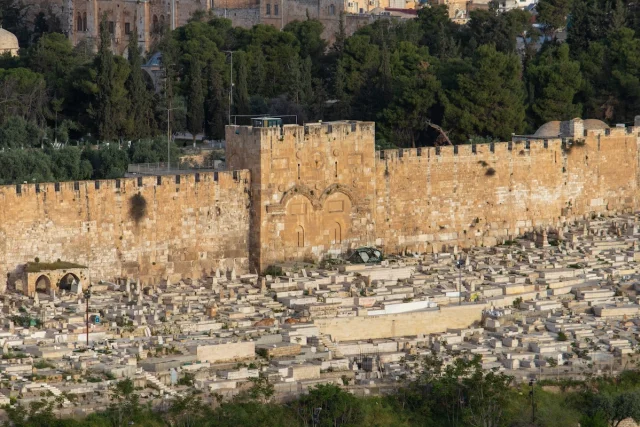
Messianic Jews in Israel stand in a land layered with holy memory. But holy geography is not a substitute for holy surrender. To live near biblical places is a gift. To walk with the God of those places is the calling.
The land remembers. The stones remember. The graves remember. But God asks His people to remember.
Dan: Justice Must Also Be Judged
Dan means judgment or justice. But Dan's story becomes one of Scripture's most sobering warnings.
The tribe named for justice becomes associated with idolatry. Judges 18 records the Danites establishing unauthorized worship. Later, when Jeroboam divides the kingdom, he places one of his golden calves in Dan (1 Kings 12:28-30). The place that should have represented discernment becomes a sanctuary of deception.
That warning is painfully relevant.
Israel's longing for justice is not wrong. A nation has a God-given duty to protect its people. Scripture does not command passivity before murder, kidnapping, terror, or annihilating hatred.
But Dan warns that justice itself can become an idol when it refuses to be judged by God. Justice becomes an idol when it forgets mercy, cannot repent, delights in enemy suffering, baptizes rage as righteousness, or forgets that every human being stands under the Creator's gaze.
Messianic Jews in Israel must speak of justice as those who know both Jewish suffering and Messiah's cross, both the necessity of defense and the danger of hatred, both the duty to protect life and the command to guard the soul.
Yeshua does not make Israel weak. He makes Israel holy. And holiness is not softness. Holiness is strength under God.
Dan says: seek justice, but let God judge your justice.
Naphtali, Joseph, and Benjamin: Light, Fruitfulness, and a New Name
Naphtali is born from wrestling. Later, Naphtali's territory lies in the north, in the region associated with Galilee. Isaiah speaks of "the land of Zebulun and the land of Naphtali," a people walking in darkness who see a great light (Isaiah 9:1-2). Matthew applies this to Yeshua beginning His public ministry in Galilee (Matthew 4:13-16).
The territory of wrestling becomes the place where light dawns.
For Messianic Jews in Israel, Galilee is not scenery for Bible illustrations. It is living land: threatened, inhabited, prayed over, and still marked by Messiah's footsteps.
Naphtali says: the light often rises where the struggle was greatest.
Joseph adds another word. He is the son of waiting, betrayal, exile, prison, interpretation, famine, forgiveness, and providence. His life teaches Israel how God hides redemption inside disaster.
His brothers sell him. Potiphar's wife falsely accuses him. Pharaoh's prison contains him. The cupbearer forgets him. But God does not forget him.
Jacob blesses Joseph as "a fruitful bough by a spring; his branches run over the wall" (Genesis 49:22).
That image is urgent for Israel now. There are walls everywhere: physical, military, ideological, religious, ethnic, digital - walls between Jews and Arabs, secular and religious, trauma and understanding, grief and speech.
Joseph does not pretend walls are unreal. He simply becomes fruitful beyond them.
That is a Messianic calling in Israel: be fruitful beyond the wall. Love beyond the wall. Serve beyond the wall. Witness beyond the wall. Pray beyond the wall. Refuse to let your wound become the border of your obedience.
Joseph also teaches forgiveness without sentimentality. He does not call evil good. He says, "You meant evil against me, but God meant it for good" (Genesis 50:20). Israel does not need cheap reconciliation - peace without truth, forgiveness without repentance, unity without justice. But Israel does need resurrection-shaped reconciliation: costly, truthful, secure, repentant, and impossible without God.
Benjamin's birth is the most heartbreaking of the twelve. Rachel dies giving birth. With her last breath she names him Ben-Oni, son of my sorrow. Jacob renames him Benjamin, son of the right hand (Genesis 35:18).
The child stands between two names: sorrow or strength, deathbed or right hand, grief or destiny.
Jacob does not deny Rachel's sorrow. He refuses to let sorrow have the last naming right.
Israel needs that now. There is sorrow that must not be rushed. There are graves that must not be explained too quickly. There are shattered families for whom slogans are an insult. But sorrow must not be allowed to become the final name.
In Yeshua, the Man of Sorrows becomes the One seated at the right hand of God. He does not escape sorrow. He passes through it. He carries it. The risen Messiah still has wounds. Resurrection did not erase them. It enthroned them as the marks of victorious love.
Benjamin says: grief may name the moment, but God names the future.
Moses' Final Blessing and the Scattered Names
Jacob blesses the tribes from a deathbed in Egypt. Moses blesses them from the edge of the land.
That difference matters. Jacob speaks as the father of a family becoming a people. Moses speaks as the shepherd of a people about to become settled tribes. Jacob speaks before slavery. Moses speaks after deliverance.
In Deuteronomy 33, Moses blesses the tribes again. Reuben is told to live and not die. Judah is heard by the Lord. Levi is entrusted with teaching and priestly service. Benjamin is beloved and rests between God's shoulders. Joseph receives the precious things of heaven and earth. Zebulun rejoices in going out, and Issachar in his tents. Gad receives enlargement. Dan is a lion's cub. Naphtali is full of favor. Asher dips his foot in oil.
These blessings do not erase Jacob's warnings. They deepen them. Israel is not frozen in its first wound. God keeps speaking over the tribes as history unfolds.
But the tribal story also becomes national tragedy.
After Solomon, the kingdom splits. The northern tribes become the kingdom of Israel. Judah and Benjamin remain in the south, with Levites drawn toward Jerusalem because of priestly fidelity. Jeroboam establishes rival worship at Bethel and Dan. Idolatry becomes policy. Covenant becomes convenience. Worship becomes politics.
Then Assyria comes. The northern kingdom falls. The tribes are scattered. Later, Judah falls to Babylon. Jerusalem burns. The Temple is destroyed. The people sit by foreign rivers and weep.
Yet exile does not mean erasure. Judgment does not mean abandonment. Scattering does not mean God has lost the names.
Empires can scatter tribes, but they cannot erase covenant from the memory of God. The Assyrians could deport. The Babylonians could burn. Rome could crucify. The nations could rage. History could bury names under dust.
But God remembers.
The Remnant, the Messiah, and the Gates
By the time Yeshua comes, Israel's tribal memory has been battered by centuries of conquest and dispersion. Yet it has not disappeared.
Anna is from Asher (Luke 2:36). Paul is from Benjamin (Philippians 3:5). James writes to "the twelve tribes in the Dispersion" (James 1:1). Yeshua appoints twelve apostles, a deliberate sign that He has come not to abandon Israel's story but to gather, renew, and fulfill it.
The number twelve is not accidental. It is restoration language.
Yeshua is not founding a religion out of nowhere. He is summoning Israel around Himself. He is the true King, Temple, Shepherd, Vine, Servant, and Israelite in whom Israel's calling is fulfilled and through whom the nations are blessed.
This is why Messianic Jewish existence matters so deeply. You are a sign that the story has not broken in two. You testify that the God of Abraham has not changed His name, that the Messiah of Israel has not forgotten His people, that the nations are grafted into Jewish promise rather than invited to sneer at Jewish unbelief, and that Jewish faith in Yeshua is not apostasy from Israel but allegiance to Israel's King.
You are not an embarrassment to the story. You are one of its foretastes.
The final book of the Bible does not end with Israel erased. It ends with Israel transfigured in the glory of the Lamb.
In Revelation 7, John hears of 144,000 sealed from the tribes of Israel. The list is strange. Judah comes first. Dan is absent. Levi is included. Joseph and Manasseh appear. The order itself preaches. Judah first because the Messiah has conquered. Levi included because the priestly calling has expanded. Dan absent, perhaps as a warning about idolatry's cost.
But Revelation 21 gives the wider vision: the New Jerusalem descends, and on its twelve gates are written the names of the twelve tribes of the sons of Israel. On the twelve foundations are the names of the twelve apostles of the Lamb.
The tribes are the gates. The apostles are the foundations. Israel and the apostolic witness are not enemies. They are one city.
The church does not replace Israel. The nations do not erase Israel. The Lamb does not abolish the tribes. The Messiah fulfills the promises and makes Israel's calling luminous for the whole creation.
The nations enter through gates bearing Israel's names. The city is not less Jewish because the nations are welcomed, and not less universal because Israel is honored.
This is the architecture of biblical hope.
For Messianic Jews in Israel, this means you are not a contradiction. You are a preview. You stand at the intersection of the gates and the foundations. You belong to the people whose names are on the gates, and you confess the Lamb whose emissaries are on the foundations.
Do not apologize for loving Israel. Do not apologize for loving Yeshua. Do not let anyone tell you those loves must compete.
The New Jerusalem says otherwise.
The names are still on the gates.
Your failures do not erase your name. Your scattering does not cancel your gate. Your sorrow does not outrank His covenant. Your wounds are not stronger than His resurrection.
Israel is again in the narrow place.
But the narrow place is not the final place.
There is a city coming. There is a Lamb at its center. There are names on its gates. And Israel's Messiah is not ashamed to welcome His people home.
You might also like to read this: