IDF demolishes underground Hezbollah ‘drone fortress’ as sides begin implementing Lebanon deal
LAF reportedly prepares for first deployments of 'pilot program'




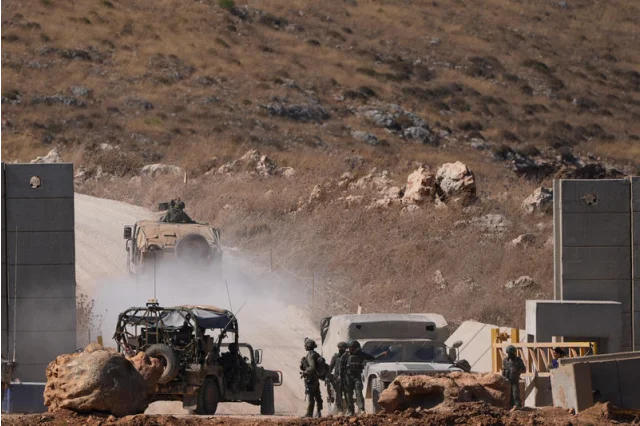
Several days after Israel and Lebanon signed the historic “trilateral framework” in Washington, D.C., media reports revealed previously undisclosed clauses of the agreement, while both sides began moving forward with initial preparations for implementation on the ground.
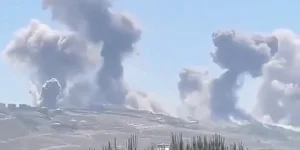
In the most noticeable development, the IDF demolished an underground complex built by Hezbollah near the Israeli border, with an explosion that shook the windows across large parts of the northern Galilee on Sunday evening.
The explosion was so large that local councils warned residents to disregard possible earthquake alerts that might be triggered. Last week, the IDF revealed the underground complex that was discovered in Majdal Zoun, only 10 kilometers (6 miles) from the Israeli border.
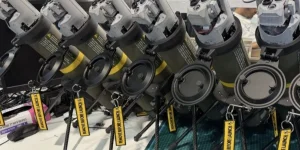
Built with Iranian assistance, it served as a drone factory and launch base. “The tunnel extended more than 200 meters (656 feet) in length and was more than 25 meters (82 feet) deep. Inside, troops discovered hundreds of weapons as well as four launch shafts aimed toward the territory of the State of Israel,” the IDF stated.
The IDF publishes footage showing the demolition of a major Hezbollah tunnel under the southern Lebanon village of Majdal Zoun this evening. pic.twitter.com/ZvQmkHXPY3
— Emanuel (Mannie) Fabian (@manniefabian) June 28, 2026
Prime Minister Benjamin Netanyahu and Defense Minister Israel Katz noted that the demolition was carried out in coordination with the U.S. and the Lebanese government. Their joint statement reiterated that the IDF would “remain in the security zone in southern Lebanon and will continue to destroy terrorist infrastructure, remove threats to northern communities, and safeguard the security of Israel's citizens.”
Israel's claim was confirmed by reports in The Times of Israel (TOI) and Channel 12 News on Sunday, with both citing the unpublished security annex to the framework.
According to an official cited by TOI, the annex stipulates that there will be no “automatic” withdrawals by the IDF once certain conditions are met, and that Israel will retain full freedom of action to counter emerging and immediate threats within the security zone.
🔴 2 pilot areas in Lebanon: one in Zoutar el Gharbiyeh and the second in Froun, Ghandouriyeh and Srifa🔴
— Or Fialkov (@OrFialkovEng) June 27, 2026
Some of the areas were not captured by the IDF at all
On the Nabatieh plateau, the IDF still controls the entire area it captured, including Zoutar esh-Sharqiyeh
And the… pic.twitter.com/FpxUb1Vfiq
Meanwhile, on the Lebanese side, troops of the Lebanese Armed Forces (LAF) were reportedly set to begin deploying on Monday in two towns as part of a “pilot program” described as a key mechanism for implementing the agreement.
The parties agreed on two areas from which the IDF will withdraw, allowing the LAF to deploy in its place. The first deployment in the towns of Zawtar and Froun will be carried out under the supervision of Admiral Brad Cooper, commander of U.S. Central Command (CENTCOM), a Lebanese government source told the Saudi newspaper Asharq Al-Awsat.
There will be no additional pilot zones in the coming weeks, TOI reported, as Israel assesses that the LAF’s deployment in the areas will take several weeks to implement fully.
SECRETARY RUBIO: "We're happy to announce a framework agreement between the sovereign government of Lebanon and the government of Israel, with the mediation and support of the United States of America." pic.twitter.com/0Zbd9HRKmh
— Department of State (@StateDept) June 26, 2026
Israel is reportedly concerned that Iran could seek to undermine the arrangement by pressuring the U.S. in separate talks to demand additional Israeli withdrawals in Lebanon.
According to a Kan News report, the agreement also includes a clause committing both sides to work toward the release of detainees, a longstanding demand over which Hezbollah has pressured Beirut.
Israel is believed to be holding at least 18 Hezbollah operatives who were captured during the war. In addition, there are the remains of Jewish people buried in Lebanon whose families wish to transfer them to Israel. However, the report noted that this clause was intentionally left vague, suggesting it is not a high-priority issue for either side.
Hezbollah UAV Launch Tunnel Discovered Beneath Civilian Homes in Southern Lebanon
— Israel-Alma (@Israel_Alma_org) June 28, 2026
A Hezbollah UAV launch tunnel, approximately 200 meters long and equipped with four launch shafts, was discovered several days ago beneath civilian homes in the village of Majdal Zoun in the… pic.twitter.com/D99P3ik0GY
While the agreement with Lebanon was welcomed by most Israelis, skepticism remains.
“It sounds good. It sounds appealing. It sounds excellent… but when you break it down into practical terms, we don't see any real breakthrough here – no improvement whatsoever in the security situation for the residents of northern Israel, Eitan Davidi, head of the Margaliot Council, told Ynet News.
Davidi noted that a similar agreement with the Lebanese government had already been reached in November 2024: “Hezbollah was supposed to be disarmed south of the Litani River. We gave them until the end of 2025, and nothing happened… we made an agreement with a government that is incapable of delivering results and of disarming Hezbollah.”
The Israeli Air Force struck three Hezbollah command centers in the Nabatieh and Mayfadoun areas in southern Lebanon last night, the military says.
— Emanuel (Mannie) Fabian (@manniefabian) June 29, 2026
The strikes were carried in response to "the continued attacks against our forces operating in the security zone by the Hezbollah… pic.twitter.com/6zM9S5Daxy
“From here in Margaliot, we can see Hezbollah raising its head again. I don't know whether anything will happen in the coming days, but I can say with complete certainty that we're heading toward another round of fighting,” Davidi warned.
Once again, fighting flared up on the ground on Sunday. The IDF said it struck three Hezbollah command centers in the areas of Nabatiyeh and Mayfadoun in response to "Hezbollah’s violations of the ceasefire agreement in the form of continued attacks on IDF soldiers in the Security Zone."
"Earlier yesterday, IDF soldiers struck and dismantled a launcher that Hezbollah continued using to direct attacks at them," the Israeli military said, vowing it would "remove any threat posed to IDF soldiers and will not allow the Hezbollah terrorist organization to harm Israeli civilians and IDF soldiers."
Please take a moment to join believers worldwide praying for Israel right now. Add your light to the live prayer map—and show the world one more watchman praying for the peace of Jerusalem.

You might also like to read this: