US supports Israel-Lebanon trilateral agreement linking IDF withdrawal to Hezbollah disarmament





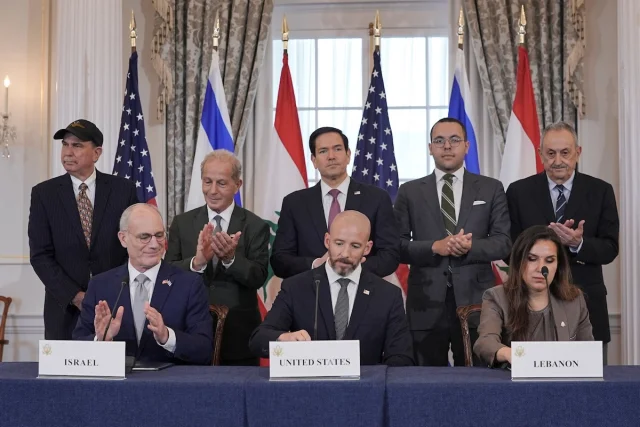
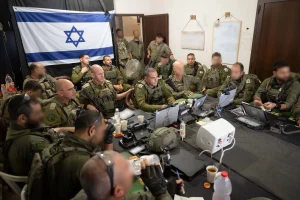
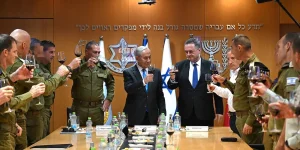
Israel and Lebanon on Friday signed a U.S.-backed trilateral agreement at the U.S. State Department aimed at ending hostilities through direct talks between the two neighboring countries. The framework reportedly links a phased Israeli military withdrawal from southern Lebanon to the disarmament of the Iranian-backed Hezbollah terrorist group, with the Lebanese Armed Forces (LAF) assuming control of areas vacated by the IDF.
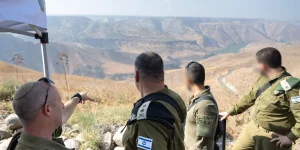
Israeli Ambassador to the U.S. Yechiel Leiter said Israel would maintain its security zone in southern Lebanon until the Lebanese military demonstrates it can assume responsibility for the designated areas. He said the IDF withdrawal would not follow a fixed timetable but would instead be tied to conditions on the ground.
Although the new framework is not considered a peace agreement, it allegedly establishes a mechanism for direct Israeli-Lebanese contacts under U.S. auspices. Israel has repeatedly said it has no territorial claims in Lebanon and that the IDF's presence in southern Lebanon is intended to protect the security of northern Israeli border communities.
U.S. Secretary of State Marco Rubio said the Israel-Lebanon agreement marks the beginning of improved relations between the two countries, but emphasized that significant work and challenges remain.
“There’s a lot of work ahead. We don’t in any way underestimate the difficulty of the task ahead, but we understand the importance of it, how vital it is, and we are honored to have played a part in bringing this together,” Rubio stated.
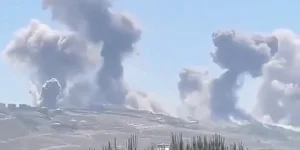
The latest conflict between Hezbollah and Israel began in early March when Hezbollah forces in Lebanon attacked Israel for the second time since the Hamas-led Oct. 7, 2023, attack.
The Lebanese government officially banned Hezbollah military activities in March but has so far been unable or unwilling to confront the terror group, which continues to attack Israel from Lebanese territory.
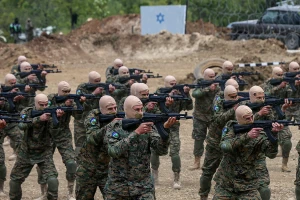
Under the framework, implementation is contingent on the LAF assuming responsibility for areas under Beirut's authority and dismantling non-state armed groups, including Hezbollah, and their infrastructure.
Israeli forces would redeploy only after those steps have been implemented and verified. Two initial pilot zones have reportedly been agreed upon by Israel and Lebanon, with any expansion to additional areas requiring the consent of both governments.
The United States said it would work with both countries to monitor and verify implementation of the framework. Lebanon has also requested assistance from Arab states and other international partners to support the process.
The Lebanese President Joseph Aoun condemned Iran earlier this month for interfering in Lebanese affairs. “We are fed up and we want to live in peace,” Aoun said in an interview with CNN. “I prefer negotiations over wars. I don’t want my children … and I don’t want the people in Lebanon to live the same hardship.”
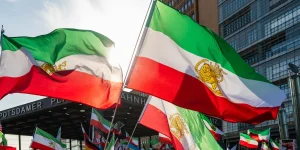
Hezbollah and the Iranian regime have rejected calls to disarm, with Hezbollah vowing to continue attacks on Israel until the IDF fully withdraws from southern Lebanon.
Please take a moment to join believers worldwide praying for Israel right now. Add your light to the live prayer map—and show the world one more watchman praying for the peace of Jerusalem.

You might also like to read this: