








northern front Hezbollah rejects joint Israeli-Lebanese ceasefire statement, vows attacks will continue until full IDF withdrawal
Terror group launches drone strikes at northern Israel shortly after visit by PM Netanyahu
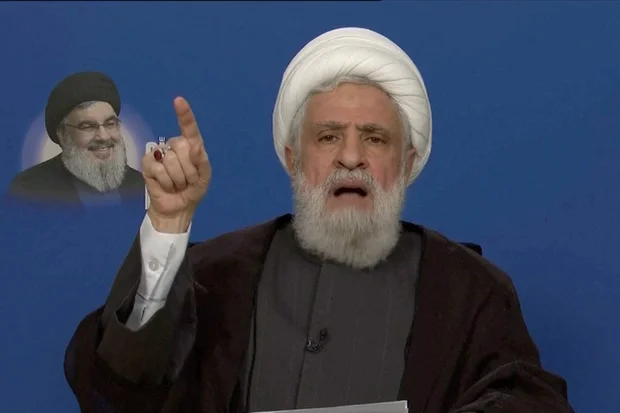
The terror organization Hezbollah rejected the agreement to recommit to a ceasefire in Lebanon that was reached by the Israeli and Lebanese governments early on Thursday, vowing to continue its attacks against Israel until the IDF withdraws from Lebanese territory.
Soon after a written statement to this effect was published by Hezbollah leader Naim Qassem, the terror group launched a fresh round of drone strikes, causing alarm sirens in the northern Israeli town of Shlomi just a short time after Israeli Prime Minister Benjamin Netanyahu visited there.
In a joint statement, Israel and Lebanon agreed to renew the ceasefire, which had been announced by U.S. President Donald Trump in mid-April and had effectively collapsed recently amid fighting between Hezbollah and the IDF. The statement noted that “the ceasefire is contingent on a complete cessation of Hizbollah fire and the evacuation of all Hizbollah operatives from the South Litani Sector.”
Officials from the U.S., whose mediation was instrumental in reaching the agreement, told the LBCI Lebanon News after Qassem’s remarks that “we judge actions, not words.”
🔴 BREAKING: A Hezbollah official says the group has told Lebanon’s government it rejects the proposed truce with Israel. pic.twitter.com/FcEi5cz97Q
— Al Arabiya English (@AlArabiya_Eng) June 4, 2026
“This agreement resembles a last chance and wasting it means that everyone will pay a heavy price,” American officials said, adding that the first de-escalatory step would be an Israeli withdrawal from zones marked as “pilot areas.”
The agreement stipulates the creation of “pilot zones in which the Lebanese Armed Forces will take exclusive control of the territory to the exclusion of all non-state actors.” In effect, this represents a renewed effort to establish state control over southern Lebanon – a task Beirut had prematurely declared accomplished shortly before Hezbollah resumed its attacks on Israel during the U.S.-Israeli war against Iran.
A Hezbollah official also told the French AFP on Thursday that it informed the government it had rejected the agreement made by Parliament Speaker Nabih Berri, the leader of the Shiite Amal movement who has been representing Hezbollah in the talks.
Hezbollah's Secretary-General Naaim Qassem: We have made no commitment to anyone to stop resisting or responding to aggression. As long as it continues, we will confront it with all our might, strike where we choose and can, and as long as our villages are bombed and our people…
— Joe Truzman (@JoeTruzman) June 4, 2026
Later Thursday, the IDF said, “Hezbollah launched two rockets toward Israel Defense Forces operating in southern Lebanon,” noting that one was intercepted and the other landed near the forces. There were no casualties reported.
Unlike many previous statements by both himself and his slain predecessor, Hassan Nasrallah, Qassem's latest message was released in writing rather than delivered on television, potentially indicating concerns about being targeted in an Israeli strike.
The agreement, he said, “is nothing but surrender and defeat. We are dealing only with a complete cessation of aggression, a ceasefire, and Israel’s withdrawal.”
Qassem demanded a “comprehensive” ceasefire that would not distinguish between southern Lebanon and the rest of the country and would not grant Israel the right to strike Hezbollah for any reason.
“We do not accept any linkage between the existence of the resistance and the cessation of aggression and Israel’s withdrawal. Iran is working to establish a comprehensive ceasefire in Lebanon as part of a broader effort to end the aggression against Iran,” he added.
Earlier, Lebanese President Joseph Aoun had praised the agreement for containing “very important points in favor of Lebanon,” emphasizing it was “the last opportunity to enter into a final and comprehensive ceasefire,” without mentioning Hezbollah in his statement.
“Regarding the pilot zones, Lebanon proposed that the beginning be in the eastern and western Zutars, along with Yahmor and Shaqif Castle, due to the symbolism of this area and its proximity to the city of Nabatieh,” the Lebanese presidency added.
Prime Minister Nawaf Salam told his cabinet, “The negotiation path we have chosen is the fastest and least costly route for Lebanon and the Lebanese people… Negotiations were not the only option available to us, but they were the best option.”
Salam also said that the Lebanese military's goal of asserting state control over southern Lebanon by displacing Hezbollah from the region, where much of the group's Shiite support base resides, was not imposed by anyone.
"It is a commitment Lebanon made to the world when it accepted UN Security Council Resolution 1701 in 2006. Regarding the principle that arms should be exclusively in the hands of the state throughout Lebanese territory, we have delayed far too long in implementing the provisions of the Taif Agreement, which the Lebanese themselves signed and which was also reaffirmed in our ministerial statement."
“The next step is practical and tangible: the deployment of the Lebanese Army in designated pilot areas as an initial phase. This does not undermine our right to a full Israeli withdrawal; rather, it brings us closer to achieving it,” Salam declared.
Popular article:
interview Easter message of resurrection hope amid war at Jerusalem's Garden Tomb

biblical commentary Let my people go: a Passover message for today
4 IDF soldiers killed, 2 wounded in fighting in southern Lebanon, as Israel eliminates dozens of Hezbollah terrorists
Receive latest news & updates
A message from All Israel News
Help us educate Christians on a daily basis about what is happening in Israel & the Middle East and why it matters.
For as little as $10, you can support ALL ISRAEL NEWS, a non-profit media organization that is supported by readers like you.
Latest articles:
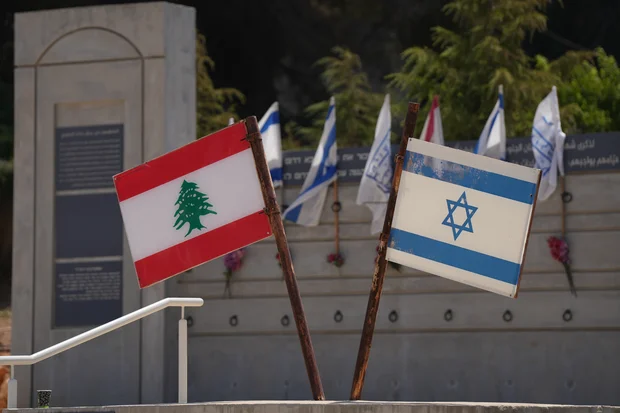
northern front 'Peaceful dialogue is not a crime:' Petition urges Lebanon to abolish its Israel Boycott Law
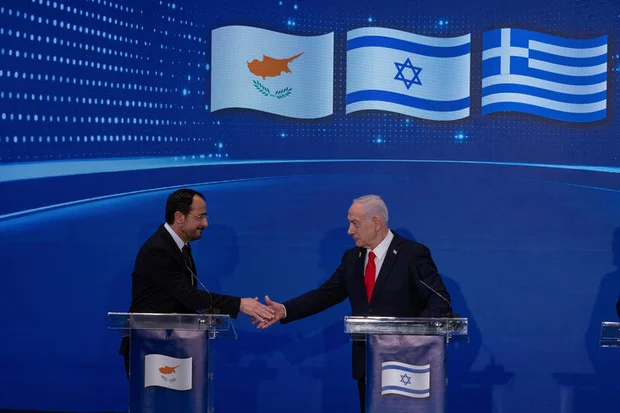
northern front Israeli defense companies expand global reach with new deals in Cyprus, Germany and Canada
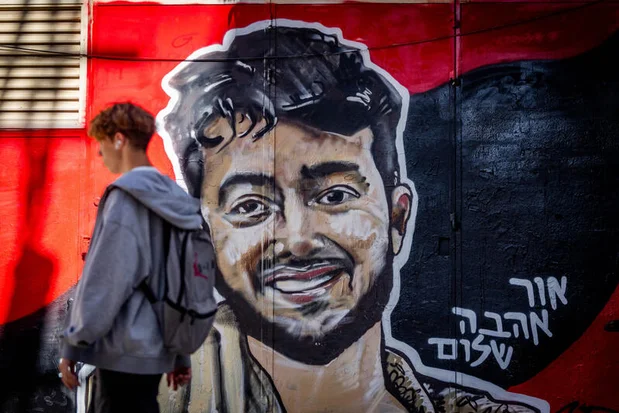
northern front Netflix’s ‘The Diplomat’ appears to pay tribute to slain Israeli hostage Hersh Goldberg-Polin
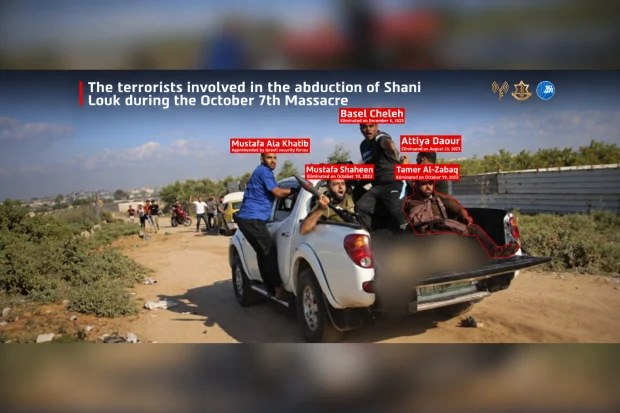
northern front IDF kills Hamas terrorists involved in abduction of German-Israeli Shani Louk on Oct 7
northern front Hungary reaffirms ties with Israel during Herzog visit, condemns antisemitism