Israel, Lebanon to negotiate over IDF withdrawal 'pilot plan' as fighting with Hezbollah flares up
4 IDF soldiers wounded in clashes, Hezbollah threatens: Israel will leave humiliated and defeated



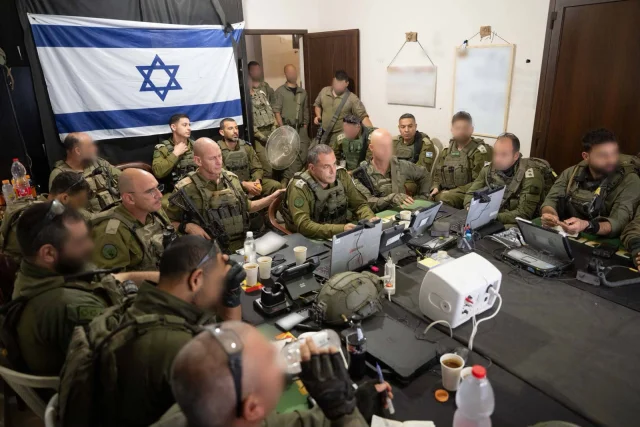
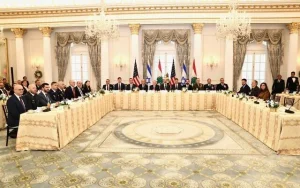
Israel and Lebanon on Thursday agreed to extend their talks in Washington, D.C., after making progress on the third day of negotiations, without reaching an agreement over “pilot zones” from where the IDF would withdraw to let the Lebanese military deploy in its place.
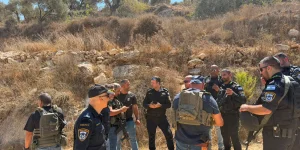
Meanwhile, fighting flared up in southern Lebanon, with the IDF killing several Hezbollah terrorists in clashes that also led to four Israeli soldiers being wounded.
Citing an Israeli embassy spokesperson, The Times of Israel (TOI) reported that establishing a framework agreement will be the focus of the fourth day of negotiations, though withdrawals in southern Lebanon would only be conducted in small areas where the IDF has cleared all Hezbollah infrastructure.
On Thursday, Iran’s Quds Force commander, Esmail Qaani, reiterated the regime’s demand for a full withdrawal of Israeli troops from Lebanese territory: “This land is a field of steadfastness and resistance, not a playground for occupiers,” Qaani said via state media. “If you do not withdraw of your own accord today, tomorrow you will be forced to flee in humiliation and defeat,” he threatened.
Hezbollah chief Naim Qassem also rejected the talks between Beirut and Jerusalem, vowing that Hezbollah would accept “no normalization, no cancellation of the state of hostility, no gains for Israel, and no partial presence on Lebanese soil… Israel must leave humiliated and defeated, and that is what will happen.”
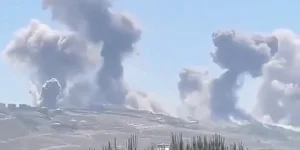
The IDF says it struck and killed at least six Hezbollah operatives who posed a threat to troops operating in southern Lebanon today.
— Emanuel (Mannie) Fabian (@manniefabian) June 25, 2026
According to the military, in one incident in Zawtar al-Sharqiyah, troops of the Golani Brigade spotted five Hezbollah operatives near them. In… pic.twitter.com/45N2NLNk5u
U.S. Secretary of State Marco Rubio praised the negotiations, saying, “We are very close in our hopes of getting a commitment of intent between the two countries… for the first time in 30 years, the sovereign government of Lebanon is speaking to the government of Israel directly. That's who we're going to be negotiating and working with. Not Hezbollah. Hezbollah is not the government of Lebanon.”
According to an informed source who spoke with TOI, both sides believe the U.S.-Iran agreement had undermined their positions during the talks by recognizing the regime’s influence over Lebanon and strengthening Hezbollah’s veto.
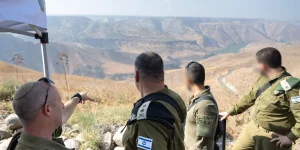
The IDF is deployed in the Security Zone, ~10 km inside Lebanese territory, due to operational requirements.
— Israel Defense Forces (@IDF) June 18, 2026
IDF soldiers will continue to remove threats and strengthen the defense of Israel’s northern residents. pic.twitter.com/jQQPCSAeIe
The Lebanese newspaper Al Joumhouria said the main obstacle in the talks has been on the Lebanese side, as Hezbollah refuses to allow the government to conduct the “withdrawal pilot plan” in an area north of the Litani River – outside of direct Israeli control.
Israel has reportedly refused to give up areas under the IDF’s control, insisting on starting the trial phase in an area north of the Litani to gauge its success before ceding areas farther south, closer to the Israeli border.
Earlier on Thursday, Reuters reported that Israel had agreed to start withdrawing some of its troops, however, this was denied by officials from both sides.
Fighting flared up on Thursday after several days of relative quiet. The IDF reported four soldiers wounded, including one combat officer who suffered moderate injuries, when a Hezbollah terrorist threw a grenade at them from inside a building in the village of Beit Yahoun.
Ali al-Taher Ridge Sector: Is Hezbollah Attempting to Undermine the Ceasefire?
— Israel-Alma (@Israel_Alma_org) June 23, 2026
Throughout the day, two strikes were carried out against Hezbollah cells operating in the Ali al-Taher Ridge area in southern Lebanon and posing a threat to IDF forces. The two cells comprised a total… pic.twitter.com/uisvbs0kSa
Israeli troops returned fire and killed the terrorist, while the IDF also carried out artillery and aerial strikes against several terrorist infrastructure sites in the area.
In other incidents, IDF soldiers operating in Zawtar al-Sharqiya “identified five Hezbollah terrorists who posed a threat to them within the area of the Security Zone,” while troops on the Ali al-Taher Ridge “identified an armed Hezbollah terrorist who posed a threat.”
“The Israeli Air Force and the ground forces fired toward the terrorists and eliminated them to remove the threat,” the IDF said, adding that its troops near Ali al-Taher Ridge would not allow “Hezbollah terrorists to exit the underground tunnel network or operate in the area of the ridge.”
Dozens of terrorists are estimated to be trapped in a vast underground complex in the area.
The Lebanon ceasefire continues to stoke tensions between the political and military leadership in Israel, as i24 News reported that ministers accused Prime Minister Benjamin Netanyahu of putting soldiers at risk.
Netanyahu reportedly stressed that soldiers have the right to respond to “any immediate threat,” to which National Security Minister Itamar Ben Gvir responded, “And what about an emerging threat? If we see Hezbollah rearming, why aren't we dismantling them?”
IDF Chief of Staff, Lt.-Gen. Eyal Zamir reportedly pushed back on the criticism, telling ministers, “You wanted a ceasefire.”
“The ceasefire has advantages and disadvantages, but we are not putting any soldier at risk,” Defense Minister Israel Katz replied.
Please take a moment to join believers worldwide praying for Israel right now. Add your light to the live prayer map—and show the world one more watchman praying for the peace of Jerusalem.

You might also like to read this: