Israeli blood test detects early breast cancer with 95% accuracy, assesses recurrence risk
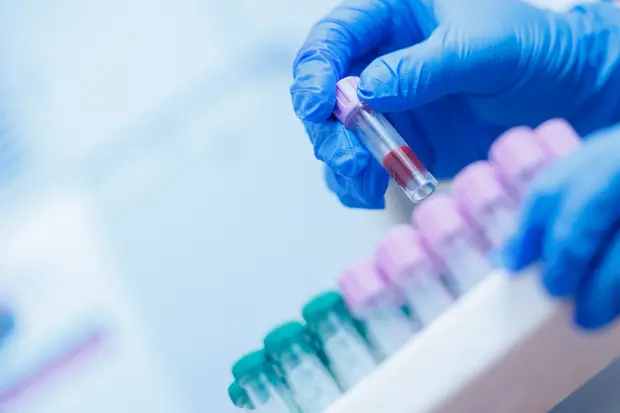
Israeli researchers have developed a blood test that detects early-stage breast cancer with 95% accuracy and can also identify patients at increased risk of the disease returning, including some considered low-risk by conventional measures.
The study, led by Prof. Efrat Shema of the Weizmann Institute of Science and Prof. Guy Ron of the Hebrew University of Jerusalem, uses epigenetic markers released into the bloodstream to identify cancer-related cell patterns.
The findings, published this week in the scientific journal Nature, could offer a less invasive way to detect breast cancer and assess the likelihood of recurrence.
The research was conducted by Dr. Noa Furth and Dr. Christina Riemenschneider from Shema's laboratory, in cooperation with Yishai Arieli from Ron's research group.
"We recruited 12 patients who were scheduled to undergo tumor removal surgery," Furth said.
"Once the tumor is removed, there is only a narrow window of time during which the epigenetic tags remain intact. So whenever a surgery began, the doctors called me. I quickly transported the biopsy sample on ice from the hospital to the laboratory, and we began analyzing it that same day," she explained.
After mapping the tumors' epigenetic signatures, the researchers set out to identify the same markers in blood samples. They used a technology developed by Shema that examines nucleosomes, structures released into the bloodstream by dying cells, including cancer cells. Ron's team applied computational tools to identify patterns associated with cancer and the risk of recurrence.
"Breast cancer screening saves lives," Shema said.
"Routine mammograms reduce the risk of dying from the disease by 22%, but the denser the breast tissue, the more likely a tumor is to 'hide' in the image," she said.
"The blood test we developed demonstrated strong diagnostic performance regardless of breast density. It maintained its performance when we tested different types of breast cancer and when we expanded the blood sample database to 188 patients with the help of Sheba and Kaplan medical centers," Shema explained.
The researchers also found that some breast tumors classified as nonaggressive contained highly invasive cells with distinct epigenetic signatures.
“The differences appear to be primarily epigenetic. When we grew breast cancer models in the laboratory from nonaggressive cells, a group of aggressive cells always emerged at some point,” Shema explained.
Ron said the team then examined whether those aggressive-cell signatures could be detected in patients' blood and used to assess the likelihood of recurrence.
"When we searched the blood samples for the epigenetic signature of the aggressive cell population we had identified in the tumors, we found that the more prevalent this signature was, the greater the risk of the disease returning,” he explained.
"Based on this signature and additional epigenetic markers, we were able to distinguish with 81% accuracy between patients whose cancer returned during follow-up and those who did not experience a recurrence. The test even identified a risk of recurrence in patients who were considered low-risk according to conventional measures,” he continued.
Shema said the findings point to the role of epigenetic changes in allowing cancer cells to become more aggressive and resist treatment.
"Evidence is mounting that cancer cells exploit their epigenetic flexibility to change, become more aggressive and evade treatment,” Shema assessed.
"The methods we developed make it possible to track aggressive cell populations across various types of cancer. In the future, they may enable us not only to predict the risk of recurrence but also to try to prevent it,” she continued.
The researchers are now investigating whether treatments could target this process and reverse some of the changes that make cancer cells more aggressive.
"We are currently working to identify treatments that would deprive cancer cells of their epigenetic flexibility and perhaps even cause cells that have already become aggressive to revert to less aggressive characteristics," Shema concluded.

Support our independent, on-the-ground reporting from Israel. Become a $5/month Ally.
Popular article:

interview Easter message of resurrection hope amid war at Jerusalem's Garden Tomb

biblical commentary Let my people go: a Passover message for today

4 IDF soldiers killed, 2 wounded in fighting in southern Lebanon, as Israel eliminates dozens of Hezbollah terrorists

Receive latest news & updates
A message from All Israel News
Help us educate Christians on a daily basis about what is happening in Israel & the Middle East and why it matters.
For as little as $10, you can support ALL ISRAEL NEWS, a non-profit media organization that is supported by readers like you.
Latest articles:

Change Bloc divided over coalition with Arab or ultra-Orthodox parties after week of negotiations

Huckabee fires back as Senate Democrats target US-Israel intelligence ties: 'Shocking!'
Injured son of ambassador Leiter still unconscious but out of life-threatening danger, moved to rehabilitation

Jim Jordan takes GOP reins: What it means for Israel as Democrats take US Congress

At UN climate summit in Turkey, Erdoğan accuses Israel of 'ecocide' over Gaza war