Making ancient paths wheelchair accessible: Balancing preservation, modernization in Jerusalem
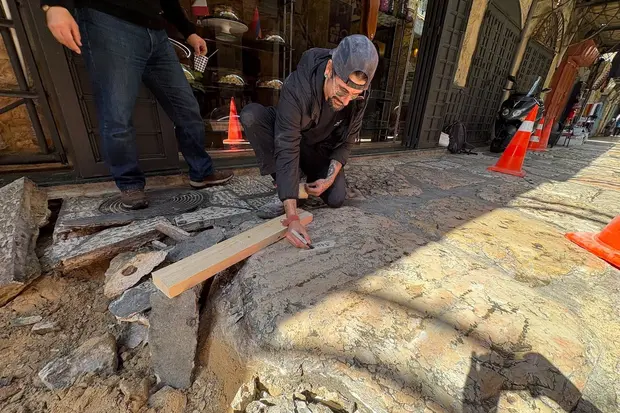
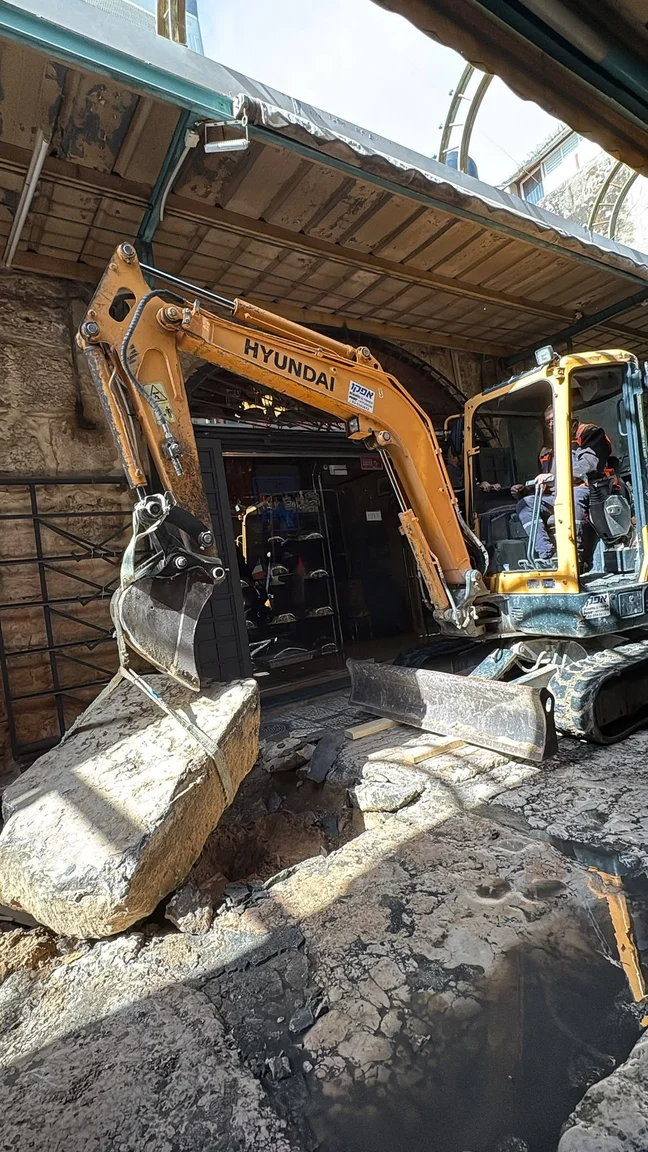
A section of Roman paving discovered beneath Christian Quarter Road is being raised to street level by the Israel Antiquities Authority (IAA) in a project that began this week, with the added challenge of making the path accessible to wheelchairs, strollers, and carts.
Making the city accessible to everyone has to be balanced with the need to preserve ancient relics that tell Jerusalem’s rich history. Archaeology and engineering experts are now documenting, dismantling and restoring around 50 Roman stones in what is estimated to be an NIS 80 million ($25 million) conservation project.
The stones will be removed, measured and examined by the IAA before being returned to create a public path. The conserved stones will take up about 1.5 meters (nearly 5 feet) on the eastern side of the street, while the western side will have modern paving suitable for wheelchair users, in line with the rest of the city.
About half of the Roman stones “require complex conservation treatment," according to the IAA, which makes the project all the more challenging, as great care is needed.
Before lifting each stone, experts will assess its condition to determine whether it can be returned to the street or should be kept in protected storage.
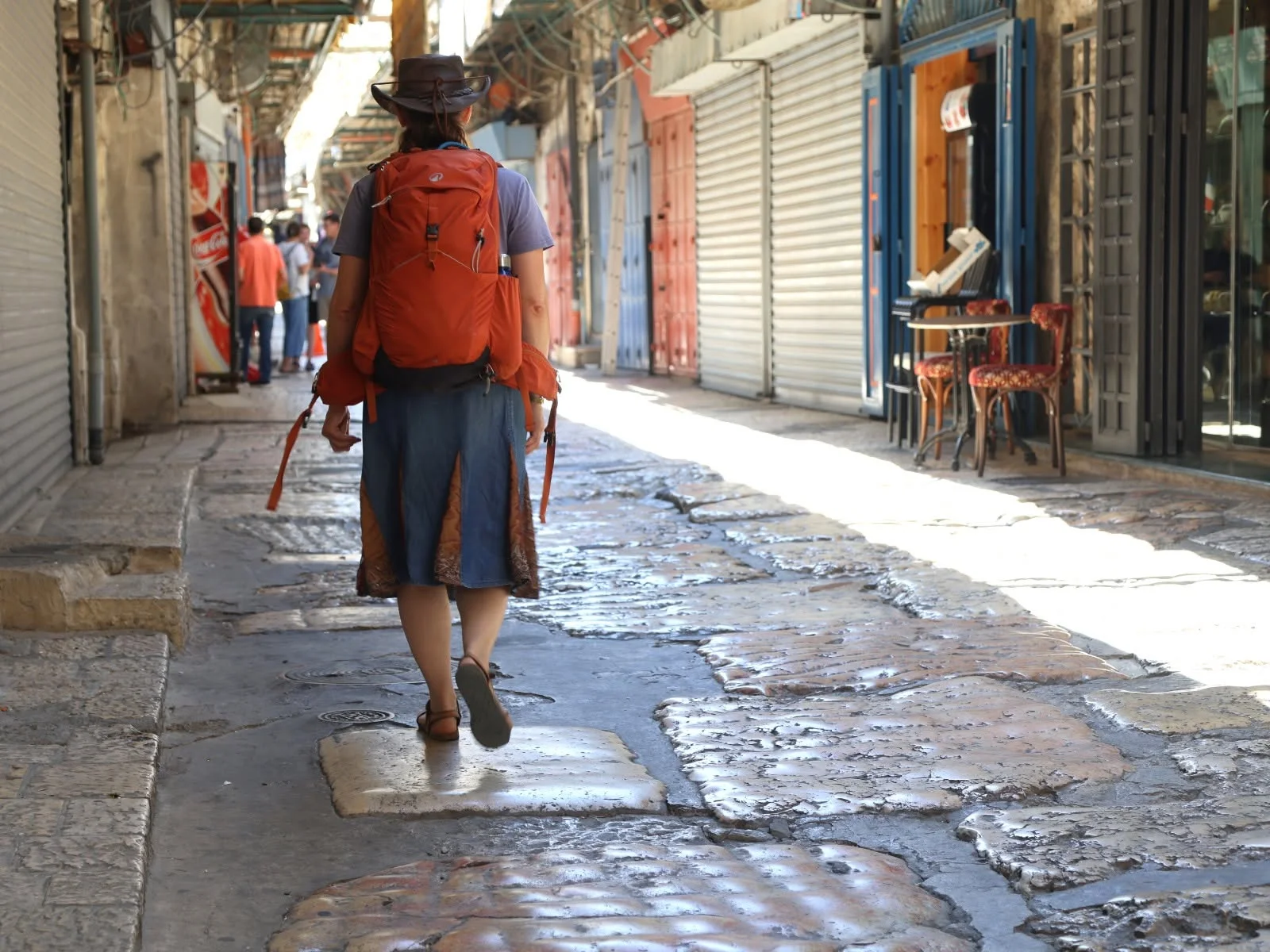
A similar project took place almost 50 years ago in 1977 when another section of ancient paving was discovered around 60 centimeters (24 inches) beneath today’s street level by Shlomo Margalit, Doron Chen and Giora Solar of the Department of Antiquities.
The large flagstones, measuring approximately two meters in length and half a meter in thickness, were raised and incorporated into the street on the medieval Patriarch's Way, forming the path that people walk on today.
Previously, it was wise to watch where you step in the Christian Quarter, where the ground underfoot can be irregular and unpredictable. Some of those slabs were laid thousands of years ago, long before trip-and-fall lawyers were invented.
Cory Lee, a wheelchair user and travel blogger, wrote about his experiences of trying to get around the ancient sites while the work to improve accessibility was still in progress.
“Much of the Old City was actually smooth and made for a pleasant journey. However, in about half of the Christian Quarter it was a little rough,” he said, adding that much of the Jewish Quarter was also challenging but “still doable” while the Muslim Quarter was the smoothest in his opinion.
The municipality began improving accessibility around 13 years ago, and by 2019 around 90% of the Old City’s streets had been upgraded, according to project spokeswoman Gura Berger, who admitted that making a 3,000-year-old city more accessible “isn’t easy to do.”
"We took fifty other historic cities around the world as a reference to see what they had done. Today I can proudly say that Jerusalem is the most accessible historic city in the world, and the result is a comfortable urban landscape," she said.
Shimon Albom, Director General of the Jerusalem Affairs and Heritage Ministry, said the project to enable access for everyone on top of thousands-of-years-old paving was part of the vision to “turn Jerusalem into the most accessible city in the world."
Moshe Lion, Mayor of Jerusalem, said making the city accessible was a responsibility.
"Precisely in a place with such immense historical and religious depth, we have a duty to ensure that this history is open and accessible to everyone," he said. "We are doing so while strictly preserving the stones, the alleyways, and the thousands-of-years-old heritage."
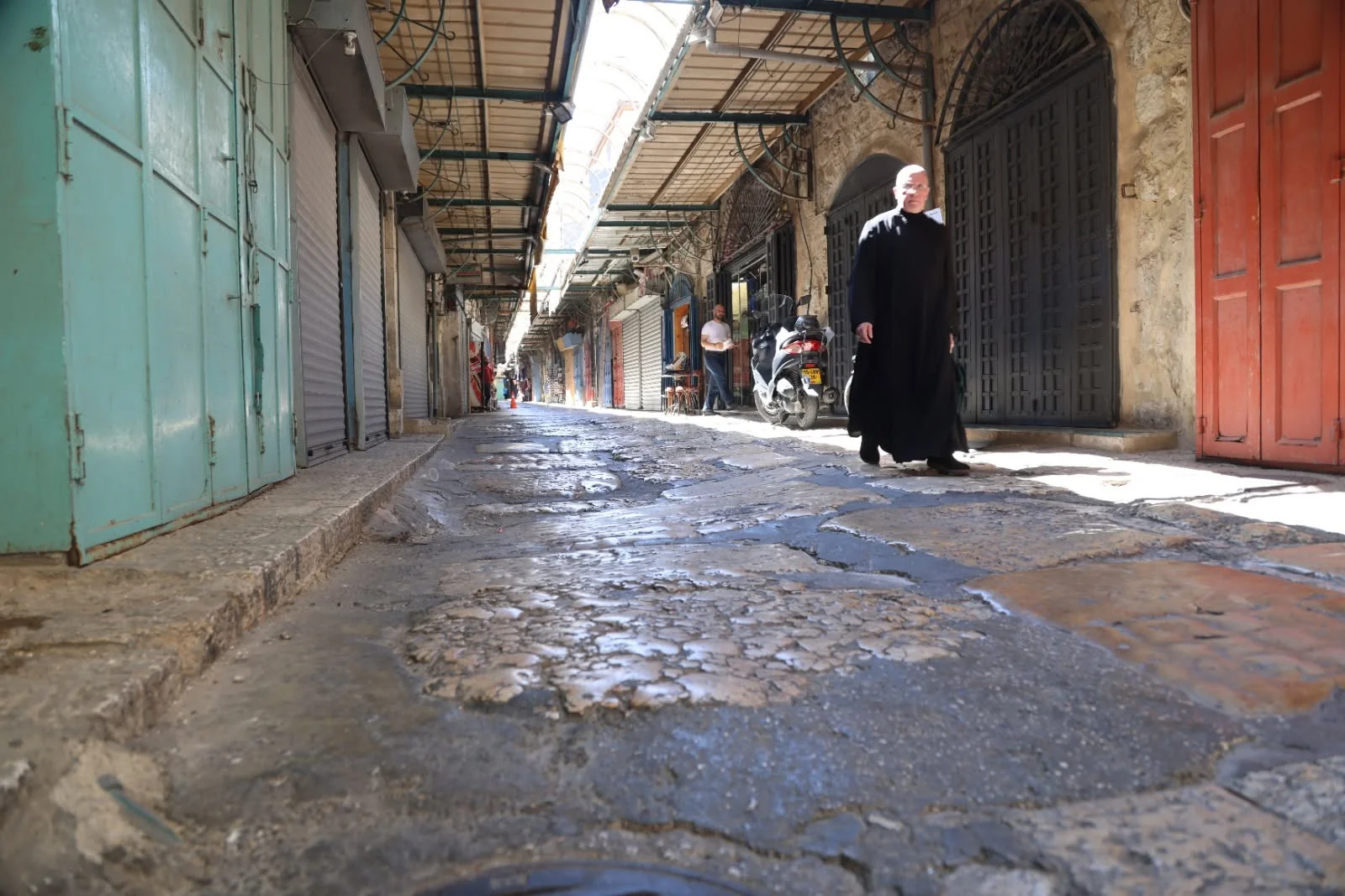
The effort to make the Old City completely accessible has already brought approximately six kilometers of alleyways and paths up to standard, enabling mobility-limited people to visit the holy sites and allowing emergency vehicles to have full access to all areas.
Berger explained the importance of making the city accessible for the residents of the Old City as well as for visitors:
"It is estimated that of the 40,000 people living within the walls, there are between 4,000 and 6,000 people with disabilities who need access to schools, grocery stores, and medical clinics. The city is built on several hills and there are thousands of stairs. In the past, if someone was sick or injured, they had to carry them on their shoulders to the Jaffa Gate; if a fire broke out, they had to run to the well and carry water by hand, whereas today emergency vehicles can reach every point in the Old City,” she said.
The project is led by the Ministry of Jerusalem and Jewish Heritage, together with the Accessibility Department of the Jerusalem Municipality and the Israel Antiquities Authority. The East Jerusalem Development Company (PAMI) is carrying out the work, with guidance from accessibility consultants, according to IAA.
Although Lee found parts of the Old City where he had to go slowly or even backward when he visited several years ago, he assessed that overall the Old City was pretty wheelchair friendly. It will be even more so now.
“While parts of it may not be one hundred percent wheelchair accessible, I can promise that navigating the Old City is completely possible and a must-do,” he summarized. “If you’re like me, the jaw-dropping city of Jerusalem will manage to go above and beyond any expectations that you had.”
A new app called “Accessible JLM” has been created for visitors, and a printed map to help visitors with wheelchairs and strollers navigate the Old City can be obtained free of charge at the Tourist Information Center at Jaffa Gate.
Popular article:

interview Easter message of resurrection hope amid war at Jerusalem's Garden Tomb

biblical commentary Let my people go: a Passover message for today

4 IDF soldiers killed, 2 wounded in fighting in southern Lebanon, as Israel eliminates dozens of Hezbollah terrorists

Receive latest news & updates
A message from All Israel News
Help us educate Christians on a daily basis about what is happening in Israel & the Middle East and why it matters.
For as little as $10, you can support ALL ISRAEL NEWS, a non-profit media organization that is supported by readers like you.
Latest articles:

ANALYSIS Is Trump about to turn off US aid spigot to Israel? Not exactly

Jerusalem Nas Summit brings 1,000 global tech entrepreneurs, industry leaders to Israel

Israel’s 26th Knesset convenes amid jockeying over potential Change Bloc gov't with ultra-Orthodox, Arab parties

Pro-Iran operative plotted attack on US airbase in Britain from NY prison

Israeli defense firm unveils SUPER ICE, new cruise missile built for long-range precision strikes