Israeli researchers develop blood test for early lung cancer detection





Israeli researchers have developed a blood test that could enable earlier, less expensive detection of lung cancer with more than 90% accuracy, according to a new study published in the peer-reviewed journal npj Precision Oncology.
The study, led by researchers from Tel Aviv University's School of Chemistry and Department of Biomedical Engineering, found that the test was also able to distinguish between the two main forms of lung cancer: non-small cell lung cancer and the more aggressive small cell lung cancer.
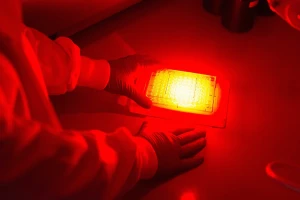
Rather than relying on DNA sequencing, which requires costly computing infrastructure, the researchers developed a "liquid biopsy" that uses light waves to detect the chemical "fingerprint" of cell-free DNA released into the bloodstream by cancer cells.
The research was conducted in collaboration with scientists from JaxBio Technologies, Bnai Zion Medical Center, the English Hospital in Nazareth, Sheba Medical Center and Bar-Ilan University.
The study's authors believe the liquid biopsy approach has the potential to provide a faster and less expensive alternative to current screening methods. While low-dose CT scans remain the standard tool for detecting lung cancer, they can produce false positives that may lead to unnecessary follow-up procedures.
In laboratory testing, the new method achieved an accuracy rate exceeding 90% and successfully differentiated between the non-small and small cell lung cancer. Researchers also said the technology could eventually help physicians monitor how well patients respond to treatment.
The team emphasized that the findings are preliminary and that substantially more research and clinical validation will be required before the test could become part of routine medical practice. For now, low-dose CT scans remain the recommended method for lung cancer screening.
Early detection is critical because lung cancer remains the world's deadliest cancer, with survival rates improving significantly when tumors are identified before they spread.
Smoking is still the leading risk factor for lung cancer, although the disease can also develop as a result of air pollution, exposure to carcinogens and genetic predisposition.
The authors of the study envision a future in which blood-based cancer diagnostics complement existing screening methods.
"To make blood tests for cancer diagnosis more accessible, faster and less expensive without compromising accuracy. The goal is not to replace existing tools but to give doctors an additional layer of biological information to support their decision-making. In the future, a simple blood test could provide information that currently requires far more complex and expensive technology."
Current treatments for lung cancer include surgery, radiation therapy, chemotherapy, targeted therapies, immunotherapy and combinations of these approaches, depending on the type and stage of the disease.
You might also like to read this: