While global markets celebrate Iran deal, Israel sees unresolved security threats




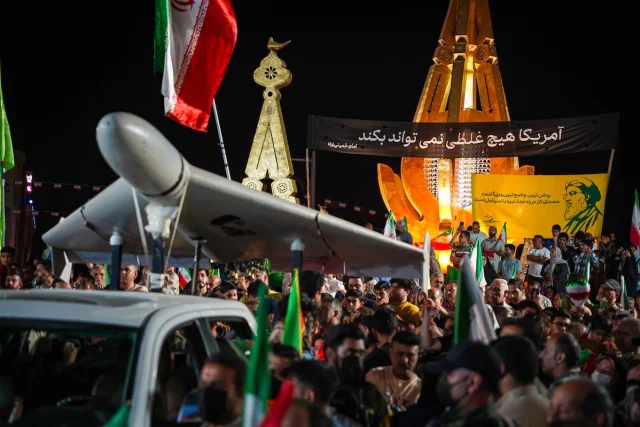
Global markets welcomed news that the United States and Iran are expected to sign a ceasefire agreement in Geneva this Friday.
Oil prices fell, Wall Street climbed to record highs, and investors embraced the prospect of a lower-risk Middle East. Yet in Tel Aviv the reaction was markedly different.
Israeli equities declined sharply as investors digested the implications of an agreement that may benefit the global economy while introducing new uncertainties for Israel.
The divergence reflects a broader reality. The interests of Washington and Jerusalem often overlap, but they are not always identical. For the United States, a reduction in tensions with Iran promises greater stability in energy markets, lower geopolitical risk, and fewer disruptions to global trade.
For Israel, the question is not whether the agreement ends the current confrontation but whether it addresses the underlying threat that produced it.
That distinction matters because the agreement being discussed is not a comprehensive settlement of the Iranian nuclear issue. It is, at least for now, a framework intended to halt hostilities and open a negotiation process.
The details of any permanent arrangement remain unclear, meaning much of the optimism currently visible in global markets is based on expectations rather than a completed diplomatic settlement. For Israel, that uncertainty carries significant strategic implications.
Prof. Eitan Shamir, head of the Begin-Sadat Center for Strategic Studies at Bar-Ilan University, argues that Israel would have preferred the existing pressure campaign against Iran to continue.
"Israel would prefer to continue the pressure on Iran – military, economic and diplomatic pressure – because the accumulated pressure has caused significant damage to the regime," he said.
The logic is straightforward. Over recent years, Israel and its allies have sought to constrain Iran's military capabilities, weaken its regional influence and limit its ability to advance its nuclear program.
The assumption behind that strategy is that sustained pressure increases the cost of confrontation for Tehran while reducing the resources available to its network of regional proxies.
A ceasefire changes that dynamic.
"The main danger is that the cessation of pressure will allow Iran time, resources and freedom of action to restore its nuclear and missile programs," Shamir stated.
Whether that outcome materializes remains uncertain. Iran's economy continues to face substantial challenges, and no one yet knows the precise terms of the agreement that will emerge from the negotiations.
Nevertheless, the concern highlights the central dilemma confronting Israeli policymakers. Diplomatic agreements can reduce immediate tensions without necessarily resolving the strategic competition that produced them.
History offers reasons for caution. Previous diplomatic initiatives involving Iran have frequently focused on managing threats rather than eliminating them.
Supporters argue that negotiated limitations are preferable to military confrontation. Critics counter that temporary restrictions can provide Tehran with breathing room while leaving the underlying ambitions of the regime intact.
Shamir appears to belong to the latter camp. Asked whether Iran would genuinely abandon its nuclear ambitions, he responded: "I don't think so. The Iranian regime sees the nuclear program as a key strategic asset and life insurance for the regime."
That assessment helps explain why many Israelis view the agreement differently from investors in New York, London or Frankfurt. International markets are primarily responding to the prospect of lower geopolitical risk. Israel is focused on what happens after the celebrations end.
The issue extends beyond Iran's nuclear program. Regional power projection remains an equally important concern.
For decades, Iran has sought influence throughout the Middle East through a network of allied organizations and proxy groups. Many of those relationships have been significantly weakened in the last two and a half years.
Yet a reduction in military and economic pressure could create an opportunity for Tehran to rebuild its regional position.
Unless the final agreement imposes meaningful constraints on Iran's activities, the regime is likely to channel resources towards restoring and strengthening Hezbollah and other regional allies.
That process would not occur overnight. Hezbollah has suffered massive setbacks and rebuilding capabilities will take time. However, strategic threats are often measured in years rather than quarters.
What appears manageable today can become considerably more serious if given sufficient time and resources.
At its core, the debate revolves around competing visions of security.
Supporters of the agreement emphasize de-escalation. Reduced tensions lower the probability of direct conflict, support economic growth and allow governments to focus on domestic priorities. These are substantial benefits. Israel, like every country, gains from a more stable regional environment.
Critics, however, focus on deterrence. They argue that the current moment may represent one of Iran's weakest strategic positions in years.
In their view, reducing pressure before securing meaningful and enforceable concessions risks allowing Tehran to recover without fundamentally changing its behavior.
This debate is hardly unique to the Middle East. Similar arguments have accompanied diplomatic efforts involving Russia, North Korea and China.
The challenge is always the same: determining whether engagement changes a state's long-term objectives or merely alters the methods used to pursue them.
Financial markets are often poorly equipped to answer such questions. Markets excel at pricing immediate developments. They are less successful at evaluating strategic risks that may emerge years in the future.
The enthusiastic reaction in global equities reflects confidence that the probability of near-term disruption has fallen. That assessment may prove correct.
The Israeli market's more cautious response reflects a different concern: not whether tensions have eased, but what Iran may do with the opportunity created by that easing.
The market reaction suggests that investors are already beginning to distinguish between a reduction in immediate hostilities and the elimination of long-term threats.
Ran Goldring, deputy chief executive and head of investments at Analyst Investment House, observed that "most interpretations are that the agreement is less good for Israel and limits freedom of action."
Edith Moskowitz, director of the International Bank's trading rooms, expressed a similar concern from a market perspective.
"So far, it seems that the agreement does not symbolize the elimination of security threats for Israel in the long term," she said.
In her view, an agreement that imposes political constraints on Israel's military freedom of action without addressing underlying security challenges could ultimately weigh on investor confidence, even if broader global trends continue to support the shekel through institutional hedging flows and stronger U.S. equity markets.
That may ultimately prove too pessimistic. The negotiations could yet produce meaningful restrictions on Iran's nuclear and missile programs. If they do, the agreement could mark an important turning point for regional stability.
For now, however, the agreement appears to offer a familiar trade-off. The world gains the prospect of immediate calm. Israel must consider whether that calm strengthens long-term security or simply postpones a confrontation that remains unresolved. The answer will matter long after the signing ceremony in Geneva has faded from the headlines.
You might also like to read this: