How three forces are reshaping Israel's technology advantage






For more than two decades, Israel's technology industry has enjoyed a competitive advantage that few countries could match. The country consistently produced world-class engineers, entrepreneurs and cybersecurity specialists while offering multinational companies labor costs that remained below those of Silicon Valley. Israel was never a cheap place to hire talent, but the quality of its workforce more than justified the premium.
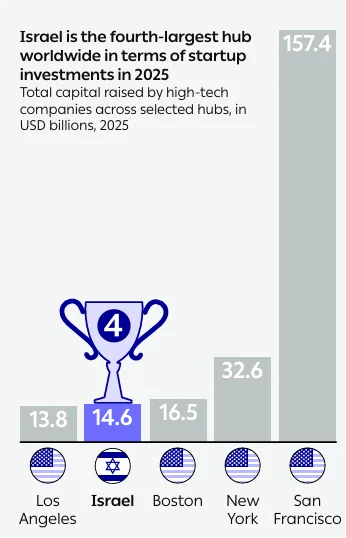
That equation is beginning to change.
Although the dollar has recently recovered to around NIS 3.00 after briefly falling below NIS 2.80 – its weakest level against the shekel in more than three decades – the broader trend remains intact. Israel's currency remains significantly stronger than a year ago, sharply increasing the dollar cost of employing Israeli workers. Salaries paid in shekels may have changed little, but for multinational companies reporting results in dollars, every appreciation of the currency raises payroll costs. What was once viewed as a manageable premium is becoming increasingly difficult to justify.
The stronger shekel, however, is only part of the story. At the same time, artificial intelligence is reshaping how software companies build engineering teams. AI tools are enabling developers to produce more with fewer people, reducing the need for rapid hiring that characterized much of the past decade. Meanwhile, engineering capabilities have continued to improve across Eastern Europe, India, and other technology hubs. For countries such as Israel, whose competitive advantage has long rested on exceptional human capital, the combination is uncomfortable. As companies require fewer engineers, they become considerably more sensitive to the cost of each one.
The numbers suggest the economics have shifted rapidly. Research by the Growth Companies Forum, based on employment data from seven Israeli growth companies employing roughly 10,000 workers, indicates that the cost of employing an Israeli software developer has now marginally exceeded that of an equivalent employee in the United States for the first time. Only a year earlier, Israeli developers cost around 85% as much as their American counterparts. According to the forum, employment costs measured in dollars have increased by between 17% and 22% over the past year, with the break-even point occurring at an exchange rate of roughly NIS 3.21 per dollar.
The comparison with Silicon Valley is striking, but perhaps not the most significant. Israeli software engineers are now estimated to cost around 2.4 times more than comparable employees in Poland, Romania, Lithuania and Ukraine. Those countries have steadily improved both the quality and scale of their engineering talent, while multinational companies have become increasingly comfortable managing globally distributed development teams. Israel's talent advantage remains considerable, but it is no longer as overwhelming as it once was.
Businesses are already adjusting. A survey by Viola Growth and the Growth Companies Forum found that 58% of Israeli growth companies had frozen or slowed recruitment in Israel by June 2026. More than half identified the strength of the shekel as a major factor alongside the growing impact of artificial intelligence. More tellingly, 15% said they had established overseas operations that had originally been planned for Israel.
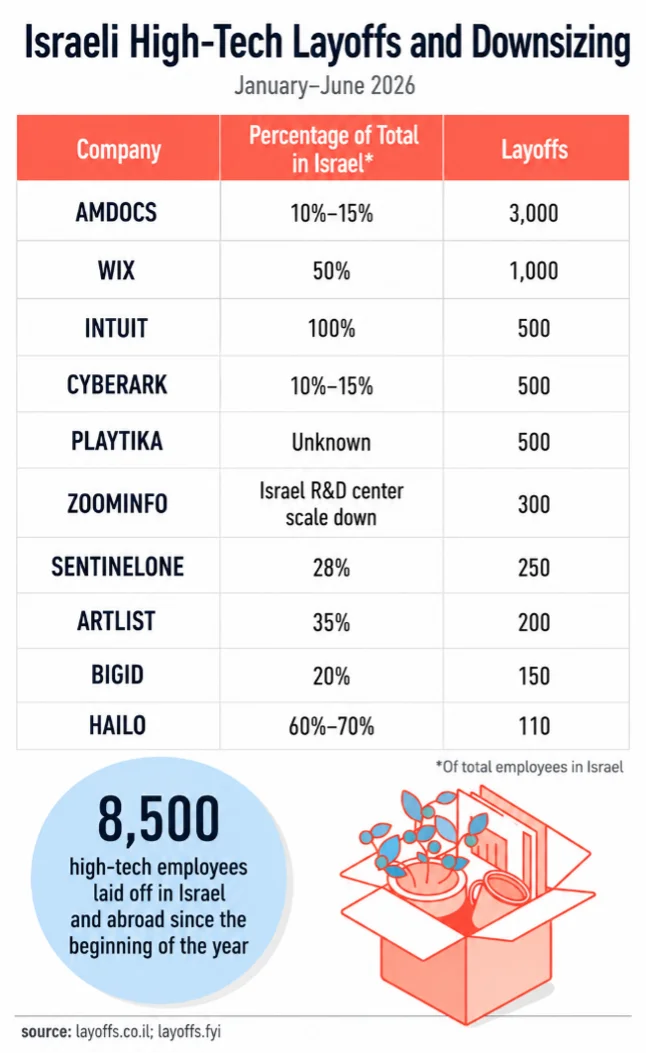
The pressure is no longer limited to hiring plans. Israel's technology sector has already shed 8,500 jobs this year as companies restructure operations. Those reductions cannot be attributed solely to the stronger shekel; AI-driven efficiency gains, broader cost-cutting and changing global investment priorities have all played a role. Together, however, they point in the same direction: companies are seeking to achieve more with smaller teams while scrutinizing far more carefully where future hiring should take place.
At present, the shift is subtle rather than dramatic. Companies are not closing Israeli operations or relocating existing research centers. Instead, incremental investment – the next engineering team, the next R&D center or the next hiring round – is increasingly flowing elsewhere. Such decisions rarely make headlines, but over time they determine where innovation occurs, where high-value jobs are created, and where future tax revenues are generated.
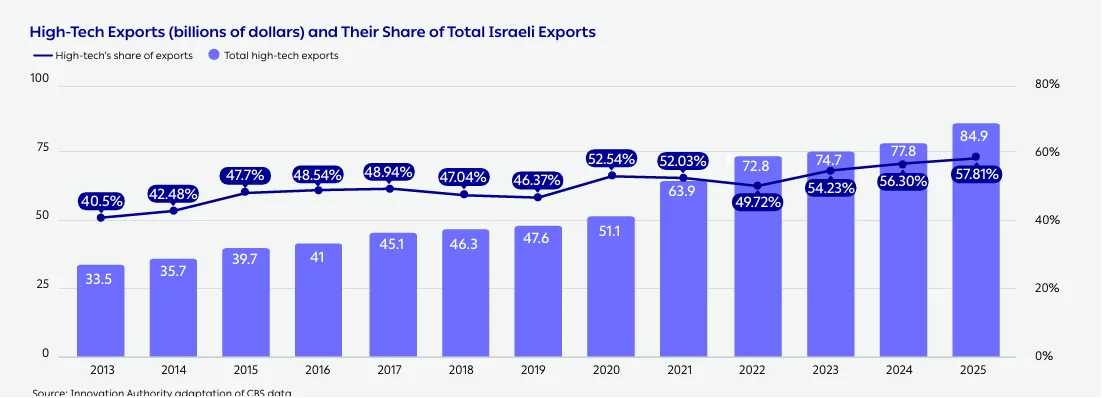
According to the Israel Innovation Authority (IAA) high-tech accounts for 18.3% of Israel's GDP, 58% of exports, and employs approximately 400,000 people, representing more than one in every nine workers in the economy. Few industries are more important to Israel's long-term prosperity.
Recognizing those risks, the government has moved to respond. Although the dollar has recovered from its recent lows, policymakers increasingly appear to view a stronger shekel as a structural feature of the economy rather than a temporary fluctuation. Finance Minister Bezalel Smotrich has described the current exchange-rate environment as the "new normal", arguing that businesses will ultimately need to adapt rather than expect the currency to return to previous levels. Against that backdrop, on the last day of June, the government unveiled a NIS 1.6 billion support package designed to help exporters and technology companies adjust to the stronger currency. Around NIS 1 billion will be channeled into accelerated grants for startups and growth-stage companies through the IAA, alongside support for advanced manufacturing, vocational training, exporter assistance programmes, and enhanced depreciation allowances for investment.
Whether the government's package addresses the broader challenge is another matter.
For young startups that raise capital in dollars while paying salaries in shekels, the assistance could prove meaningful. A company that expected a funding round to finance twelve months of operations may suddenly find its cash runway shortened by several months as the currency appreciates.
For multinational corporations, however, the calculation is different. Decisions about where to establish the next development center or expand engineering teams are made by comparing productivity and costs across dozens of countries. Temporary grants are unlikely to alter those long-term investment decisions.
Industry leaders have broadly welcomed the government's response while arguing that it does not fully address the industry's most pressing concern. Karin Mayer Rubenstein, chief executive of the Israeli Association for Advanced Industries (IATI), said the package "focuses on creating future growth engines, while the companies' need is to respond to the immediate challenges created by the strengthening of the shekel." Rather than incentives to expand, many businesses are seeking practical measures that would help preserve existing operations through temporary adjustments to employer costs and taxation.
Smotrich himself has acknowledged that immediate layoffs are not his principal concern, pointing instead to Israel's still-tight labor market. The greater risk, he argues, is that multinational boards choose to establish their next R&D center elsewhere. Once those investment decisions are made, reversing them becomes considerably more difficult than replacing individual jobs.
Finance Ministry Chief Economist Shmuel Abramzon perhaps offered the clearest assessment. The package, he said, is intended to provide companies with "breathing room during this challenging period," but is "not a substitute for the adjustments required by the new economic reality." Ultimately, he argued, Israel's competitiveness will depend on businesses improving efficiency, continuing to innovate, and adapting to rapidly changing technological and economic conditions.
That may prove to be the defining challenge for Israel's technology sector.
A stronger currency is usually viewed as evidence of economic success. It reflects capital inflows, investor confidence and resilient economic fundamentals. Yet exchange rates do more than measure economic strength; they reshape it. Combined with artificial intelligence and the rapid improvement of engineering talent elsewhere, a structurally stronger shekel is testing the economic model that has underpinned Israel's technology success for more than two decades.
For now, there is little evidence of a dramatic exodus from Israel's technology industry. What may emerge instead is something far more gradual: a steady diversion of future hiring, research and development towards lower-cost jurisdictions. One engineering team relocated abroad will scarcely be noticed. Hundreds of similar decisions made over several years could gradually reshape one of Israel's most important industries.
The debate, therefore, is no longer simply about how the dollar trades against the shekel. It is about whether Israel can continue to command a growing premium for its engineering talent at a time when companies need fewer developers, artificial intelligence is reshaping software production, and competing technology hubs are steadily narrowing the gap in quality. The answer will determine not only where the next generation of innovation is created, but whether Israel can preserve the competitive advantage that made it a global technology powerhouse in the first place.
You might also like to read this: