Healing the world, one child at a time: Inside Israel's Save a Child's Heart



Dr. Ami Cohen began his career as a cardiac surgeon in the U.S. Army. His military service would ultimately plant the seeds of a global humanitarian mission when he found himself treating civilians alongside combatants.
"While on a tour of duty in Korea in 1988, Ami was introduced to Harriet Hodges, an American woman known as the 'Queen of Hearts' for her heart-saving work on behalf of indigent Korean children," said Daniel Campos, Save a Child's Heart's PR representative. "She implored Dr. Cohen to use his skills to treat them, and with permission from the army, he began performing surgery."
Cohen immigrated to Israel with his family in 1991, returning to a country he had known as a child when his father worked in Holon, and he became head of pediatric cardiac surgery at the Edith Wolfson Medical Center in the same city.
Save a Child's Heart came into being in 1995 when an Ethiopian doctor contacted Dr. Cohen after being referred to him by a mutual friend. He asked Cohen for help with two children in desperate need of heart surgery. He agreed, organized their flights, secured hospital approval, and housed the children in his home during their recovery.
Guided by Tikkun Olam – a Hebrew phrase meaning 'repair the world' – along with his founding ethos, "If we can, we should," Dr. Cohen created Save a Child's Heart (SACH) and began bringing children from all over the globe in need of cardiac care to Israel for treatment free of charge.
The funding came from a deeply personal source.
"He financed the treatment of the first children through support from his family in the United States and housed the children in his parents' apartment in Netanya. This marked the beginning of the organization's activities." Campos explained.
The operation was about as grassroots as it gets. Cohen didn't just perform the surgeries; he opened his own home to recovering children, and his parents' home when that wasn't enough.
More than three decades later, that founding spirit still pulses through the hallways of the Edith Wolfson Medical Center, where Dr. Hagi Dekel, the organization's leading surgeon, has spent over 20 years advancing the work. Dekel is following in the footsteps of Dr. Lior Sasson, SACH's director of Pediatric Cardiac Surgery, who was a very close friend of Cohen and has been the leading physician driving SACH since Cohen's passing.
"We've been operating so far [on] more than 8,500 children who came from 75 countries from all over the world," he told ALL ISRAEL NEWS (AIN). "And we're still doing it, and basically we are saving a child's life every day."
His weekly ritual says everything about what keeps him going: watching 10 sick children arrive, and 10 healthy ones climb back into the car to make their way home.
"Whenever I get the chance, I always find the time to be there when it's happening, just for me to remind me what we have done and how important it is."
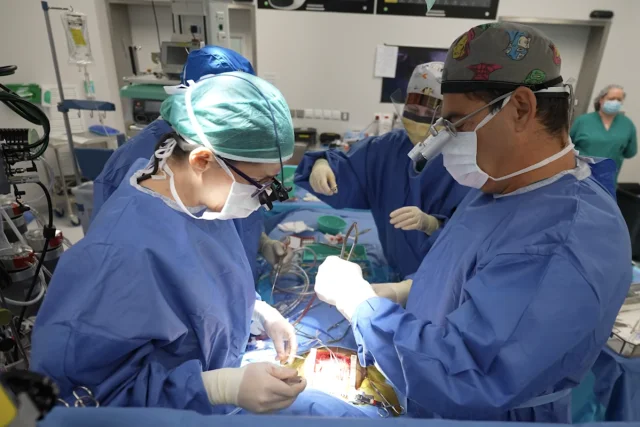
AIN staff members witnessed a life-saving surgery on a 3-year-old girl with a hole in her heart.
"Once it will be closed, she will have a normal life, full life, she can do whatever she wants," Dekel said. "But if it won't be closed – slowly, slowly, her body won't be able to cope with the disease, and she would have had a very sad life."
The team watched the surgery alongside Dr. Sarah Musalale, an anesthesiologist from Zambia, five months into her training at SACH in pediatric cardiac anesthesiology. When she returns home, she will be among a handful of specialists able to provide this care.
"People here are very hardworking and they don't give up on the patients," she said, watching the team work.
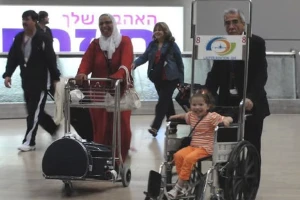
In a waiting room nearby, Maggie had traveled from Malawi with her son Prince, also born with a small hole in his heart. The path to Israel was not straightforward – the war with Iran delayed their flights for weeks.
"I was doubting if my son was going to make it. So, we were just still waiting and hoping – and then here we are," she said.
Prince is now recovering from his surgery.
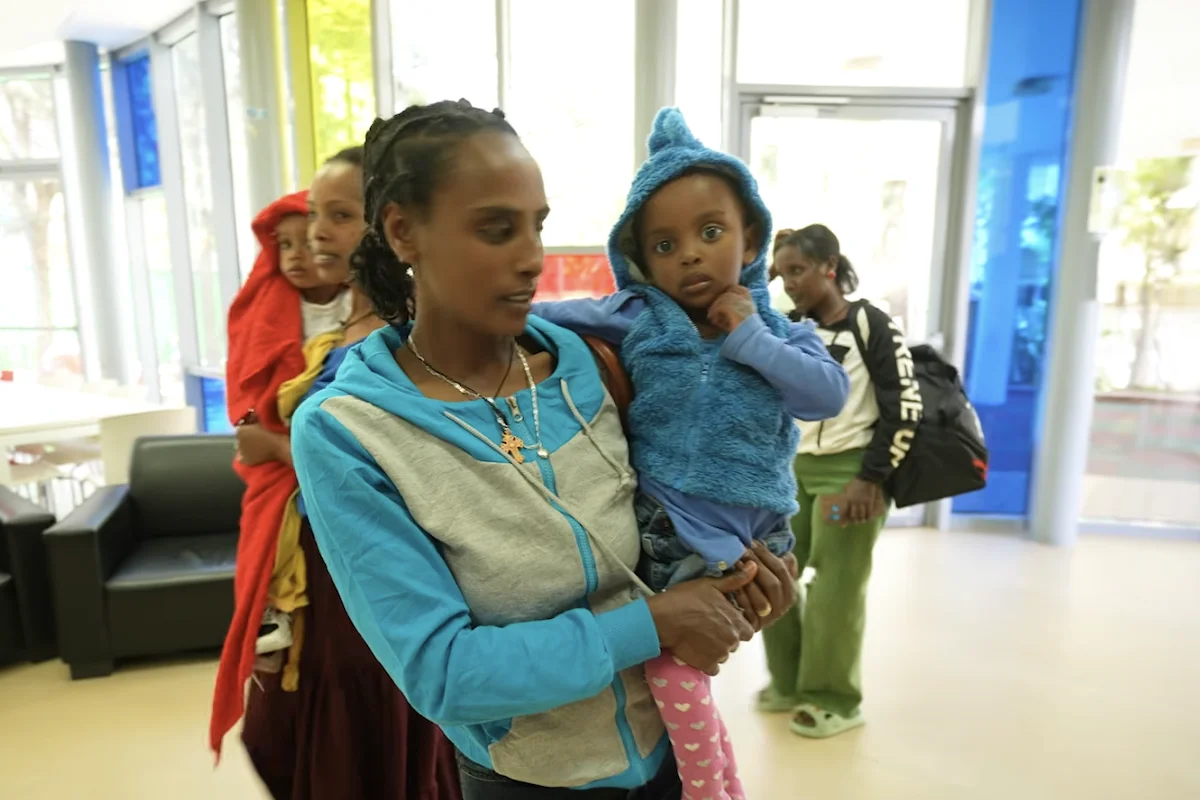
Beyond the operating rooms, SACH runs a children's home where international volunteers help keep daily life active and as normal as possible for those recovering. Ariella, a gap-year volunteer from Melbourne, Australia, described the environment as something she hadn't anticipated. She shared the story of Wealth, a 1-year-old from Nigeria who had gone into cardiac arrest, suffered a stroke and fallen into a coma. Doctors told his mother he would not survive.
"She went and she said to God, 'Take my child. If you want my child, take him. I can't go through this pain anymore,'" Ariella recounted. "And it was a miracle." Wealth is now doing well and is on his way to making a full recovery.
Having faced antisemitism growing up in Australia, Ariella described the children's home as a rare sanctuary.
"Before the 7th of October, [SACH] used to help kids from Gaza and other Arab countries. Being at [SACH] just makes all the problems out there seem so much less," she said.
That tension between the world outside and the work inside is something Dekel has navigated throughout the recent years of war, when flights were grounded and children were stranded both before and after surgery.
"Sometimes during war, your mood [gets] down and you get depressed…" he said. "But then you go to surgery…and you see these small kids who are getting better…And it warms your heart and it puts [things] in perspective – that there are things that are a little bigger than what you can see and appreciate."
What truly distinguishes SACH is a longer-term philosophy. They not only help the children; they also train the surgeons who will go home and treat them.
"What I like so much about our project is the fact that very early on we learned that it's not good just to give them the fish, but also to teach them how to fish," Dekel said.
Down the hall, Dr. Mulu, a physician from Zambia in his fourth year of training, will soon become only the second pediatric cardiac surgeon in his country. Muthalale – training alongside him in anesthesiology – will join that team, giving Zambia its most complete surgical unit yet.
"When I talk about my country, we are talking about 21 million people and one out of a hundred children being born with a heart condition – about a quarter of them needing surgery for them to survive," Mulu said. "We've had many children that we have lost who shouldn't have died."
He described accompanying a critically ill child to Israel for surgery – too fragile to fly without oxygen and a medical escort – and then watching that same child go home days later.
"This child was blue because of not having enough oxygen. And after the operation, I saw this child the day the child was going back home – an active child, a happy child,” he said. “What more would you want?"
"It's not just that child. It's the whole family. It's the whole country. And I think it's the whole world at large,” he added. “Let the world be healed. Let every child be given that opportunity to live."
Dekel's ultimate hope is that Save a Child’s Heart in Israel will become unnecessary.
"I really hope that we're going to be unemployed," he said. "There will be so many other centers in those third-world countries that they won't need us anymore, and they can do everything on their own."
On a recent mission to Zambia, he observed surgeons from Tanzania and Ethiopia, both SACH-trained, operate independently, giving each other instructions in Hebrew, the language in which they'd learned their craft.
"They were speaking between each other in Hebrew and giving orders in Hebrew, because this is how they learned the profession," he said. "That's very fulfilling."
From a military doctor helping children in Korea, to a family home that became a recovery ward, to an operating room where a Zambian doctor is learning to heal children in his own country, the heartbeat of Save a Child's Heart has remained the same: one child at a time, one country at a time, one surgeon at a time.
To learn more or refer a child in need, visit saveachildsheart.org.
You might also like to read this: