Egypt's historical and contemporary role in the Israeli-Palestinian conflict
How Egypt's policies toward Gaza have shaped the Palestinian issue from 1948 to the present





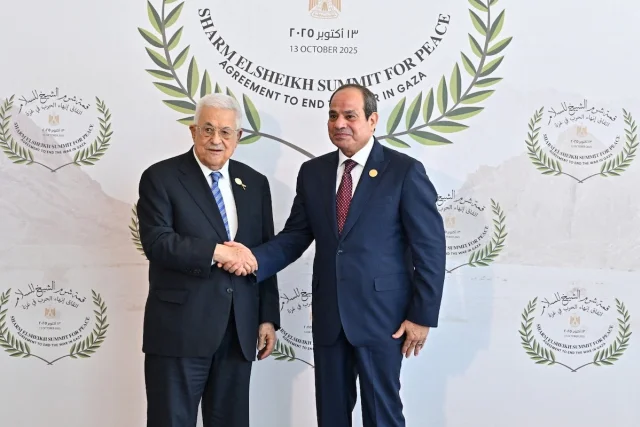
Let’s talk about Egypt. What is the role of the Arab Republic of Egypt in the Israeli-Palestinian conflict, historically and currently? Ask most people who ruled Gaza before Israel captured it in 1967, and many will answer, “the Palestinians.” But the answer is Egypt. For 19 years, Egypt controlled Gaza.
Yet, unlike Jordan in the West Bank, Egypt never annexed the territory, never offered its inhabitants Egyptian citizenship, and never showed any interest in turning Gaza into part of Egypt, even after ruling Gaza for nearly two decades. In fact, one of the recurring themes of modern Egyptian policy has been wanting influence over the Palestinian issue while avoiding responsibility for it.
But let’s take it from the beginning. The area today known as Israel, Palestine, and Jordan was together the British Mandate of Palestine, but two-thirds of it received full independence in 1946 as the Hashemite Kingdom of Jordan. Being a descendant of Muhammad, the Hashemite King Abdullah saw himself as a natural candidate for leadership in the Arab world, and in 1948 he had the best and most organized military in the region. The Egyptian King Farouk saw this as a threat, and one of the reasons he joined the 1948 war against Israel was to limit Jordan’s expansionist ambitions. While Egypt and Jordan were both fighting Israel, they were also competing with one another over who would shape the future of Palestine. Jordan hoped to incorporate the Arab parts of Palestine into its kingdom; Egypt preferred a separate Palestinian entity that could limit Hashemite influence. This is why their policy vis-à-vis its Palestinian population after 1948 was the exact opposite.
In 1949, Egypt was left in control of a small sliver of land that was filled with Palestinian refugees, and it became known as the Gaza Strip. You might have heard of it. Egypt kept this piece of land under a strict, oppressive military administration, under a military governor who ruled by decree. The Palestinians were rendered stateless, political parties were banned, freedom of speech and assembly was suspended, and severe restrictions on movement and travel were imposed. The local economy of Gaza was intentionally isolated from Egypt proper. Publicly, they advocated for the rights of the Palestinians, but on the ground, they blocked all attempts at Palestinian self-rule.
The “All-Palestine Government” they set up in Gaza was a total puppet, moved to Cairo as soon as it had served its initial purposes, and its leader was kept in de facto house arrest, not even allowed to give a statement to the press without rigorous Egyptian censorship. By 1959, the government was officially dissolved.
In 1952, the Egyptian kingdom was overthrown in a revolution by Colonel Gamal Abdel Nasser, who captivated the hearts and minds of the Arab world, championing the ideology known as pan-Arabism and seeing himself as the undisputed leader of the Arab world. He framed himself as the grand champion of the Palestinian cause. But the reality on the ground in Gaza was the exact opposite.
Five years after having dissolved its “Palestinian” puppet government, Egypt tried to establish a new Palestinian puppet organization – the PLO. This “Palestine Liberation Organization” was designed to do the exact opposite of liberation – keep the Palestinians under Egyptian supervision. Nasser pushed the Arab League at their summit in Cairo in 1964 to create the organization, and it was formally established a few months later in East Jerusalem under Ahmad Shukeiri, a hand-picked Nasser loyalist.
Why did Nasser do this? Because he was worried about independent Palestinian factions, like Fatah under the young Yasser Arafat, which was strongly inspired by the Algerian revolution against the French and pushed for armed struggle against Israel no matter what the Arab states wanted. Nasser worried that they would drag the region into a full-scale war before the Egyptian military was ready.
The PLO was an umbrella organization, meant to supervise the more unruly Palestinian terrorist groups and subordinate them to Egyptian oversight. In its original charter, the PLO explicitly confirmed it had no claims whatsoever to the West Bank or Gaza. They were formed solely to “liberate” the parts of Palestine that the “Zionist entity” was ruling. At the time, the West Bank (Judea and Samaria) belonged to Jordan and Gaza was administered by Egypt. The PLO's target was not those territories, but Israel itself.
But then 1967 happened, the Six-Day War, and Israel conquered the Sinai Peninsula and the Gaza Strip. Paradoxically, it was the occupation of 1967 that enabled the Palestinian national movement to become independent and not subject to Egyptian or Jordanian censorship. By 1969, Arafat had managed to take control of the PLO, maneuvering out the Egyptian loyalists and hijacking the organization originally created to control him. Nasser’s plan for the PLO had totally backfired.
After Nasser’s death and the 1973 war, Nasser’s successor, Anwar Sadat, started pursuing peace with Israel, making Egypt the first Arab country to do so, breaking a huge taboo. In the peace deal of 1979, Egypt received the Sinai Peninsula back – but not Gaza. Why? The real reason was probably practical. Egypt wanted the Sinai because of its oil and wanted the Suez Canal back, but it did not want to once again police a large population of angry, stateless, impoverished, and increasingly radicalized refugees, especially as the PLO was by then operating more independently among the population. The official reason they said publicly was that they wanted the Gaza Strip to be tied to the West Bank in some sort of future autonomy for the Palestinians.
Egypt’s policy today is not that different from that of 1979, especially after Hamas took over. Hamas is a branch of the Muslim Brotherhood, which ruled Egypt under Morsi for a few years, and is the sworn enemy of current president Abdel Fattah el-Sisi. After Egypt fought brutal wars against ISIS-connected insurgencies in Sinai, it sees Hamas as a dangerous extension of these radical threats. Egypt still, however, has to save face vis-à-vis the Arab world and its own population. Egypt is on a dual track with Israel: public denunciation combined with quiet coordination. Harsh rhetoric against Israel on the world stage, while at the same time conducting highly coordinated security cooperation with the IDF.
Egypt is not allowing people to enter from Gaza and maintains a highly secure, multi-layered concrete-and-steel border fence to keep Gazans out. Publicly, it claims to do so in order to “prevent Israeli ethnic cleansing of Gaza.” Realistically, they want to prevent a massive, destabilizing wave of hundreds of thousands of impoverished refugees bleeding into the Sinai with embedded Hamas militants, which would become both an economic and military burden. They prefer to push that burden onto Israel.
From King Farouk to Nasser, Sadat, Hosni Mubarak, and present-day President Abdel Fattah el-Sisi, Egyptian policy has shown a remarkable consistency. Cairo has sought influence over the Palestinian issue and legitimacy in the Arab world, while avoiding direct responsibility for Gaza and resisting any development that might threaten Egyptian stability. The result has been a policy of public advocacy for the Palestinian cause combined with a persistent reluctance to absorb its political, economic, or security burdens.
You might also like to read this: