Egypt continues to discriminate against minorities, especially Christians, US State Dept says
Report says Egyptian government actions ‘restrict ability to freely practice their belief’


The Egyptian government is systematically restricting freedom of religion, according to a new report by the U.S. State Department’s Commission on International Religious Freedom (USCIRF).
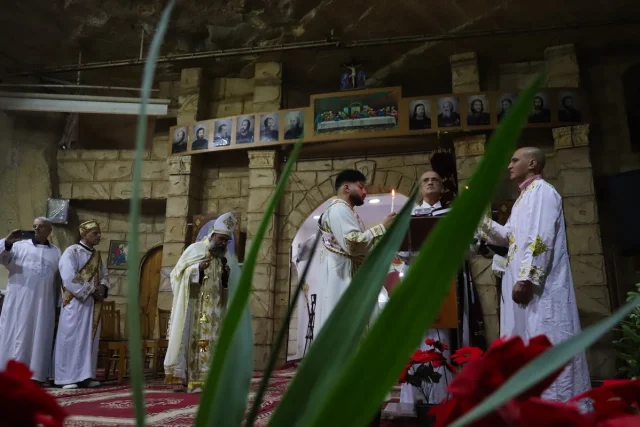
While such restrictions affect all religious minorities in the country, Egypt’s Christians, the largest minority, often experience state-sanctioned discrimination, especially through restrictions on the construction of new houses of worship or burial grounds, and the failure to prosecute acts of violence committed against members of the community.
Despite Christianity having an official protected status as one of the “three heavenly religions,” blasphemy laws have been used to target Christians in Egypt who talk about their faith online.
Provision 98(f) of the Egyptian Penal Code criminalizes “insulting [the three] heavenly religions.”
In practice, this law is almost exclusively used to protect Islam from any criticism, while inciting content against Christianity, Judaism, or other religious minorities is not challenged.
According to U.S. estimates, around 10% of Egypt’s population is Christian, with the majority being Coptic Christians, a form of Eastern Orthodoxy.
Evangelicals and Catholics make up a smaller percentage of Christians, and the number of converts to Christianity from Islam is difficult to determine.
While Egypt has no formal law criminalizing apostasy, converts to Christianity who share their testimony online are often targeted by blasphemy laws and charged with insulting Islam.
The report by the USCIRF says that state security officials, judicial authorities, and the courts “continue to investigate, arrest, detain, prosecute, and in some cases convict and sentence individuals for alleged breaches of the blasphemy law.”
USCIRF drew attention to several cases, including that of Said Mansour Rezk Abdelrazek, a convert to Coptic Christianity, who was charged with “contempt for Islam” in 2025 for a post explaining his conversion. He had previously been arrested and beaten by security officers following his 2016 conversion.
Abdelrazek was first arrested in 2023, shortly after requesting to change his national identity papers to state that he is now a Christian instead of a Muslim. He was charged with allegedly posting videos online that desecrated the Quran.
After serving a one-year prison sentence, Abdelrazek fled to Russia, where he petitioned for asylum. That request was denied, and he was deported to Egypt, where he was again detained.
Later, after Abdelrazek testified that Egyptian National Security Agency (NSA) agents subjected him to multiple beatings following his detention, the First Criminal Terrorism Circuit Court in Badr called Abdelrazek’s religious expression a threat to national security.
At a hearing earlier this week, on June 15, the court adjourned the trial of Abdelrazek on terrorism charges after the primary witness against him failed to appear. His trial was rescheduled to September 6, when he could be sentenced to life imprisonment or death for allegedly founding a “terror organization.”
@EgyptianPPO EXPLAIN to us why Egyptian authorities continue to enforce blasphemy laws, such as Article 98(f) of the penal code, disproportionately against Christians or those expressing minority religious views.#FreeSaidAbdelrazek #ChristianPersecution #Prayer #Egypt pic.twitter.com/E3vewDPWw2
— Said Mansour Rezk Abdelrazek (@SaidAbuMustafa) June 17, 2026
In January 2026, an Egyptian court sentenced a Coptic apologist, Augustin Samaan, to five years of imprisonment for “contempt of religion,” over posts explaining and defending the Coptic faith and for responding to anti-Christian incitement online.
A recent cybercrime law, which forbids the use of technology to “infringe on any family principles or values in Egyptian society,” has been used to crack down on social media influencers who openly speak of their faith.
Christians in Egypt’s largest cities tend to have better treatment than those in rural areas, where communities face significant obstacles in building and repairing houses of worship.
While security services sometimes intervene to prevent violent incidents against churches in large cities, authorities often fail to investigate such incidents or hold perpetrators to account.
Additionally, personal attacks by Muslims against Christians are rarely investigated by authorities.
These attacks include the kidnapping of Christian girls, for the purpose of forcing them to convert to Islam under threat to themselves or their family. Once the girls have converted, the Christian families are unable to intervene, and the girls are married off to their captors.
The USCIRF report said, “Coptic families have consistently reported local police and other authorities’ reluctance or refusal to undertake investigations into young women’s disappearances, including potential evidence of abduction or coercion. This refusal denies Coptic women equal protection under the law on account of their gender and religious identity.”
Christians have a “disproportionately low representation” in Egypt’s government, the USCIRF said.
Another area of concern for Christians has been the seizure of historic church properties by the government for infrastructure projects, as well as the delay in approving construction or renovation of church facilities, which often takes years, or even decades.
This is especially apparent when compared with approvals for similar mosque projects, which often take only weeks.
“Egypt continues to impose systematic and ongoing obstacles to Freedom of Religious Belief (FoRB) on religious minority communities,” the USCIRF report states.
“Existing laws, policies, and judicial decisions target Baha’is, Coptic Christians, Jehovah’s Witnesses, Jews, Qur’anists, members of the Ahmadi Religion of Peace and Light, and nonbelievers and restrict their ability to freely practice their belief as described in Egypt’s constitution.”
A previous USCIRF report recommended that Egypt be placed on a special watch list for “severe violations of religious freedom.”
This article originally appeared on ALL ARAB NEWS and is reposted with permission.
You might also like to read this: