They were told Israel was the problem, then these American-Christian students went there





At a time when social media feeds are flooded with competing narratives about Israel, more than 150 American Christian students are charting a different path: seeing the situation for themselves.
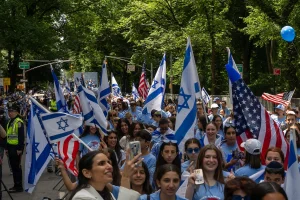
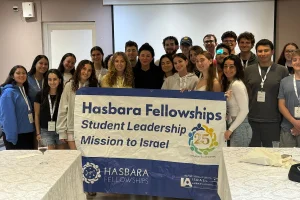
This week, the pro-Israel group Passages returned to the United States with over 150 American students after visiting Israel. The group included more than 55 high school students and over 100 college students from across the country. The educational trip comes as anti-Israel messaging has gained significant traction among younger Americans, including some Christian and conservative audiences.
The Christian students represent universities, seminaries, ministries, and church communities from across the United States. They visited Jerusalem, Tel Aviv, Israel’s northern and southern borders, the area near Gaza, the Nova music festival massacre site, and had meetings with survivors of the Oct. 7 Hamas attacks.
For Passages CEO Zach Bauer, the trip to Israel is not about tourism. It is something much bigger.
“At a time when students are being bombarded by competing narratives online, there is simply no substitute for seeing Israel with your own eyes. Many young Americans are being asked to form strong opinions about Israel without ever having met an Israeli, visited the region, or experienced the complexity of the Middle East firsthand. Our goal is not to tell students what to think. It is to give them the opportunity to learn, engage, ask questions, and encounter the reality for themselves.”
His comments touch on a growing concern among many pro-Israel advocates: that an entire generation is increasingly forming opinions about the Jewish state through TikTok videos, Instagram reels, YouTube influencers, and activist content rather than firsthand experience. It’s a poison that’s growing, and yes, it’s affecting younger Evangelicals as well.
The numbers suggest something significant is happening. Recent polling from organizations, including the Pew Research Center and Gallup, has shown a widening generational divide on Israel. Younger Americans are substantially more likely than older ones to hold unfavorable views of Israel and to sympathize with the Palestinian cause. That trend accelerated following the Oct. 7, 2023, Hamas attacks and the subsequent war in Gaza.
Of course, the battleground for those opinions is increasingly digital. Platforms like TikTok, Instagram, and 𝕏 have become central hubs for political activism aimed at younger audiences. Hashtags, short-form videos, influencer content, and viral graphics often reduce a highly complicated conflict into simple narratives designed to generate engagement.
The problem is compounded when activist organizations get involved – and boy, have they gotten involved. Groups such as Students for Justice in Palestine have dramatically expanded their presence on college campuses over the past decade. Meanwhile, a growing ecosystem of online activists, advocacy organizations, and content creators regularly produce material focused on portraying Israel as a colonial or apartheid state. Much of that content is specifically designed to resonate with younger audiences who consume news primarily through social media.
Christian audiences have increasingly become targets of that effort as well. Over the past several years, organizations promoting Palestinian advocacy within churches have worked to influence Evangelical Christians, younger pastors, and ministry leaders. Some groups have organized church campaigns, educational events, social media initiatives, and campus outreach efforts specifically aimed at reshaping how Christians view Israel.
When you put all of this together, it is precisely why Zach Bauer and all of the employees at Passages believe firsthand experience matters. “One of the greatest challenges facing young Christians today is distinguishing between slogans and reality. When students stand in communities attacked on October 7, meet survivors face-to-face, and see the region’s complexity for themselves, they gain a level of understanding that simply cannot be replicated through social media posts, viral videos, or political activism.”
Passages says the goal is not political indoctrination. Rather, the organization wants students to encounter Israelis, hear diverse perspectives, and understand both the biblical significance and modern realities of the region. The summer delegation includes students from schools such as the University of Georgia, Regent University, Liberty University, the University of North Carolina at Chapel Hill, Colorado State University, Gonzaga University, and several others.
Many Christian leaders have expressed concern that younger believers are becoming disconnected from the historical relationship between Christianity and the Jewish people. Others point to social media algorithms that reward emotionally charged content, often pushing users toward increasingly one-sided portrayals of complex geopolitical issues. That's why Bauer says choosing to travel to Israel right now carries special significance.
“The decision by these students, parents, and pastors to come to Israel at this moment reflects tremendous courage and conviction. At a time when anti-Israel activism is increasingly targeting younger audiences and even faith communities, these students are choosing engagement over ignorance, learning over slogans, and firsthand experience over secondhand narratives…These students are the next generation of faith leaders, community leaders, and decision-makers. The experiences they have in Israel this summer will equip them with something increasingly rare in today’s information environment: knowledge grounded in personal experience, human connection, and truth.”
You might also like to read this: