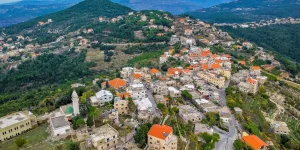
Judea and Samaria: The battle over Israel’s biblical heartland




Israel’s Knesset has spent the past two years advancing legislation that could reshape the modern debate over sovereignty in Judea and Samaria. The proposed Heritage Authority bill has reignited international tensions, drawing criticism from many of Israel’s detractors and even from some allies. Though the legislation is not yet finalized, the Knesset continues moving steadily toward formal approval.
A May 12 Knesset press release outlined the bill following its first reading, after which it advanced for further review and debate. The legislation would place responsibility for antiquities, archaeology, and heritage sites in Judea and Samaria directly under Israeli oversight. It also proposes establishing a Judea and Samaria Heritage Authority, a civilian agency tasked with excavation, preservation, land acquisition, enforcement, and the protection of archaeological evidence.
To understand why this legislation matters so deeply to Israelis, it is important to revisit the historical background.
The modern dispute stretches back nearly eight decades. In 1947, Jewish leaders accepted the United Nations Partition Plan, Resolution 181, which proposed dividing the land into Jewish and Arab states. Arab leaders rejected the proposal outright. On May 14, 1948, only hours after David Ben-Gurion proclaimed Israel’s independence, surrounding Arab nations launched war against the newborn Jewish state.
Ironically, the United Nations plan had already allocated much of the biblical heartland’s fertile agricultural land and key water resources to the proposed Arab state. Yet even that was not enough to satisfy Arab leadership. As war unfolded, the geographical terminology itself began changing. Judea and Samaria, the historic biblical heartland west of the Jordan River, increasingly became known internationally as the “West Bank.” Over time, this terminology hardened into a diplomatic framework that often ignores Israel’s historical and legal claims to the land.
Biblically, however, the Jewish connection to the land stretches back thousands of years. Modern Israel is not merely a seventy-eight-year-old state. Its history, culture, and spiritual identity trace back more than 3,400 years to God’s covenant with Abraham recorded in Genesis 12.
The Bible itself stands apart among ancient texts for its remarkable preservation, historical continuity, and global influence. Written over approximately fifteen centuries by forty authors across three continents and in three languages, Scripture presents a unified narrative regarding the Jewish people and the land of Israel.
Exodus 19:5 records God’s declaration: “Now therefore, if you will indeed obey My voice and keep My covenant, then you shall be a special treasure to Me above all people; for all the earth is Mine.”
Jeremiah 31:35-36 further emphasizes God’s enduring covenant with Israel: “This is what the LORD says, He who appoints the sun to shine by day, who decrees the moon and stars to shine by night … the LORD Almighty is His name: ‘Only if these decrees vanish from My sight, declares the Lord, will Israel ever cease being a nation before me.’”
Beyond biblical conviction, Israeli leaders also point to urgent operational concerns behind the Heritage Authority legislation.
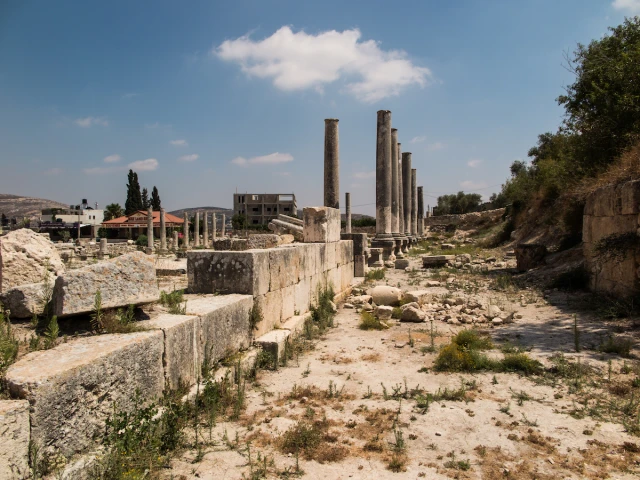
The Israel Antiquities Authority and international archaeological organizations have documented widespread antiquities theft, site destruction, black market smuggling, and organized looting networks operating throughout Judea and Samaria. Ancient Jewish burial caves, Byzantine churches, Roman fortresses, and biblical sites have suffered irreversible damage.
The Antiquities Theft Prevention Unit warns that archaeological layers preserving thousands of years of history are being destroyed at an unprecedented rate. For Christians as well as Jews, this loss is significant. These sites offer tangible connections to biblical history and to the land where the events of Scripture unfolded.
The proposed legislation seeks to strengthen Israel’s ability to preserve and protect those historical treasures.
International reaction, however, has been swift and critical. The European Union continues to describe Judea and Samaria as “occupied Palestinian territory,” labels Jewish communities there as “settlements,” and insists such communities violate international law. European officials have demanded that Israel reverse course.
Yet the Heritage Authority bill continues advancing through Israel’s legislative process. Alongside it, another major development emerged in 2025 when the Knesset approved a preliminary reading extending Israeli sovereignty to Ma’ale Adumim, one of the largest Jewish cities in Judea and Samaria with approximately 40,000 residents. Many Israelis consider it a suburb of Jerusalem.
For supporters of Israel, these developments are about far more than politics. They represent questions of identity, heritage, historical truth, and biblical conviction.
As global tensions intensify and the debate surrounding Israel grows increasingly polarized, believers are challenged to stand with courage, wisdom, and conviction. In a confused and often hostile world, truth still matters.
This article originally appeared here and is reposted with permission.
You might also like to read this: