








Explainer A delicate balancing act – Why Pakistan has played a central role in US-Iran negotiations
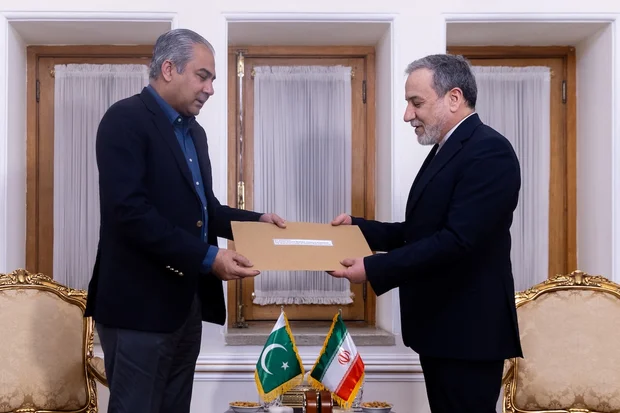
The recent war between the Islamic Republic of Iran and the United States, together with Israel, presented Pakistan with an opportunity to move from being a peripheral player to a strategic actor in the Middle East.
The shift became evident when Pakistan positioned itself as the leading force behind efforts to secure a ceasefire between Iran and the United States, even offering to host the talks during their initial stages.
Before the ceasefire was announced, the United States acknowledged Pakistan's crucial role as a mediator, with U.S. officials indicating that messages between the parties were being relayed through Pakistan in the lead-up to the negotiations.
Pakistan’s mediation role arose from a unique combination of factors, including its functional ties with both sides, the absence of permanent American bases in its territory, its status as a neighbor and trade partner of Iran, and the fact that it had not been attacked by Iran.
"Pakistan has unusual credibility as a mediator, maintaining workable ties with both Washington and Tehran, while a history of strained relations with each gives it just enough distance to be seen as a credible go-between," Adam Weinstein, deputy director of the Middle East program at the Quincy Institute, told Reuters.
Already engaged in a low-grade conflict with Afghanistan, Pakistan sought to avoid being drawn into direct involvement in the Iran conflict, particularly given that the country is home to the world's second-largest Shiite population after Iran.
“Pakistan has strong credentials as the only country in the region enjoying good relations with the U.S. and Iran,” Asif Durrani, Islamabad's former ambassador to Tehran, told AFP. "Concurrently, it enjoys strategic relations with Saudi Arabia, the Gulf states and Türkiye.”
Sitting to Iran’s east, and sharing a 909-kilometer-long (565 miles) border with the Islamic Republic, Pakistan and Iran have had infrequent flare-ups, often related to insurgent groups in the Balochistan region, which spans both sides of the border. In 2007, Iran announced plans to begin construction of a border fence to prevent insurgents from crossing the border. Pakistan responded with its own border security project to prevent Baloch separatists from crossing into its territory from neighboring Iran.
In 2024, following a terror attack during the commemoration of Quds Force Commander Qassem Soleimani, who was assassinated during Donald Trump's presidency in early 2020, the two countries exchanged limited cross-border strikes.
Iran blamed Sunni militants in Pakistan, said to be affiliated with the Islamic State, for striking a site in southwestern Pakistan. Two days later, Pakistan responded with strikes it claimed were targeting the Baloch Liberation Front (BLF), a separatist group pushing for an independent Balochistan.
However, following the tit-for-tat strikes, both countries moved quickly to restore normal relations, portraying their actions as acts of self-defense rather than attacks directed at each other's national forces.
Pakistan also appeared fearful of economic damage from the continuation of the Iran war. It is heavily dependent on energy imports from Iran and the Gulf region, while several million expatriates work in Gulf states, contributing significantly to Pakistan’s economy through money sent back to families. A peaceful Gulf helps restore trade routes and lower oil prices – both essential for an economy that has relied on successive International Monetary Fund bailouts.
Another motivation for Pakistani mediation attempts lies in the recent defense pact it signed with Saudi Arabia in September of last year. Saudi Arabia was targeted by repeated Iranian attacks from the first day of the war, which should have triggered the mutual defense clause. By choosing mediation, Pakistan appears to be acting to halt Iranian attacks on the kingdom, without having to engage in active conflict with its neighbor, particularly when its efforts could be seen by the broader world as supporting Israel.
For its part, the Kingdom of Saudi Arabia appears to have entered the pact with Pakistan, in part because of Islamabad's status as a nuclear-armed state. Saudi leaders, such as Crown Prince Mohammed bin Salman, have stated that if Iran were to develop nuclear weapons, it would do so as well.
Despite the mutual defense pact, Pakistan fulfilled its commitment to the kingdom only after the ceasefire came into effect. It deployed around 8,000 troops, a squadron of fighter jets, and an air defense system to Saudi Arabia under the pact on April 11, 2026.
The deployment of Pakistani forces in Saudi Arabia after the ceasefire reflects Islamabad’s attempt to balance its role as a mediator – avoiding confrontation with Iran – while honoring its security commitments to Riyadh. It may also function as a strategic signal to Tehran, reinforcing deterrence without drawing Pakistan directly into the conflict.
“Saudi Arabia has been very patient,” retired Lt.-Gen. Muhammad Saeed, formerly the second highest officer in the Pakistan Army, told CNN.
“If the Saudis retaliate militarily, it won’t be the Saudis alone,” Saeed continued. “That would then put the entire region into flames.”
Islamabad’s measured approach can also be seen in its relations with the U.S. after the start of the conflict. Unlike other U.S. partners in the region, Pakistan did not publicly forbid the U.S. from launching strikes on Iran from its territory, like Turkey, another U.S. partner, did. However, following the June 2025 Operation Midnight Hammer, Islamabad moved quickly to deny reports that it had permitted the United States to use its airspace in carrying out the strikes.
Additionally, Iran’s decision not to target Pakistan – as it did to several Gulf states hosting U.S. facilities – suggests that the U.S. did not use Pakistani territory as a staging ground for operations against Iran, as it had previously done in Afghanistan.
Islamabad has also been engaged in intense relationship building with Trump administration officials. That relationship was on display when the U.S. president thanked Pakistan and its two highest officials, Prime Minister Shehbaz Sharif and Field Marshal Asim Munir, in a post on Truth Social shortly after the ceasefire announcement.
“Thank you to Pakistan and its great prime minister and field marshal, two fantastic people!” he wrote.
The rehabilitation of relations between Pakistan and Trump involved astute diplomacy, including helping to extradite a wanted ISIS-K operative alleged to have played a key role in the Kabul airport suicide bombing that killed 13 U.S. soldiers in Afghanistan. It was further reinforced by public praise of Trump’s role in brokering an end to the May 2025 conflict with India.
Pakistan’s finance minister also signed a deal with a cryptocurrency company co-founded by Trump’s sons and the sons of U.S. Middle East special envoy Steve Witkoff.
Being the key negotiator raises Pakistan's global prominence without forcing it to choose sides. This status as a mediator – recognized by Saudi Arabia, Turkey, Egypt, China, and both warring parties – positions Islamabad as a legitimate regional power rather than a nation seeking international handouts.
Despite the failure of negotiations, Pakistan succeeded in elevating its profile with the United States.
“What they’ve done is put themselves on the map diplomatically,” Elliott Abrams, who served as special representative for Iran during the first Trump administration, told Politico. “I think they will continue to pass messages, and have earned a lot of goodwill.”
This development affects Pakistan’s geopolitical standing in South Asia and the Middle East, especially as Islamabad attempts to position itself as both a partner to and friendly rival of Turkey's growing influence in the Muslim world.
Successfully brokering an Iran deal would cement Pakistan’s position as an indispensable U.S. partner with potential implications for debt relief, military assistance, and diplomatic support on issues like Kashmir.
Pakistan's role as a mediator in the war and the deployment of military forces in Saudi Arabia point toward a potential post-U.S. Middle East. As Arab states reduce their dependence on the U.S. and build more diverse partnership networks, Pakistan is seeking to position itself as a capable player in managing regional instability.
"Pakistan hosting U.S.-Iran talks represents a major upgrade in Islamabad’s strategic standing," Kamran Bokhari, a senior resident fellow with the Middle East Policy Council in Washington, told Reuters.
"After decades of being a troubled state, Pakistan appears to be re-emerging as a major American ally in West Asia," he said.
In a reality of ongoing regional uncertainty, Pakistan is positioning itself as a key player, without having to choose sides.
Popular article:
interview Easter message of resurrection hope amid war at Jerusalem's Garden Tomb
biblical commentary Let my people go: a Passover message for today
4 IDF soldiers killed, 2 wounded in fighting in southern Lebanon, as Israel eliminates dozens of Hezbollah terrorists
Receive latest news & updates
A message from All Israel News
Help us educate Christians on a daily basis about what is happening in Israel & the Middle East and why it matters.
For as little as $10, you can support ALL ISRAEL NEWS, a non-profit media organization that is supported by readers like you.
Latest articles:
Explainer Founding trustee of Oxford’s Islamic studies department believed Muslims should ‘continue the work of Hitler’
Explainer 'Peaceful dialogue is not a crime:' Petition urges Lebanon to abolish its Israel Boycott Law
Explainer Israeli defense companies expand global reach with new deals in Cyprus, Germany and Canada
Explainer Netflix’s ‘The Diplomat’ appears to pay tribute to slain Israeli hostage Hersh Goldberg-Polin
Explainer IDF kills Hamas terrorists involved in abduction of German-Israeli Shani Louk on Oct 7