US carries out additional strike in Iran as negotiations appear stalled, IRGC retaliates against Kuwaiti base
President Trump reiterates demand that Gulf states join Abraham Accords, says Iran deal may depend on it




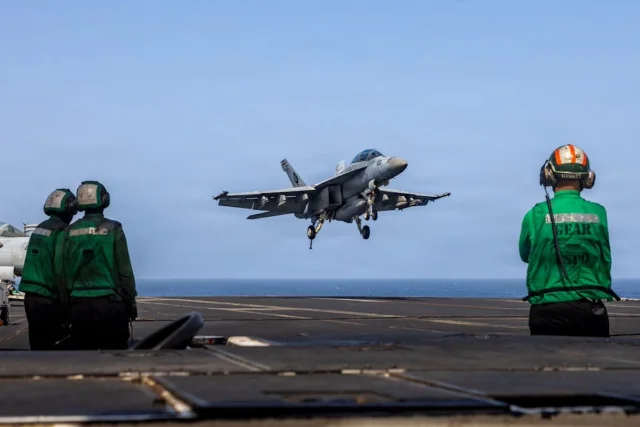
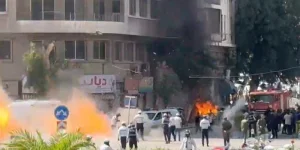
The U.S. military carried out additional strikes in the Iranian port city of Bandar Abbas on Wednesday evening, according to a Reuters report, citing an anonymous official.
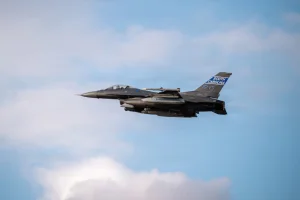
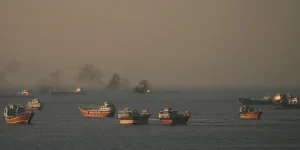
The strikes targeted a drone operation that had threatened U.S. and other vessels in the vicinity of the Strait of Hormuz, the official said. U.S. forces shot down four attack drones and then struck a drone facility in Bandar Abbas, which was preparing to launch a fifth drone.
He described the U.S. military’s actions as “purely defensive,” adding, “These actions were measured, purely defensive and intended to maintain the ceasefire.”
Following the U.S. strikes, the Islamic Revolutionary Guard Corps (IRGC) claimed it had targeted a U.S. airbase in retaliation in a statement on Iran's Tasnim News.
While that statement did not specify the location of the American airbase, the Kuwaiti military, which hosts U.S. bases, reported that its air defenses intercepted missile and drone threats, without specifying where the threats came from.
تتصدى حالياً الدفاعات الجوية الكويتية لهجمات صاروخية وطائرات مسيرة معادية.
— KUWAIT ARMY - الجيش الكويتي (@KuwaitArmyGHQ) May 28, 2026
تنوه رئاسة الأركان العامة للجيش أن أصوات الانفجارات إن سمعت فهي نتيجة اعتراض منظومات الدفاع الجوي للهجمات المعادية.
يرجى من الجميع التقيد بتعليمات الأمن والسلامة الصادرة عن الجهات المختصة.… pic.twitter.com/qvsBXZxokq
The report about the strikes came shortly after U.S. President Donald Trump held a Cabinet meeting, during which he again said that Iran wants to make a deal.
“They want very much to make a deal,” Trump said. “So far, they haven’t gotten there. We’re not satisfied with it, but we will be – either that or we’ll have to just finish the job.”
The recent launch highlights the continued tensions between the U.S. and Iran, with neither side appearing willing to compromise.
President Trump has come under criticism from several Republican allies over the proposed deal.
Ebrahim Azizi, head of the Iranian Parliament’s National Security Commission, said that Iran will not move from its red lines.
“Iran will not be pushed back by Trump’s rhetoric from its red lines,” Azizi wrote on 𝕏 Thursday morning. He identified those red lines as “the right to enrich uranium, possession of enriched uranium, authority over the Strait of Hormuz, and the removal of sanctions.”
Azizi said he believes Trump is “seeking a way out of this strategic deadlock,” and alternates between issuing threats and calling for an agreement.
During a Cabinet meeting, President Trump reiterated that the United States rejects any Iranian claim over the Strait, describing it as an international waterway that must remain open to all countries.
“The strait is going to be open to everybody,” Trump stated.
He was responding to a reporter’s question about whether the U.S. would accept a deal granting Iran and Oman temporary control over the strait.
“It’s international waters. Nobody’s going to control it. We’re going to watch over it,” he added.
President Trump threatens to attack Oman if they don't "behave."
— The American Conservative (@amconmag) May 27, 2026
"Oman will behave just like everybody else or else we'll have to blow em up." pic.twitter.com/Eae4h8BcmP
Trump also appeared to threaten Oman over any potential attempt to assert control over the critical waterway, stating, “Oman will behave just like everybody else, or we’ll have to blow them up. They understand that, and they’ll be fine.”
The U.S. president acknowledged the Iranian regime's resistance to U.S. demands, but said he’s in no hurry to make a deal, contradicting previous reports suggesting he was seeking a quick resolution to the conflict with Iran.
“We can make a good deal right now, but maybe not a great deal, and if it’s not a great deal, we’re not making it.”
During the Cabinet meeting, Trump also repeated his offer to the Gulf states to join the Abraham Accords, indicating that an Iran peace deal might be contingent on such a move.
“I would like to have the countries we were talking about, Saudi Arabia, the UAE, Qatar, and the others…would like to have them join the Abraham Accords. It would be historic if they do,” Trump said. “I think they owe that to us.”
Trump: We would like to have the countries join the Abraham Accords. I think they owe it to us. I’m not sure we should make the deal if they don’t sign.
— Acyn (@Acyn) May 27, 2026
Reporter: So the Iran deal might be contingent on this?
Trump pointing to Hegseth: We can make a great deal with this guy… pic.twitter.com/hQxCnHoXQf
“I’m not sure we should make the [Iran] deal, if they don’t sign,” Trump added, after asking U.S. envoy Steve Witkoff if he thought the Gulf states would join the accords.
The Gulf states in question, however, are not in a hurry to join the Abraham Accords, with the exception of the United Arab Emirates, which was among the original signatories in 2020. Joining the accords would require officially recognizing Israel as a Jewish state, marking a significant shift from decades of Arab and Muslim policy toward Israel.
An anonymous Arab diplomat told Politico that Trump's comments serve as “a smart tactic to calm down the angry base,” adding, “but it will not be part of the [Iran] deal.”
You might also like to read this: