Trump says ships begin traversing Hormuz Strait as VP Vance confirms Iran deal signed digitally
Iran deal draws skepticism from vocal Trump supporters




Nearly 24 hours after U.S. President Donald Trump announced a Memorandum of Understanding intended to pave the way for a permanent peace agreement with the Iranian regime, key details of the deal – including when it will be officially signed – remain unclear.
Meanwhile, open criticism of the deal mounted within Israel as Trump supporters voiced skepticism about its terms.
Trump had originally intended to sign the deal over the past weekend, but said IDF strikes on Hezbollah targets in Beirut in Lebanon delayed the ceremony, prompting public criticism of Israeli Prime Minister Benjamin Netanyahu. The U.S. president then prevented retaliatory strikes from Iran against Israel, though reportedly only after offering more concessions.
NEW: President Trump touts his Iran peace deal as the Strait of Hormuz reopens and oil prices begin to drop:
— Fox News (@FoxNews) June 15, 2026
"I think a lot of great things are going to happen with the Middle East right now. Very importantly, the oil is plummeting down, and the stock market is shooting up like… pic.twitter.com/cBeIVXxC2T
On Monday, U.S. Vice President JD Vance said the agreement had been “already signed ... digitally yesterday” during an interview on ABC's "Good Morning America."
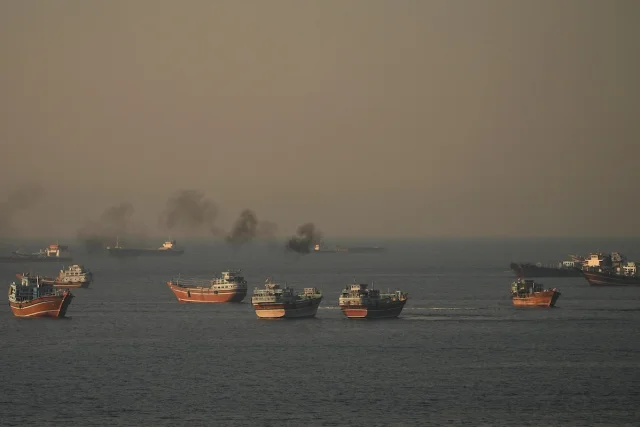
However, exact details of the deal remained unclear. On Monday, Trump wrote on Truth Social: “Ships are starting to move, many loaded up with Oil, out of the Strait of Hormuz. They are going along the Southern ‘Highway,’ which is totally safe, secure, and pristine. There are other areas of travel, also!!!”
However, the U.S. military stated that its naval blockade of Iranian ports remained in effect, “restricting all traffic inbound and outbound from these ports” until the agreement is signed. “Do not attempt to cross until explicit direction is given,” it warned.
The agreement ensures that Iran will never have a nuclear weapon. pic.twitter.com/rFj3rnbmyV
— The White House (@WhiteHouse) June 15, 2026
In comments to reporters on the sidelines of a G7 summit in Paris, Trump affirmed that a formal signing ceremony would be held on Friday while repeating his claim that his administration has “gotten along very well” with Iran’s “new set of leaders,” characterizing the Israeli and U.S. militaries’ elimination of dozens of leaders as “regime change.”
Trump reportedly promised that, with the agreement, Iran would not be allowed to acquire nuclear weapons under any circumstances. He also said that “a lot of good things” were going to happen in the Strait of Hormuz, noting that gas prices around the world had already begun to fall.
Vance said that Washington expects the Strait of Hormuz to remain open “in a toll-free way for the long-term” during an interview with CNBC, though he added that details would be worked out “in these technical negotiations” during the ceasefire.
The exact wording of the 60-day ceasefire agreement will be released “some time after Friday,” Trump said.
He also vowed to “see if we can straighten out the Lebanon thing,” referring to the ongoing conflict involving Hezbollah. “It just seems to never end,” Trump said, adding, “Hezbollah, we have to have a little talk with them.”
I am pleased to hear the memorandum of understanding with Iran to allow the Strait of Hormuz to open has been agreed to. I will be watching closely the ensuing negotiations regarding Iran’s nuclear program and other matters.
— Lindsey Graham (@LindseyGrahamSC) June 14, 2026
I am somewhat concerned that Iran’s view of the… https://t.co/3vSNSOc1mp
While there was no public official statement revealing details of the deal, two senior aides to the president told reporters on Monday that the MOU created a framework for follow-up negotiations, though one official said Washington will only know whether a permanent deal can actually be reached “over the next two or three weeks.”
The other official said that while the deal envisions the “immediate” reopening of the Strait of Hormuz, it would still “take a little time” due to remaining dangers, including sea mines.
“We probably won’t return to normal in two weeks, but we will see a significant increase in strait traffic,” he added.
Speaking to CNBC, Vance addressed concerns from Israel while saying there were “elements within Israel” that favored the deal “quite a bit,” without identifying the “elements.”
He also said some of the criticism stemmed from what he described as “misreporting” by Iranian state media. In Israel, criticism focused largely on a reported clause seen as potentially restricting Israel’s freedom of action against Hezbollah, while some U.S. critics cautioned against releasing funds to Iran without guarantees of compliance.
The agreement would create a “new Middle East” and “Israel is going to have a seat at the table,” Vance said.
Another senior U.S. official hit back at “hardliners” in the U.S. who criticized the deal. On one hand, they “say you can’t trust the Iranians – that they’re always going to lie. And then they take all the stuff put out in the IRGC channels as gospel.”
“But all the details of the agreement have not been put out yet,” the official stressed.
Over the past day, some of Trump's top U.S. supporters have expressed skepticism regarding the president's move.
Journalist Mark Levin, whose statements Trump has reposted on social media several times, wrote, “Here’s an idea: if you want people to stop speculating about the MOU, release the MOU. Don’t brief a few anointed ones to control the narrative and expect everyone else to sit silently.”
In another post, Levin argued, “Reagan was right. Trust but verify. Except with the Iranian regime and its terror proxies, if you understand their ideology, it's never trust. Nobody has yet to explain how this or any deal can possibly work, over time, not only given 47-years of experience with this enemy but its theocratic ideology. An MOU or final deal simply cannot and will not change it.”
Levin also objected to Trump’s statements regarding Netanyahu, saying that he cringed at how Netanyahu is being “berated for standing up for his country" and that "when Hezbollah and Iran, together or separately, fire missiles or commit other acts of violence against Israel, they will undoubtedly be hit hard in response.”
U.S. Senator Lindsey Graham, who has consistently praised Trump’s handling of the Iran war so far, said he was “pleased” at the agreement but noted he would “be watching closely the ensuing negotiations regarding Iran’s nuclear program and other matters."
"I am somewhat concerned that Iran’s view of the agreement seems different than what the American negotiating team is claiming,” he added.
Like Levin, Graham warned that ”no matter what deal we sign with Iran, Hezbollah’s stated ambitions of destroying Israel and making Lebanon a caliphate have not fundamentally changed.”
You might also like to read this: