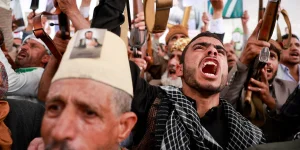
The MOU leaves a divided Gulf, new challenges for Israel and a more influential Iran
The results are far from what some hoped would lead to a stronger anti-Iran, pro-Israel bloc in the region



At some point during the 40 days of war led by the United States and Israel against the Islamic Republic, the potential for a very different post-war Middle East began to take shape.
The Gulf states – pummeled more heavily by Iranian missiles than Israel – issued condemnations, while some quietly launched attacks against Iran. Reports later claimed that some leaders even cooperated with and welcomed secret visits by Israeli officials to their countries, though those reports were denied.
Lebanon was quietly absorbing Israeli attacks against Hezbollah while participating in Washington-brokered negotiations with the Jewish state.
It looked like an Abraham Accords bonanza was on the horizon.
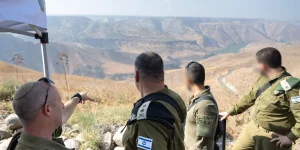
But this week, the U.S. and Iran announced a Memorandum of Understanding (MOU), prompting the Gulf states to retreat to their previous positions and leaving Israel in the lurch – its soldiers still in southern Lebanon, with the biggest question being whether their continued presence there will scuttle U.S. President Donald Trump’s ultimate deal with Iran.
GULF RETURNS TO OLD PATTERNS
Now, rather than an entirely new Middle East with an anti-Iran bloc, the geopolitical chessboard looks much like it did before the war.
Not surprising, some analysts say.
“It seems like the war didn’t change the dynamics, but each state gained proof that, ‘Our policy was right from the beginning,’” said Ariel Admoni, Ph.D., a researcher for the Jerusalem Institute for Strategy and Security (JISS).
He expects each country now will double down on its previous position. Admoni noted the widening rift between Saudi Arabia and the United Arab Emirates, plus the UAE's decision to leave OPEC, as mere extensions of the paths these countries were already on, including in their respective relations with Israel.
“Even during the war there wasn’t Gulf unity, not during the war, not during the ceasefire or now after the agreement was announced,” he told ALL ISRAEL NEWS.
In “a very sophisticated manner…when they gathered that the U.S. is not going all the way,” the surrounding countries saw it coming and played their cards, Admoni said.
“When they see the wind shifted in a way that prefers the Iranian regime, the UAE saw where the shift was going and went along with it,” Admoni said. “This is why, from the beginning, the Gulf response, in general, wasn’t so public and was mostly focused on condemnations and the United Nations resolution.”
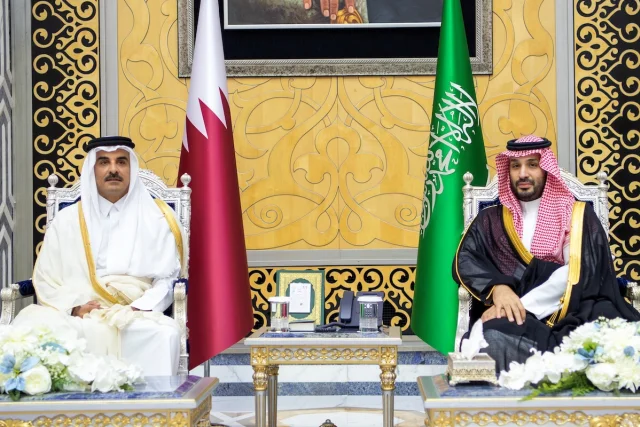
According to Admoni, the war did not present a compelling reason for Riyadh and Doha to align with Israel. That is not to say backchannel cooperation doesn’t exist with Jerusalem, even if Saudi and Qatari officials publicly distanced themselves from Israel.
But broader normalization with Saudi Arabia and other Gulf states – one of Israel’s strategic goals before the war – is in doubt as Iran reasserts its dominance in the region. The U.S.-Iran memorandum did, however, justify their decision to maintain workable relations with Tehran, Admoni noted.
According to unconfirmed reports published this week, the UAE agreed to unlock billions of dollars for Iran, while Qatar was said to have a secret financial arrangement to allow its tankers through the Strait of Hormuz.
IRAN EMERGES AS REGIONAL POWERBROKER
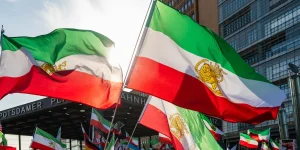
The agreement effectively begins a new phase of regional diplomacy – one in which Iran emerges with greater leverage, said former Mossad official and Iran expert Sima Shine. Neighboring countries are likely to forgive aggression, at least for now.
“The relations between Iran and the Gulf States will be an issue the day after,” Shine said in a MediaCentral briefing with reporters. “In spite of Iran attacking all the states, including Qatar, in spite of attacking some of their oil and gas facilities, the Gulf States understand that they don't have an alternative to their neighbor, their regional superpower neighbor, Iran.”
She also expects Gulf states to seek improved relations with Tehran despite deep-seated mistrust.
“They will try to find ways to improve relations even though none of them will believe the Iranians or love them too much,” she said.
Shine also pointed to Qatar’s last-minute role in the negotiations, noting that Qatari officials were present in Tehran during the final hours of talks despite Pakistan formally leading the mediation effort.
“Sometimes the devil is in the details,” Shine said.
“In all the disputes in the Middle East, we find the Qataris – and not only do we find them again, but they were sitting in Tehran when Iranians said they will not sign the MOU because of the Israeli attack” in Beirut, she said.
While it remains to be seen what Qatar is walking away with, it may not matter. Negotiations on the MOU will likely continue after the 60-day implementation period because Iran has little incentive to abandon its nuclear ambitions, Shine said.
“From their point of view, what they will get now, which is the frozen sums of money and the capability to export oil, I think from their economic point of view, it's good enough,” she said. “And therefore, it might be that there will be no nuclear agreement at all.”
Shine said that the MOU will also have serious repercussions in Lebanon, which was ripe for change and depending on Israel to disarm Hezbollah – something its own military is incapable of doing.
The agreement essentially allows Iran to keep a foothold in Lebanon “and to make sure that Hezbollah is a major political actor in the Lebanese arena,” Shine argued.
“By allowing Iran to decide what will happen in Lebanon, the U.S. is giving Iran the possibility to continue and support Hezbollah and to make sure that Hezbollah is a major political actor in the Lebanese arena,” Shine said. “Hezbollah is a major problem, first and foremost to Lebanon and then to Israel as well.”
Please take a moment to join believers worldwide praying for Israel right now. Add your light to the live prayer map—and show the world one more watchman praying for the peace of Jerusalem.

You might also like to read this: