Netanyahu hails ‘historic achievement’ with Lebanon, reaffirms Israeli ‘freedom of action’
Ben Gvir calls agreement a ‘historic mistake’, demands cabinet vote







After Israel and Lebanon signed a trilateral framework agreement on Friday, aimed at ending hostilities through direct talks, Prime Minister Benjamin Netanyahu called it a “historic achievement” for Israel.
Netanyahu addressed the Israeli public in a pre-recorded statement which aired at the end of the Sabbath, hailing the agreement with Lebanon a “massive blow to Iran and Hezbollah.”
“Dear citizens of Israel, yesterday before the start of the Sabbath, we achieved a historic accomplishment for the State of Israel,” Netanyahu announced. “Following direct negotiations between Israel and Lebanon, mediated by the US, we have reached a framework of understandings that allows us to move forward toward ending the conflict, and, G-d willing, eventually reaching a peace agreement between the two countries.”
Netanyahu also repeated the claims of Israeli Ambassador to the U.S. Yechiel Leiter, who said Israel would maintain its current security zone in southern Lebanon until the Lebanese military demonstrates it can assume responsibility for the designated areas.
“Under these understandings, the U.S. and Lebanon have recognized Israel's right to maintain the security zone inside Lebanon for as long as it is required for our security,” Netanyahu said in the video. “We will continue to hold it until Hezbollah and the rest of the terrorist organizations are disarmed, and until no further threat to Israel is posed from Lebanon.”
⭕️IMPORTANT: The IDF maintains a hold on the entire anti-tank line and the ridge line controlling the first kilometers from the Lebanese border, including strategic points like the Beaufort, Kfar Tibet and the Ali Taher ridge.
— Raylan Givens (@JewishWarrior13) June 28, 2026
Information on the 2 areas where the IDF will… https://t.co/r8tiyRMq3u
“I want you to know – this is a massive blow to Iran and Hezbollah,” Netanyahu claimed, saying, “Iran tried to force a withdrawal from southern Lebanon upon us.”
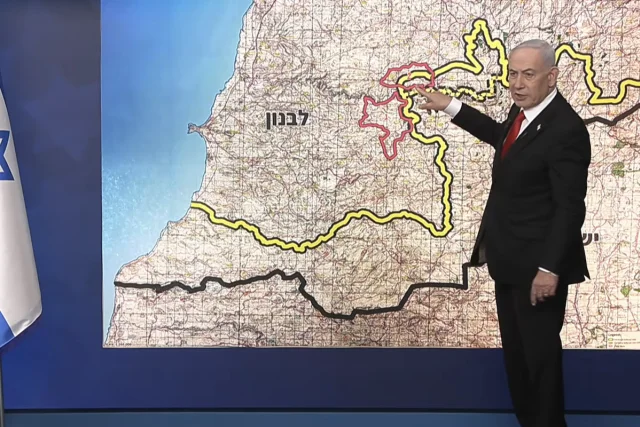
Showing a map of the Yellow Line, defining the security zone, the prime minister also showed the two “pilot areas” the IDF would withdraw from as part of the agreement, as the Lebanese Army moves in to prevent a return of Hezbollah forces.
“Israel and Lebanon have agreed on two adjacent areas near the Yellow Line, recommended by the IDF, where there will be a pilot program for disarming Hezbollah and transferring the territory to the control of the Lebanese army,” Netanyahu explained.
Those two areas are outside of the Yellow Line security zone, and represent territory seized in recent fighting with Hezbollah.
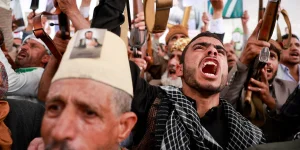
Hezbollah leader Naim Qassem rejected the agreement in a statement aired Saturday, calling it “humiliating, shameful and a surrender of sovereignty” for Lebanon.
“We will pursue all necessary means and exert international and Arab pressure to compel the Israeli enemy to abide by the first clause of the Memorandum of Understanding and withdraw from Lebanon,” Qassem declared.
Following the Hezbollah leader’s statements, Israeli security leaders have begun preparing for the possibility of renewed fighting with the terror group.
Netanyahu affirmed that the agreement with Lebanon allows “freedom of action” to retaliate against Hezbollah for attacks against Israeli targets.
The agreement was hailed by several Netanyahu partners, including Defense Minister Israel Katz, who noted the agreement is “a historic event.”
Katz also affirmed that “the state of Israel has not withdrawn from Lebanon,” saying the agreement maintains “the IDF's freedom of action to address threats to our soldiers and the communities and residents of the north.”
However, coalition partner, and National Security Minister Itamar Ben Gvir slammed the agreement in a statement made on Saturday evening.
“The agreement with Lebanon is a big mistake - I already approached the Prime Minister this evening with a request to hold a vote in the cabinet, and I've been fighting against the agreement for weeks,” Ben Gvir said.
Acknowledging that the IDF will remain in the security zone, Ben Gvir said “the state of Lebanon will not disarm Hezbollah of its weapons,” noting that “ministers in the Lebanese government are Hezbollah members, and we cannot rely on Lebanon to take the weapons away from Hezbollah.”
Ben Gvir also argued that the agreement gives Hezbollah “air to breathe so it can recover, rearm, and build the next monster.”
He pointed to previous failures by the Lebanese government to disarm Hezbollah, saying the agreement should only be signed once the terror group is “completely defeated.”
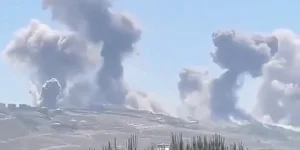
On Sunday morning, the IDF said it had carried out several strikes within southern Lebanon the previous day, killing Hezbollah terrorists armed with rocket-propelled-grenades (RPG) operating close to Israeli soldiers, and also striking a rocket launcher operated by the terror group.
Lebanese President Joseph Aoun told U.S. President Donald Trump that his country will “assume its responsibilities” under the agreement, and asked Trump to pressure Israel to withdraw.
Aoun said "the Lebanese state would assume its responsibilities in implementing the framework agreement and expressed hope that the United States would help prevent any violations of the deal and ensure that all commitments are fulfilled, notably by pressuring Israel to withdraw from the areas it occupies in southern Lebanon to facilitate the deployment of the Lebanese army up to the international border,” the president’s office said in a statement on Sunday morning.
Please take a moment to join believers worldwide praying for Israel right now. Add your light to the live prayer map—and show the world one more watchman praying for the peace of Jerusalem.

You might also like to read this: