US military planes moving from Ben Gurion airport to ease summer travel bottleneck



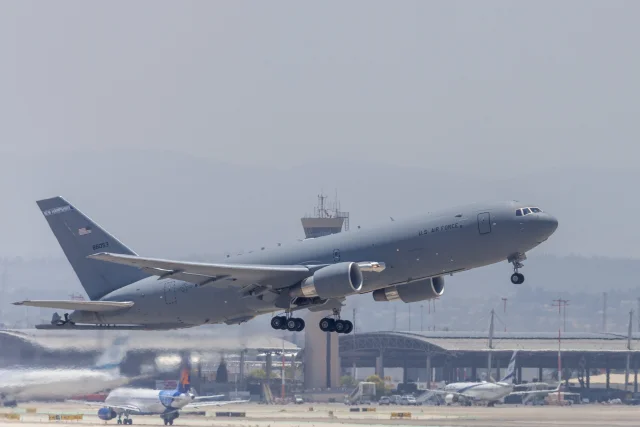
The Israeli Transportation Ministry announced on Friday that it had reached an agreement with the U.S. military to relocate dozens of American aircraft from Ben Gurion Airport, a move aimed at easing congestion and preventing widespread disruptions to civilian air travel during the busy summer season.
Under the agreement, about 30 U.S. refueling and cargo aircraft currently parked at Israel's main international airport will be transferred to Israeli Air Force bases by Tuesday. Fifteen aircraft have already departed, with another 20 expected to be relocated later.
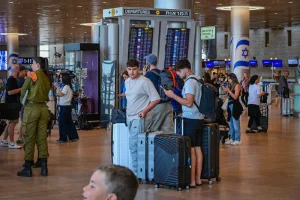
The move comes after weeks of concern that the large U.S. military presence at Ben Gurion Airport was limiting space for commercial aircraft and threatening tens of thousands of passenger flights at the height of the summer travel season.
Around 75 U.S. refueling and cargo aircraft have been stationed at the airport outside Tel Aviv since the beginning of the war with Iran in late February, reducing the number of parking positions available for civilian aircraft from 99 to just 65.
Israel Airports Authority head Sharon Kedmi warned in a letter to Transportation Minister Miri Regev that the continued presence of the U.S. military aircraft could disrupt travel plans for some 100,000 passengers during the peak summer season, which begins in July.
Kedmi assessed that Ben Gurion Airport needs at least 80 parking positions available for civilian aircraft to manage July traffic and warned that all 99 positions would be needed during the peak travel period in August.
Earlier this month, Regev urged Prime Minister Benjamin Netanyahu to intervene, warning that the situation could cause "direct economic damage of billions of shekels."
“If half of the refuelers are not removed by Tuesday, June 16, we will inform more than two million citizens that their summer flights, including Breslov trips to Uman for Rosh Hashanah, are canceled,” Regev warned.
“Mass cancellations of summer and holiday flights at a time when the Israeli public needs relief and normalcy more than ever will harm national morale and civic resilience,” the minister added.
Israeli aviation officials have also warned that continued congestion at Ben Gurion Airport could discourage additional international airlines from returning to Israel, potentially keeping airfare prices elevated.
Air France and several other major European airlines have canceled flights to Israel through the end of June because of ongoing regional instability.
U.S. carrier Delta has postponed the resumption of its service to Israel until September, while British Airways has announced it will not resume flights to Ben Gurion Airport before October.
Germany's Lufthansa resumed flights to Israel this month, while low-cost carrier Wizz Air restarted service in May. Earlier this week, Spain's Air Europa also resumed flights between Ben Gurion Airport and Madrid.
Although approximately 30 U.S. military aircraft are expected to be relocated by Tuesday, they could return within 72 hours if fighting with the Islamic Republic of Iran escalates again.
The Trump administration and the Iranian regime recently signed a Memorandum of Understanding (MoU) intended to end hostilities between the two countries.
However, U.S. President Donald Trump accused Tehran on Friday of violating the ceasefire. The U.S. Central Command (CENTCOM) announced on Friday that it had struck Iranian missile, drone and coastal radar sites after an Iranian drone attacked the Singapore-flagged commercial cargo ship M/V Ever Lovely in the Strait of Hormuz.
You might also like to read this: