Jewish groups voice concern over Trump’s Iran deal, but criticism remains milder than against Obama's JCPOA


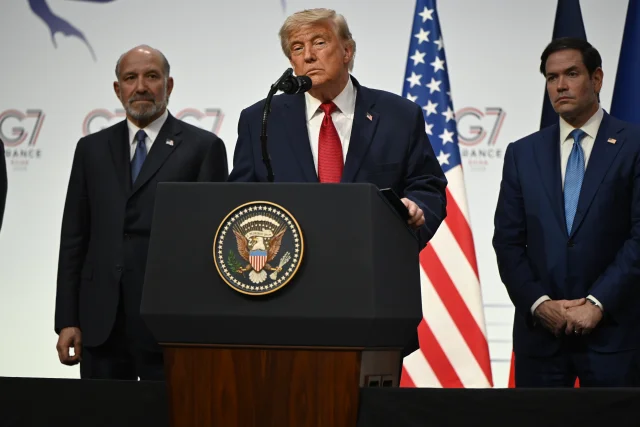
Jewish American groups have reportedly grown increasingly concerned about the implications of U.S. President Donald Trump’s Iran agreement for the United States and Israel.
However, criticism from Jewish organizations of the Trump Memorandum of Understanding (MOU) with the ayatollah regime has so far been more muted compared to the backlash against former U.S. President Barack Obama’s 2015 JCPOA nuclear agreement.
The Joint Comprehensive Plan of Action (JCPOA) was an agreement between Iran and major world powers that limited Iran’s nuclear program in exchange for sanctions relief and expanded international inspections.
The Republican Jewish Coalition (RJC) on Thursday urged its supporters to “Trust President Trump,” a markedly different stance from its criticism of the 2015 Obama agreement.
“President Trump has earned the trust of the Jewish community as he and his team work towards a final agreement,” RJC CEO Matt Brooks and chair Norm Coleman said in a joint statement. The officials said the Trump administration’s MOU“ envisions a horizon of economic stability for the United States, the region, and the world,” adding that it “provides an opportunity for potential new pathways to greater peace.”
However, not all Jewish American organizations share this outlook on the emerging Iran deal. The pro-Israel American Jewish Committee and American Israel Public Affairs Committee (AIPAC) warned that the MOU “raises significant questions” and called on Congress to act ahead of “a final nuclear agreement.”
AIPAC emphasized that the MOU in its current form does not match “President Trump’s stated objectives for the war.”
According to the report, the American Jewish Committee (AJC) identified seven concerns regarding the MOU with Tehran, while expressing hope that a potential final agreement would be more favorable to Israel and include stricter requirements on the Iranian regime.
Trump’s MOU begins with a 60-day period during which the two sides are expected to continue negotiating an end to the war. Unlike the JCPOA, the initial MoU does not include commitments regarding Tehran’s covert nuclear weapons program. By contrast, the JCPOA was criticized for its “sunset clauses,” under which nuclear restrictions on Iran would expire 10 years after the agreement was signed.
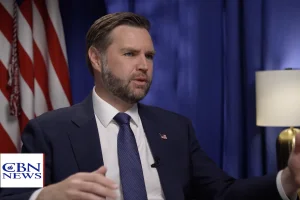
President Trump has praised the MOU, and Vice President JD Vance said the Iran agreement could be positive for both the United States and Israel. However, views within Israel across the political spectrum appear less uniformly optimistic.
U. S. domestic criticism of the US-Iran deal is not limited to Jewish American organizations.
“This is the worst foreign policy blunder in decades,” U.S. Senator Bill Cassidy (R-LA) wrote on 𝕏. “Reagan is rolling over in his grave. Iran’s nuclear ambitions were not curbed, and they have learned that threatening the Strait of Hormuz works and will undoubtedly leverage it in the future,” adding, “Now, Iran gets to build brand-new infrastructure under this deal.”
Some critics argue the current Trump framework could be weaker than the JCPOA, saying it may allow broader economic relief for Iran.
Conservative think tanks, including the Foundation for Defense of Democracies and the Jewish Institute for National Security of America (JINSA), have also criticized the deal, with JINSA stating, “In some ways, the MOU is even weaker than President Barack Obama’s,” and that it “authorizes the transfer of far more money and lifts many more sanctions on Iran than the JCPOA ever did.”
Trump has said the agreement aims to improve economic conditions for ordinary Iranians. Critics, however, question whether such benefits will materialize, citing concerns that Tehran could channel resources toward military and regional proxy activity.
You might also like to read this: