JD Vance makes his case to Israel: Why Trump’s Iran deal could be good for the Jewish state
Part One of an exclusive interview: US VP Vance explains why the administration believes diplomacy offers best path to preventing a nuclear-armed Iran




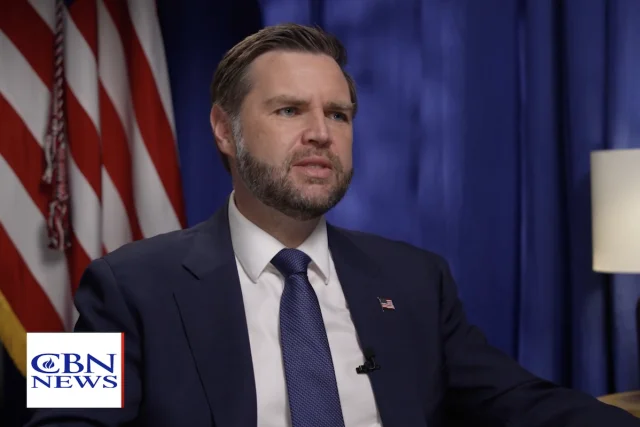
U.S. Vice President JD Vance knows he’s got a tough sell on his hands.
The agreement between the United States and Iran is already generating major skepticism in Israel and among many pro-Israel conservatives in America. It all makes sense since, for decades, Iran has existed as an existential threat to the Jewish state. That’s why any deal involving Tehran immediately raises red flags.
Yet Vance, alongside Special Envoy Steve Witkoff and senior advisor Jared Kushner, is making a direct case that this agreement could ultimately benefit Israel rather than harm it.
The White House believes Iran is operating from a position of weakness after years of economic pressure, regional setbacks, and internal instability. Administration officials argue that this moment presents a rare opportunity to pursue a broader regional arrangement that could lower tensions while strengthening security for multiple countries in the Middle East.
In short, Vance and the White House are betting on Gulf Arab States cooperating to box Iran in and, in turn, make the region and Israel much safer.
I met with Vice President Vance on Wednesday on Long Island, New York, and interviewed him on a myriad of issues. This is Part One and you can find Part Two here.
When it came to Israel, I asked him about Israel’s role in the broader struggle between good and evil in this current conflict and whether he viewed Israel as being on the right side of that battle.
“I think it’s important to say, look, Israel’s been a great partner through this and we’ve got a lot of shared interests,” Vance told me. “If you go back to the early 2000s, when we were first confronting the Islamist radicalism and terrorism problem, obviously we actually had some very important Gulf allies. But the Israelis have been important partners. And then even going back before that, there were other things that we were working on together.”
“What I think is also true is that sometimes the United States and Israel are going to have disagreements. And I think that what some people say as well, because the United States and Israel have disagreements somehow, Israel’s bad, the United States is good, or vice versa," Vance continued. "Sometimes you see people in Israel, even after all the president of the United States has done for that region, they’re attacking the president because they don’t like this deal, even though a lot of them don’t know what’s in the deal."
“I think that what is true here is if you go back to Eisenhower and General Montgomery in World War II, people can work together, have shared interests, but also have disagreements from time to time."
EXCLUSIVE: Vice President JD Vance says the U.S. Agreement with Iran will be “good for the people of Israel.” On the Hezbollah/Lebanon aspect of deal, Vance tells me: “Israel is allowed the right of self-defense. Nobody's going to tell another government they're not allowed to… pic.twitter.com/woNyn8XbWi
— David Brody (@DBrodyReports) June 17, 2026
“I really feel when the people of Israel get to know this deal and hopefully trust what the president is able to accomplish for the region, they’re going to see this is good for the people of Israel,” Vance said.
He also said that Israel is a great country with amazing people. "We have a lot of friends who live there."
"It’s going to be good for the people of Israel. It’s going to be good for the whole region,” he said.
Vance is essentially asking Israelis and pro-Israel Americans to trust the Trump administration’s broader vision for the Middle East.
His argument is not that Israel and America will agree on every detail. Rather, he contends that the final outcome will leave Israel safer and the region more stable. Whether Israelis embrace that argument remains a serious open question.
Of course, one major sticking point involves Lebanon and the ongoing threat posed by Hezbollah.
Israel has maintained military positions in parts of southern Lebanon because of security concerns and fears that Hezbollah could once again establish offensive capabilities near Israel’s northern border.
Critics of any agreement involving Iran worry that Tehran could use diplomatic gains to strengthen its regional proxy network, including Hezbollah.
I pressed Vance on reports suggesting that Iran wants Israel to leave southern Lebanon as part of broader regional negotiations. He rejected the idea that the agreement itself contains provisions forcing Israel to withdraw.
“First of all, the deal doesn’t talk about Israel getting out of southern Lebanon or not, but I actually think that Israel would love to get out of southern Lebanon so long as the Hezbollah threat was gone,” Vance says.
“We want to be very clear: Israel is allowed the right of self-defense. Nobody’s going to tell another government they’re not allowed to defend their people. But we are going to work aggressively, diplomatically on this peace process. The people of Lebanon want sovereignty and safety. The people of Israel want sovereignty and safety. That’s part of the work of diplomacy and, frankly, because the Iranian regime is so weak, we’ve got a better opportunity to work on that problem successfully than we’ve had in a very long time," he concluded.
In Part Two of my exclusive interview with Vice President JD Vance, he responds to skeptics' biggest questions: Can Iran be trusted? How will the administration verify compliance? And how will it prevent Tehran from continuing to finance Hezbollah, Hamas, and other terrorist proxies?
You might also like to read this: