Iranian believers feel 'deeply disappointed,' 'stabbed in the back' with US-Iran deal




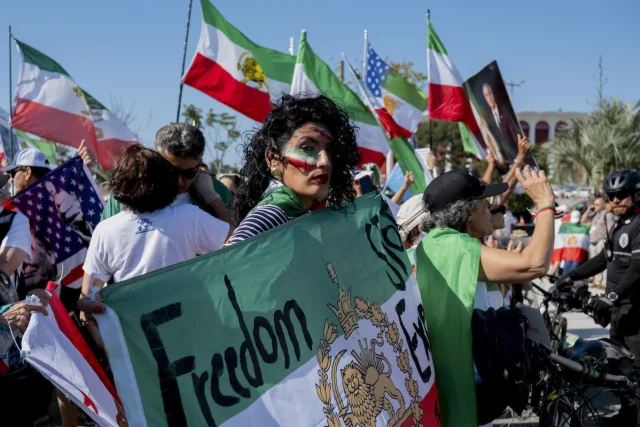
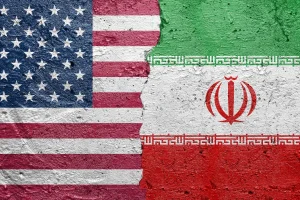
Iranian believers have expressed feelings of "deep disappointment" and being "stabbed in the back" regarding the “peace deal” made last Friday by U.S. President Donald Trump.
“From what I’m hearing, many Iranians feel deeply disappointed and, frankly, a bit stabbed in the back,” Iranian exile Roobin Nozouri said. "After everything that has happened, seeing talk of deals, sanctions relief, business as usual, and the Strait of Hormuz reopening as if nothing happened has been a bitter pill to swallow."
Another Iranian, Pastor Reza Sotoudeh, a church leader from Tehran who currently leads a Farsi-speaking church in the United Kingdom, shared similar sentiments passed by from congregants who have friends and family still in Iran.
“Trump at the beginning promised that he was somehow going to help Iranians to get freedom from this awful government, but he started to negotiate with the Iranian regime. So they were very, very disappointed,” Sotoudeh said.
While Trump claimed at the G7 summit earlier this week that he “never cared about regime change,” Sotoudeh said it seemed he didn’t care about the Iranian people either.
Sotoudeh was forced to flee in the 1990s when friends and fellow pastors began to be abducted and murdered by the Islamic regime. He is under no illusions about what Iranian believers are up against, and expressed the frustration and despair felt by many of those he is in contact with.
“This deal is not helping Iranians at all,” he stressed, warning that releasing funds to the regime will inevitably lead to a resumption of terrorism and violence. “No Iranians trust this government because they can lie in their religion of Islam, they can lie to kuffar [non-Muslims], to fool non-Muslim people… They're going to do whatever they want to do, but secretly.”
Sotoudeh spoke about the country's dire economic situation and its impact on ordinary people.
“They have no money, no jobs and no freedom,” he said, adding that people are afraid to go out knowing that the regime killed 45,000 Iranians in two nights. “The government actually goes door by door to arrest Iranians who are against this regime and takes them by force.”
The pastor said many people connected to his congregation had been abducted and murdered, and that in many cases, the families were forced to pay thousands of dollars for the bullets used to kill them, just to get the bodies of the loved ones back. Some were not even able to bury their dead.
“They took people to jail because they were just protesting. Nothing else,” he continued.
Two teenage girls from one family known by his church were taken and raped, while other young people had been accused of spying and murdered, Sotoudeh said.
“This regime is just Satanic,” he said.
Sotoudeh estimated that some 80% of Iranians support Reza Pahlavi. He believes very few support the regime. After 47 years, Iranians understand the situation very well, but feel powerless to rise up against a regime that has guns, but no mercy, he said.
“One of the things this government has done was to show Iranian people real Islam. I would say 90% of Iranians in Iran don't believe Islam anymore, don't follow Islam,” he continued.
Mosques in Iran are empty and around 50,000 are now permanently closed, according to an Iranian cleric.
“Please pray for Iranians to find Jesus,” Sotoudeh said.
He refuted the suggestion that diaspora Iranians do not represent the attitudes of those living there.
“That's not correct. I know. Whatever Iranians outside of Iran are saying, they are the voice of Iranians in Iran,” he insisted. “They promised to be a voice for them.”
Sotoudeh also encouraged believers around the world to stand up for the Iranian people in the same way and to speak out on their behalf.
“I have a connection with both sides, people in Iran and outside of Iran,” he said, adding that they get news and updates all the time from family members there.
“I don't know who made up this saying that Iranians outside of Iran are thinking different than Iranians in Iran,” he repeated. “It is not correct.”
Sotoudeh also expressed his deep frustration that the situation in Gaza has been a highly visible cause while the international community is silent about Iran.
Nozouri said there is a sense of betrayal from U.S. President Donald Trump and the watching world.
“Many feel that the world has largely looked away from the suffering of ordinary Iranians,” he told ALL ISRAEL NEWS. “Many feel abandoned and ignored, as though their suffering has been pushed aside in favor of political convenience and business as usual. Millions remain trapped under a regime they never chose, while the diaspora watches helplessly from abroad.”
Yet despite the disappointment, most people haven’t lost hope.
“One thing I hear repeatedly is that trust in politicians comes and goes, but many Iranians still see Israel as a genuine friend. Not because of any one leader, but because of shared values, shared struggles and a belief that both peoples understand what it means to live under existential threats,” he added.
Although conditions in Israel are far better than in Iran, the mood is also low among Israelis, with commentators comparing Trump’s Memorandum of Understanding to former President Barack Obama’s nuclear deal of 2015.
“Obama set quite a high bar for bad deals, and I think Trump now surpassed it,” lamented Dr. Dan Schueftan, strategic analyst and former director of the National Security Studies Center at the University of Haifa, saying he hoped that Trump would change his mind.
However, as Middle East analyst Haviv Rettig Gur pointed out, the conditions are different at this point, as much of Iran’s infrastructure has been destroyed.
“Iran is years back now… its steel mills will have a hard time producing the steel to produce more centrifuges. So if Trump reaches the identical deal today as the JCPOA, it's not the identical deal, because it allows Iran things Iran can't possibly do for years to come. And that gives us breathing room,” he said.
"You've created an Iran in which the only standing elite left is the IRGC. It's now a military dictatorship. And that IRGC has only one idea: this mess and martyrdom ethos for an eschatological, final, great revolution of the world,” he continued.
A regime with nothing good to offer its people would not be able to survive forever, he concluded.
Nozouri shared Rettig Gur’s optimism.
“There’s still a strange mix of hope and determination. There's a lot of denial inside Iran, with people convincing themselves that any deal with the regime won't actually happen,” he said. “People are shocked and frustrated, but not defeated.”
With the World Cup underway, Nozouri relayed a football analogy that's being passed around with Iranians saying, "It's a 90-minute match, and we've only played the first 45."
“Most people are waiting to see how the second half unfolds before drawing conclusions,” he explained.
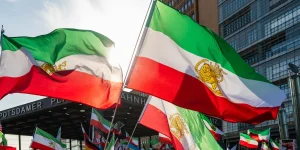
“As HRH Crown Prince Reza Pahlavi has repeatedly said, Iranians will continue this struggle with or without outside help,” Nozouri assured.
“Any arrangement that merely throws another lifeline to the regime will never be accepted by the Iranian people. The fight for a free Iran will continue, and history will remember who stood with the Iranian people and who chose to save their oppressors,” he added.
“So the mood is a mixture of heartbreak, frustration, resilience, and hope,” he summed up. “Wounded, yes. Defeated, no.”
You might also like to read this: