Who is Reza Pahlavi, son of the Shah deposed during the 1979 Islamic Revolution, and a leading voice for the protests?




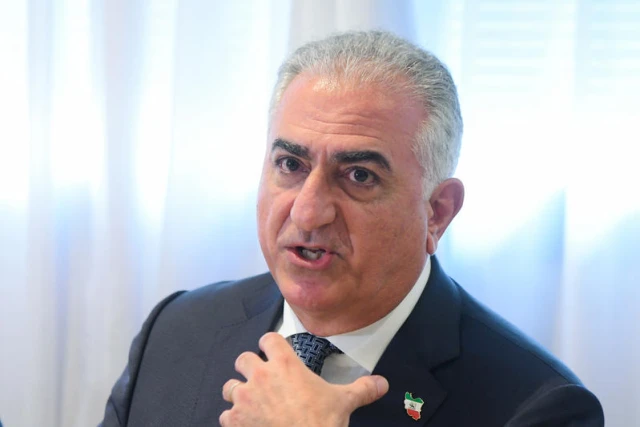
As protests in Iran have grown since they began on Dec. 28, when shop owners and bazaar merchants in Tehran closed their stores in protest over the country’s worsening economic situation, one name has been heard repeatedly both inside and outside Iran: Reza Pahlavi.
Pahlavi was often viewed by Westerners as little more than a curiosity, a man who continued to talk about the political future of Iran after the end of the Islamic Revolution, at a time when the Islamic regime seemed firmly in power.
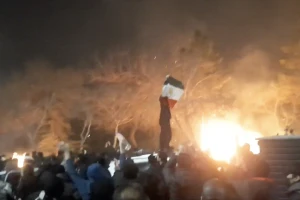
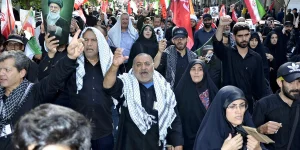
However, over the past few protests in Iran, Pahlavi’s name has been heard more frequently. When he issued a call on social media for the Iranian people to take to the streets last Thursday and Friday night, to show the regime how many people were tired of the Islamic Republic’s rule, hundreds of thousands of Iranians answered, showing up for hours, despite intensifying crackdown efforts by the regime.
My compatriots,
— Reza Pahlavi (@PahlaviReza) January 11, 2026
By your widespread and courageous presence in the streets across Iran for the third consecutive night, you have severely weakened Khamenei’s repressive apparatus and his regime. Reliable reports have reached me indicating that the Islamic Republic is facing a… https://t.co/pJGMpsmBKU
Many of those who demonstrated shouted the name of Reza Pahlavi, or the phrase Javid Shah - “Long live the Shah!” But who is Reza Pahlavi, the exiled Crown Prince, who has lived most of his life outside of Iran?
He was born in Tehran on Oct. 31, 1960, the eldest son of Shah Mohammad Reza Pahlavi and was officially named crown prince in 1967 during his father’s coronation ceremony.
While Pahlavi's father is widely credited with modernizing Iran and making the country more Western in many economic, technical, and social spheres, in the final decade of his reign the Shah also took increasingly repressive steps to suppress opposition. His intelligence agency, SAVAK, became notorious for torturing dissidents suspected of conspiring against the monarchy.
Amid fluctuating oil prices during the OPEC embargoes and growing domestic unrest, an alliance of Marxist-leaning student groups and hardline Shiite clerics (called mullahs) eventually led to the revolution that would overthrow the Shah.
Crown Prince Reza, then a cadet in the Imperial Iranian Air Force, had been sent to the U.S. for pilot training and was not in Iran when the revolution erupted in 1979. His father was also abroad at the time, undergoing cancer treatment, when Ayatollah Ruhollah Khomeini returned to Iran with Western backing and assumed leadership of the protest movement, quickly transforming it into a successful revolution
After that revolution, and following his father’s death from terminal cancer in 1980, Pahlavi proclaimed himself Reza Shah II; however, this proclamation had little effect and was largely ignored. In the intervening years, he has used his high profile in the Western world to campaign for more awareness of human rights abuses and injustice inside Iran.
While Pahlavi has lived 50 years outside of Iran, and was thus unknown to many inside his home country, the exiled crown prince has taken advantage of the power of social media in recent years to make himself more known to the younger generation, releasing videos in Farsi on social media, and appearing on Farsi-language news channels like Iran International, to spread a nationalistic message of opposition to the Islamic Republic’s regime.
Despite calls by some in the Iranian opposition for a restoration of the monarchy, Pahlavi has instead focused on a message of uniting Iranians around the overthrow of the Islamic Republic, saying the Iranian people should decide their future in a public referendum.
For most of the younger generation, born after the Islamic Revolution, Pahlavi has become a symbol of a time before the Islamic Republic. While those who remember his father’s rule are few, the recent brutal crackdowns in protests over the last decade, along with decades of public executions, have cast the Pahlavi monarchy in a more favorable light to many.
This is the final battle Pahlavi will return ✌️ pic.twitter.com/i9N8cKB8DM
— Arash Hampay (@ahampay) January 12, 2026
At the same time, few individuals or organizations have achieved the same recognition and status as the crown prince. As the people in Iran have increasingly seen the struggle against the regime as a struggle for their own survival, the figure of Reza Pahlavi has become a recognizable figure, one who has consistently spoken out for the Iranian people, and to the Iranian people, over the past few decades.
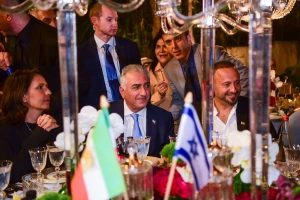
Pahlavi has also spoken openly about returning Iran to open relations with the Western world, in particular, the United States and Israel. In early 2023, Pahlavi visited Israel for the first time, observing Holocaust Remembrance Day. During his visit, Pahlavi spoke of the “Biblical relationship” between Iran and Israel, and expressed his hope that one day, Iran and Israel could be joined as friends in a peace agreement he called the Cyrus Accords, after the Persian king who granted permission and support to the Jews to return to Jerusalem and rebuild the Temple.
Crown Prince Pahlavi expressed the views of many in Iran who oppose the Islamic regime, noting that the two countries could benefit each other, and that conflict is a result of the Islamic regime, not the desire of the Iranian people.
Since then, Pahlavi has continued to call for the international community to support those who oppose the Iranian government, while often downplaying calls for direct military intervention. However, after Israel struck Iran hard during the 12-day Israel-Iran war, Pahlavi called for action to help topple the regime, including giving support to protesters. At that time, Pahlavi expressed his desire to help oversee a 100-day “transitional period” after the fall of the Islamic Republic, reiterating that he hoped to see “the establishment of a national and democratic government – by the Iranian people and for the Iranian people.”
My Fellow Countrymen,
— Reza Pahlavi (@PahlaviReza) June 17, 2025
The Islamic Republic has reached its end and is in the process of collapsing. Khamenei, like a frightened rat, has gone into hiding underground and has lost control of the situation. What has begun is irreversible. The future is bright, and together, we… https://t.co/XEyL5IM05t
As a result, the crown prince, who was once ignored in Iran, particularly by the Islamic regime, has now become a figure to whom many dissatisfied Iranians attach their hopes for change and freedom.
Whether Reza Pahlavi will ever become Shah, or even a democratically elected public leader, is not clear. But for the moment, many of those protesting the regime are listening to his voice, holding his picture, and chanting his name as an act of resistance.
You might also like to read this: